

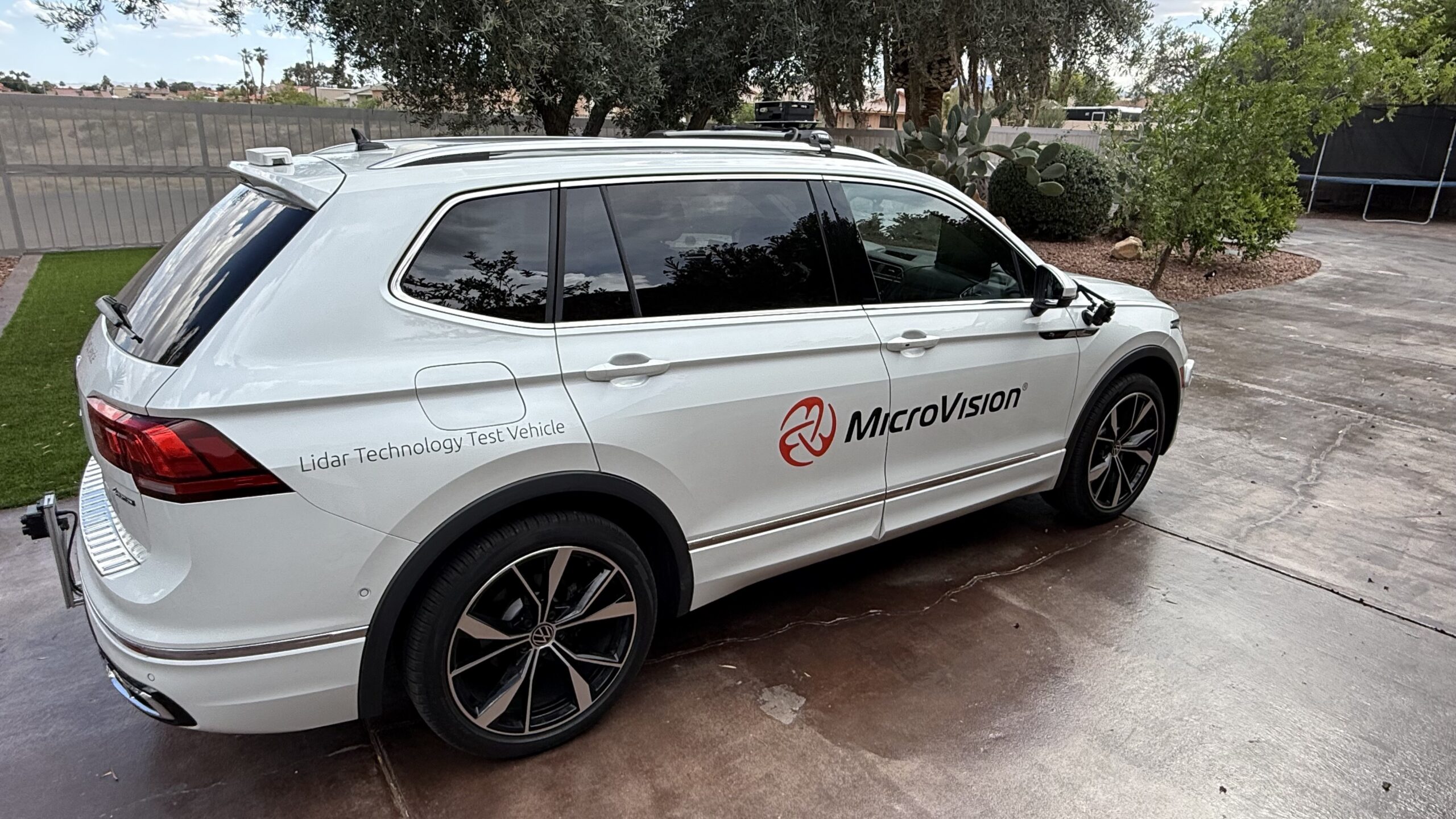
MicroVision has executed a radical strategy shift in the LiDAR sensor market by acquiring bankrupt Luminar for $33 million after the autonomous driving frenzy. The company took over production programs from Luminar, once valued at $9-10 billion, along with its ASIC design team in Colorado Springs and validation facilities in Orlando worth hundreds of millions of dollars. MicroVision's Vice President of Global Engineering Greg Scharenbroch stated the company is focused on cost-driven sensor development with automotive discipline.
The company's strategy rests on balancing revenue cycles by reusing core technology across commercial trucks, passenger vehicles, industrial automation and defense applications. Scharenbroch emphasized automotive development requires 2-3.5 years of investment before seeing first revenue, making portfolio diversification vital. MicroVision's open software framework departs from industry norms by allowing customers to run their own code directly on the sensor processor.
Three strategic moves since January have reshaped the product roadmap. The Luminar acquisition brought production programs with Volvo and other automakers. The Scantinel acquisition added frequency-modulated continuous-wave technology capable of measuring range and velocity simultaneously with detection range reaching one kilometer. Projects proving the technology could fit into small wafers have been completed, with tape-out expected in 2027.
For fleet operators, the value proposition translates directly to cost-per-mile savings. Scharenbroch cited a Bosch study showing automated braking and lane-keeping systems produced accident cost avoidance of approximately 4 cents per mile. Insurance Institute for Highway Safety data shows fleets with regularly used ADAS systems achieved 15 percent lower average accident costs, with some insurers offering up to 20 percent reduced premiums. Bendix Wingman system data showed operational efficiencies of 6-8 cents per mile through smoother speed profiles and reduced tire and brake wear.
The safety imperative remains critical: approximately 650,000 Class 8 truck crashes occur annually in the United States, resulting in roughly 5,000 fatalities. LiDAR excels in scenarios where cameras struggle, particularly detecting small objects at night beyond headlamp range. Scharenbroch noted camera systems can only see 200 feet at night via headlamps, while trucks require over 500 feet to stop. MicroVision is currently in evaluation stage with a commercial vehicle OEM in Europe and in discussions with retrofit suppliers and towing system developers.
Key Takeaways:
1. MicroVision acquired Luminar from bankruptcy for $33 million, gaining Volvo production programs, ASIC design team, and validation facilities worth hundreds of millions.
2. Scantinel acquisition added frequency-modulated continuous-wave technology with one-kilometer detection range, with tape-out targeted for 2027.
3. Bosch study shows automated braking and lane-keeping systems produce accident cost avoidance of approximately 4 cents per mile.
4. Fleets with regularly used ADAS systems achieve 15 percent lower average accident costs, with some insurers offering up to 20 percent premium reductions.
5. Approximately 650,000 Class 8 truck crashes occur annually in the US, and LiDAR excels in detecting small objects at night beyond headlamp range where cameras struggle.
[33]

