

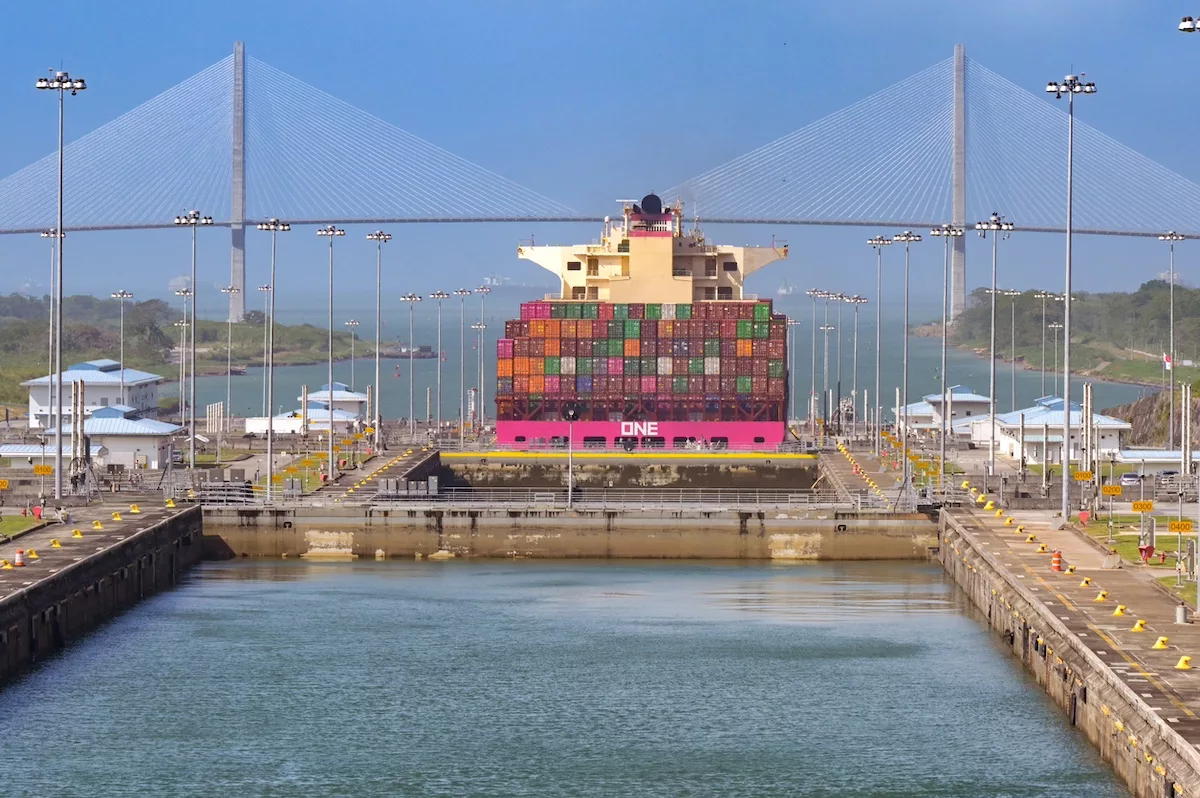
APM Terminals and Terminal Investment have been assigned to temporarily operate two contested ports situated at either end of the Panama Canal following the Panamanian government's cancellation of contracts held by Hong Kong-based CK Hutchison. The decision was announced shortly after the government ordered the Panama Maritime Authority to seize the ports on February 23. From a supply chain perspective, the temporary placement of two major container operators in terminal operations reduces near-term uncertainty in the call rotation schedules of Asia-Americas and transpacific service providers and supports rotation stability in service contract renewals. Simultaneously, Maersk and MSC's terminal presence in the same geography creates a headline subject to scrutiny by competition authorities during a period when alliance structures have undergone significant transformation following the end of the 2M.
As reported by CNBC, Panama has selected Maersk's APM Terminals unit to operate the Balboa port on the canal's Pacific side for the next 18 months. Mediterranean Shipping Co.'s Terminal Investment unit will operate the Cristobal port on the opposite side of the canal during the same period. This arrangement is designed to maintain uninterrupted vessel traffic while Panama conducts a tender process for new permanent contracts. From a supply chain perspective, the 18-month transition window represents the period of highest risk vulnerability in the process of transferring terminal operating systems (TOS), crane operation crews, and yard operations. Maintaining uninterrupted VLCS and Neo-Panamax vessel traffic emerges as a critical performance metric for line operators.
The step was taken following the Supreme Court of Panama's decision to invalidate CK Hutchison's long-term concession agreements. In the months leading to the decision, U.S. President Donald Trump frequently expressed concerns about CK Hutchison's ties to China and argued that Beijing-linked influence at the Panama Canal posed a potential national security risk to U.S. commerce. Panamanian authorities, by temporarily assigning APM Terminals and Terminal Investment, aim to provide carriers and shippers with assurance that operations will remain stable while a longer-term concession process is conducted. From a supply chain perspective, this temporary structure serves as a critical operational insurance function for maintaining exports and reefer flows linked to the Colon Free Zone.
Meanwhile, CK Hutchison has characterized the seizure as "unlawful" and announced plans to initiate legal proceedings against the Supreme Court decision and Panama's takeover of the ports. China has also ordered state-owned firms to cease negotiations on new projects in Panama and is encouraging carriers to reroute cargo to alternative ports. From a supply chain perspective, potential route changes by Chinese line operators and state-owned shippers represent a development that could increase volume performance at regional alternative transshipment hubs such as Buenaventura, Manzanillo, Cartagena, and Caucedo. Ultimately, the Panama Canal port structure is experiencing a multi-layered transformation dynamic in which geopolitical, regulatory, and operational layers are being simultaneously reshaped.
Key Points:
1. APM Terminals operating Balboa for 18 months.
2. Terminal Investment operating Cristobal during the same period.
3. Supreme Court invalidating CK Hutchison's concessions.
4. CK Hutchison planning to pursue legal remedies against the seizure.
5. China ordering its own firms to halt Panama projects.
Your feedback would be greatly appreciated.

