

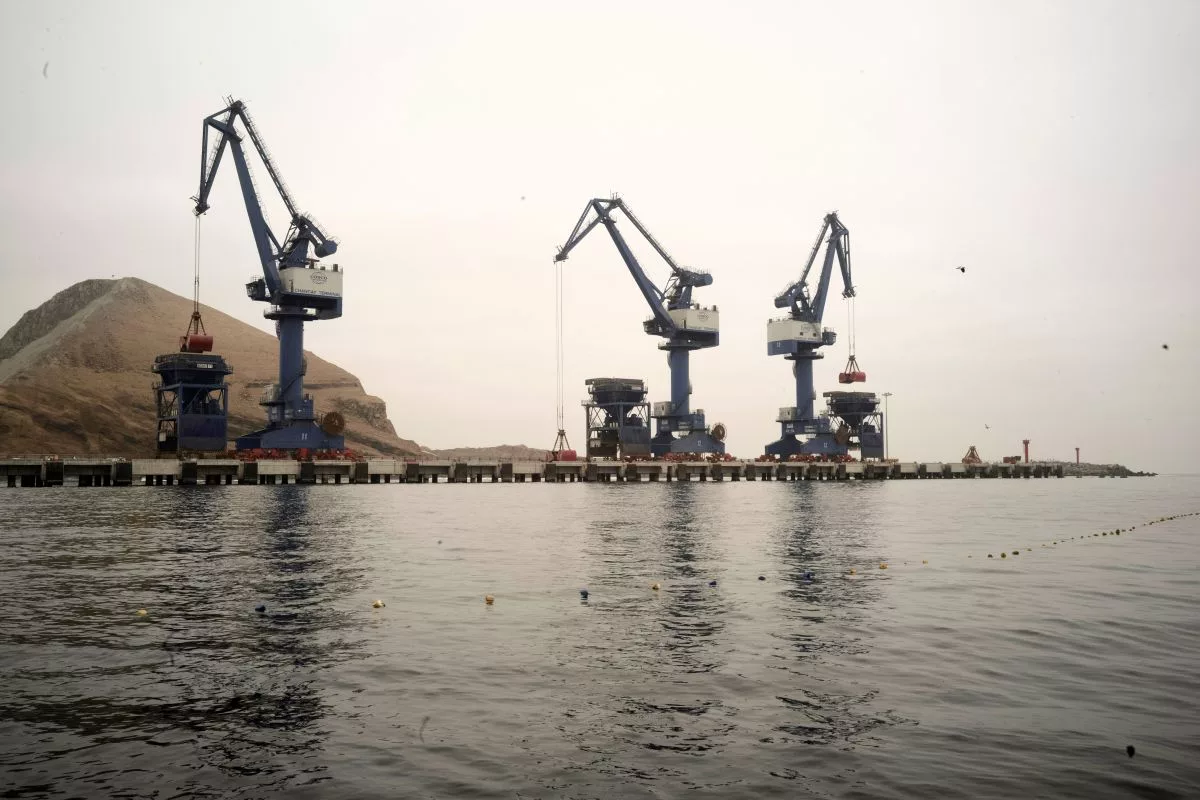
The Trump administration has warned Peru that it is losing sovereignty over a Chinese-owned port near the country's capital after a local judge ruled that the Chancay port is exempt from certain regulatory oversight. The large-scale Chancay port, located on Peru's Pacific coast, was designed as a critical new trade link between Asia and Latin America. But as Donald Trump seeks to reassert U.S. power across the Americas, the port has re-emerged as a flashpoint of tension between Washington and Beijing. From a supply chain perspective, this competition directly affects long-term contract pricing and regulatory risk profiles for transit freight routes between Asia-Pacific and South America.
The U.S. State Department's Bureau of Western Hemisphere Affairs posted on X on February 11: "Concerned about latest reports that Peru could be powerless to oversee Chancay, one of its largest ports, which is under jurisdiction of predatory Chinese owners," and added the warning: "Let this be a cautionary tale for the region and the world: cheap Chinese money costs sovereignty." The warning marks the Trump administration's most direct criticism yet of Peru's close ties with China. China is Peru's largest trade partner, followed by the U.S. The flashpoint is the Chancay port, built at a cost of $1.3 billion and inaugurated in 2024 by Chinese President Xi Jinping. The port accelerates shipments from South America to China and is operated by Chinese-owned Cosco Shipping Ports.
Gonzalo Rios, deputy general manager of the port and a retired admiral, told Bloomberg: "Chancay is not an enclave. It's not a place where the Peruvian state has no sovereignty." Rios noted that a number of state agencies, including customs, regulate port activities and that the dispute highlighted by the U.S. is limited only to the infrastructure regulator. The local court ruling found that the infrastructure regulator Ositran has no regulatory authority over Chancay. Ositran regulates Peru's other major ports, which consist of concessions on public land, while Chancay is structured as a privately owned port. This structural difference forms the technical basis for the court ruling.
From a supply chain perspective, Chancay holds an important position in Cosco's global terminal portfolio and adds value to transshipment flows running through Brazil, Chile, and Argentina on Asia-Pacific routes. The average 25-30-day transit advantage the port offers to exporters of copper, fish meal, and agricultural commodities structurally improves the logistics cost base of South American producers. On the other hand, Peru's regulatory adjustments under U.S. pressure affect Cosco's terminal investment planning and the port selection decisions of Chinese line operators (OOCL, COSCO Shipping Lines). Ultimately, the Chancay dispute marks an important turning point indicating that control of Latin America ports is now central to the global geopolitical competition.
Key Points:
1. The Trump administration warns Peru about loss of sovereignty over Chancay.
2. Chancay was built at a cost of $1.3 billion and was inaugurated in 2024 by Xi Jinping.
3. The port is operated by Cosco Shipping Ports.
4. A local court ruled that Ositran has no regulatory authority over Chancay.
5. China is Peru's largest trade partner.
We would be delighted to hear your feedback.
We wish you happy reading in advance.

