

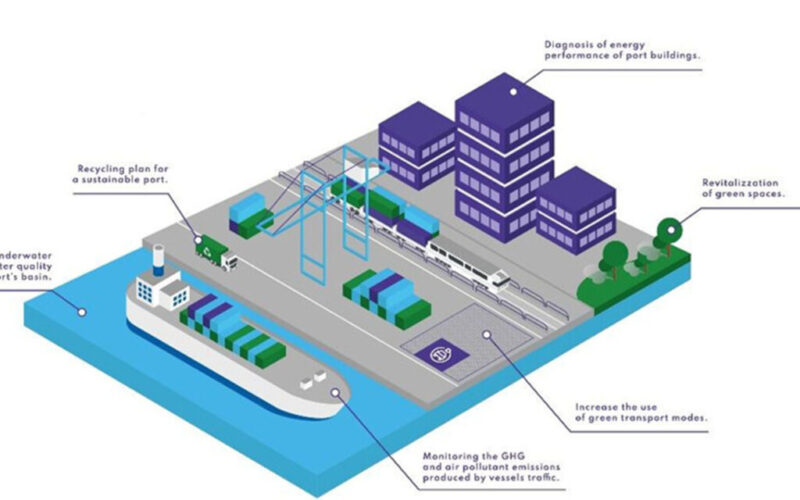
PortXchange has announced the release of its new "Port Emissions Report." The report provides a comprehensive assessment of emissions arising from various modes of transport, including vessels, harbour tugs, cargo handling equipment, trains, and trucks. By monitoring vessel movements, vessel types, and associated CO2, CO, CH4, SO2, NOx, N2O, PM10, and CO2 equivalent greenhouse gas emissions, it enables ports to identify critical areas for improvement.
The report helps ports comply with local and international environmental requirements, protecting them from potential penalties such as administrative sanctions, financial fines, or public criticism. By providing actionable data, it contributes to ports' ability to enhance their sustainability initiatives and achieve decarbonization targets.
PortXchange notes that this tool supports ports in meeting the growing demands to reduce environmental impact from a broad range of stakeholders, including governments, NGOs, shipping lines, and the general public.
Abhishek Nair, Business Development Director at PortXchange, stated: "PortXchange is committed to advancing environmental sustainability through innovative solutions to support ports in their pursuit of greater ecological responsibility." CEO Sjoerd de Jager added: "We are determined to help ports accelerate their journey to net zero. Historically, ports have operated in silos, and fragmented data collection has hindered progress. This launch represents a significant step toward establishing a unified global standard for port emissions reporting across all ports, regardless of size or operational complexity. We need a unified standard similar to those already established in other industries."
Key Takeaways:
PortXchange has released a new report called the "Port Emissions Report."
The report provides a comprehensive examination of emissions from various modes of transport.
It ensures ports comply with local and international environmental requirements.
It monitors CO2, CO, CH4, SO2, NOx, N2O, PM10, and CO2 equivalent greenhouse gas emissions.
It helps ports enhance their sustainability initiatives and achieve decarbonization targets.
CEO Sjoerd de Jager highlighted the need for a unified global standard for port emissions reporting.
Your feedback would make us happy.
We wish you pleasant reading in advance.

