

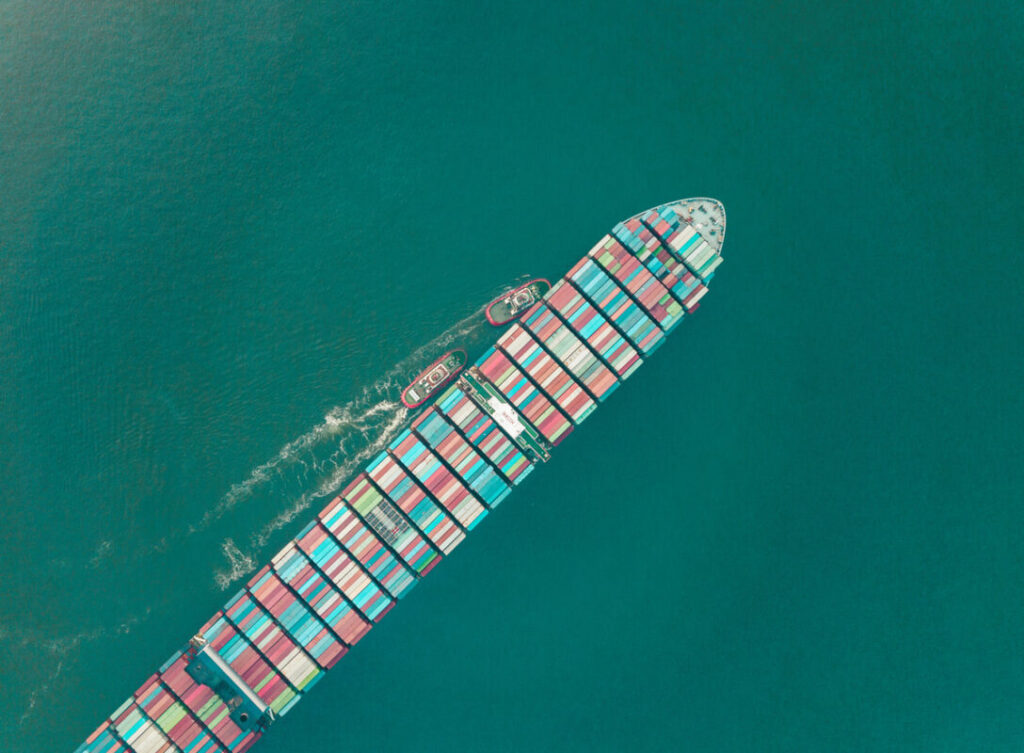
A new international green shipping corridor has been established between China's Ningbo-Zhoushan Port and France's HAROPA Port Complex (Le Havre–Rouen–Paris). The corridor was developed under the International Green Shipping Corridor Cooperation Initiative and was announced during the 2025 North Bund Forum.
The objective is to accelerate decarbonisation in maritime transport, create a sustainable cooperation model for clean-energy vessels and low-carbon port operations.
China–France cooperation in green shipping
This initiative is based on a Memorandum of Understanding (MoU) signed under the Maritime Silk Road Forum and brings together key stakeholders including Bureau Veritas Marine & Offshore, Zhejiang Provincial Seaport Investment & Operation Group, HAROPA Ports, MSC Group, MSC Terminal Investment Limited, CMA CGM and China Waterborne Transport Research Institute.
This multi-stakeholder collaboration will establish coordination among port authorities, shipping lines, classification societies and research institutions, setting an exemplary framework for zero-carbon fuel infrastructure, fuel certification and emission reduction standards.
A seven-pillar green framework
The forum unveiled a seven-pillar framework for the Green Shipping Corridor Initiative. This framework supports the development of an international green corridor network and focuses on the following areas:
Next-generation clean-energy vessels,
Near-zero carbon port operations,
Sustainable fuel production and supply chains,
Green fuel certification and verification systems,
International standard alignment and information sharing.
This framework aims to contribute to the IMO 2050 net-zero vision in alignment with Paris Climate Agreement objectives.
Technical leadership: Bureau Veritas (BV)
Bureau Veritas (BV) has assumed the role of technical lead partner, tasked with developing certification, verification and emission reduction technologies for the project.
Working with other stakeholders, BV will:
Develop the corridor's certification system,
Establish fuel quality and safety protocols,
Develop new ship energy efficiency solutions.
Matthieu de Tugny, Senior Vice President of Bureau Veritas's Industrial and Raw Materials unit, commented on the collaboration:
"This corridor will exemplify international cooperation in green maritime transport. While strengthening China–Europe maritime ties, it will directly contribute to global climate objectives. Bureau Veritas is committed to turning this vision into reality through innovation and certification support across the entire value chain."
Contributing to the global decarbonisation agenda
The new green corridor is viewed as a concrete step toward transitioning maritime transport to sustainable energy in line with the IMO's net-zero carbon emission target by 2050.
Participating companies—particularly MSC and CMA CGM—are already investing in alternative fuels such as biomethane, methanol and LNG. The corridor will serve as a testing platform for integrating such technologies into real operations and standardizing fuel supply infrastructure.
Zhejiang Seaport Group and HAROPA Ports will carry out joint projects to develop electrification, shore power and carbon tracking systems at ports. This will accelerate the green transition pace at both Asian and European ports.
One of the first links in an international network
According to experts, the Ningbo–HAROPA connection will be among the first links in a future global green shipping corridor network. This network will promote low-carbon transport on Asia–Europe trade routes, setting an example for emission management, fuel certification and sustainable supply chains.
The project also aligns with China's objective of increasing green technology exports in the maritime sector.
Conclusion: The green corridor as a symbol of strategic cooperation
This initiative transcends a simple environmental project between two countries, instead serving as a diplomatic and economic model for green transformation in maritime transport.
With Bureau Veritas's technical leadership and support from global operators such as CMA CGM and MSC, the implementation of international standards to accelerate emission reduction in shipping is expected.
Key Points:
A green shipping corridor has been established between Ningbo-Zhoushan (China) and HAROPA (France).
The initiative was developed under the International Green Shipping Corridor Cooperation Initiative.
Partners: Bureau Veritas, MSC, CMA CGM, HAROPA Ports, Zhejiang Seaport Group and China Waterborne Transport Research Institute.
Objectives: Clean-energy vessels, low-carbon ports, sustainable fuel chains and certification systems.
Bureau Veritas will provide technical support for certification and emission reduction.
The initiative is aligned with IMO 2050 net-zero targets and the Paris Agreement.
The project represents a new milestone in China–Europe green maritime cooperation.
Author: SedatOnat.com
We would be happy to receive your feedback.
Wishing you happy reading.

