

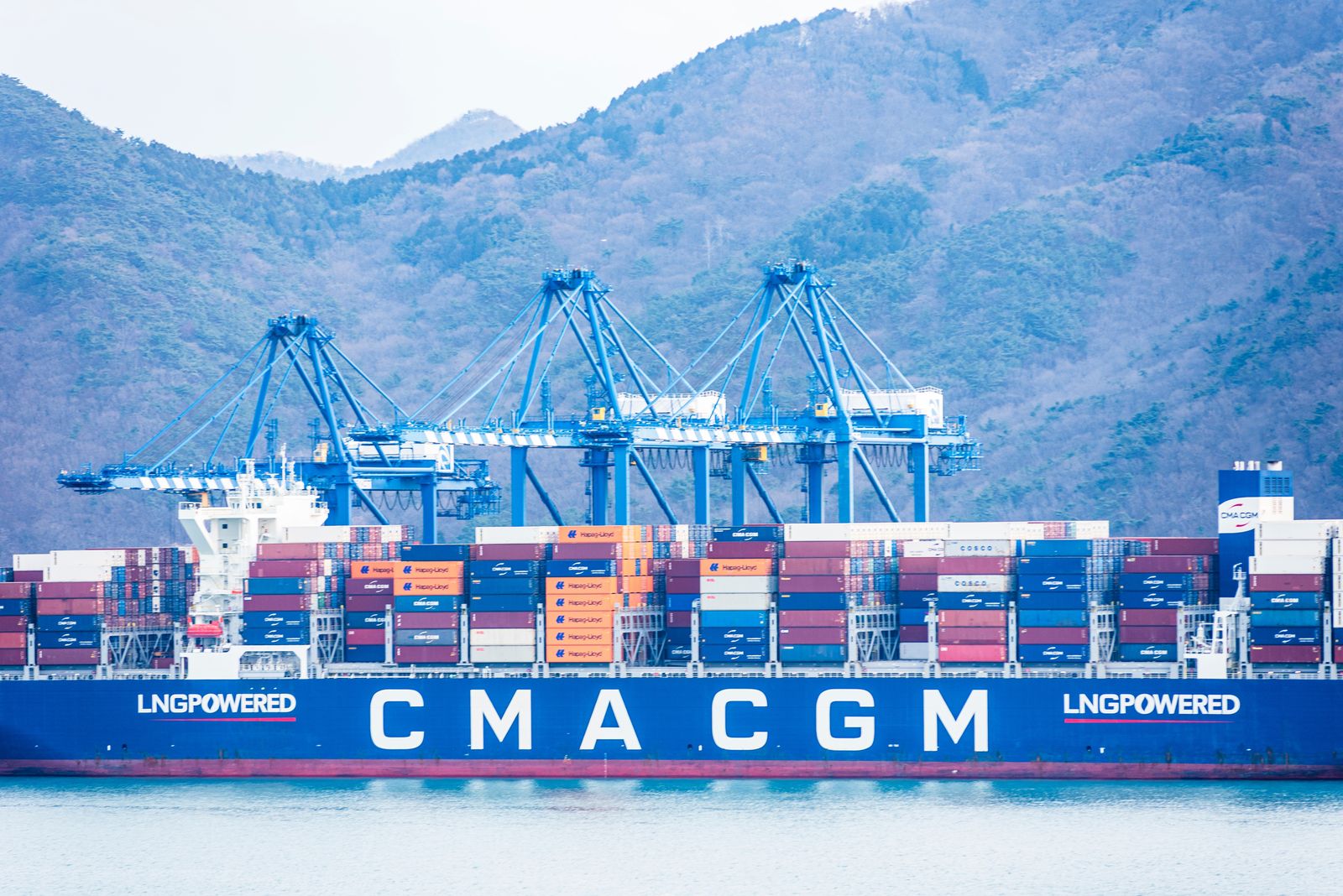
A new era is beginning in the decarbonization process of global maritime shipping: LNG (liquefied natural gas) has become the most preferred alternative fuel in the container shipping sector.
According to analysis by Peter Tirschwell, the stalling of the decarbonization agenda at the International Maritime Organization (IMO)'s policy meeting in October 2025 has directed many carriers toward LNG rather than more complex alternatives such as methanol, ammonia, or hydrogen.
Record growth in LNG vessel orders
According to data from S&P Global Market Intelligence, LNG-powered container ship orders have risen from 194 units at the end of 2023 to 362 by mid-2025 — representing an 86 percent increase.
This trend shows that carriers are beginning to adopt LNG as a "transition fuel" to meet their carbon-neutral targets. In the short term, LNG is seen as compatible with existing port infrastructure, while in the medium term it facilitates a transition to carbon-neutral variants such as biomethane and synthetic LNG.
Methanol falling behind
Despite high expectations for methanol-powered vessels in recent years, infrastructure gaps, fuel costs, and global supply chain shortcomings have slowed its widespread adoption.
According to Tirschwell:
"For carriers, methanol is still the technology of tomorrow; LNG is today's solution. Decision-makers are adopting a phased approach to reach zero-carbon targets."
Major line operators such as CMA CGM, Hapag-Lloyd, MSC, ONE, and Evergreen are expanding their LNG fleet investments. For example, CMA CGM's LNG fleet has reached 45 vessels and the company has more than 60 new LNG ship orders on the books.
"Pragmatic" approach to decarbonization
Although the IMO's target of net-zero carbon emissions by 2050 remains unchanged, interim targets such as 20–30 percent emissions reductions by 2030 have not been clearly defined. This uncertainty has prompted shipowners to seek solutions that reduce investment risk and are immediately implementable.
Advantages of LNG:
Can be integrated into existing port infrastructure.
Not as toxic as methanol or ammonia.
Fuel bunkering operations are well established in many regions (for example, Singapore, Rotterdam, Marseille).
Delivers 20–25 percent CO₂ emissions reductions.
Limitations:
Methane slip remains a significant environmental challenge.
Not a fully carbon-neutral solution in the long term.
However, the industry aims to reduce methane slip issues through new-generation engine technologies (for example, MAN Energy Solutions ME-GA series).
Industry consensus: LNG as transition fuel
Many industry experts define LNG not as a final solution but as a transitional fuel. CMA CGM CEO Rodolphe Saadé stated last month that the company is investing in biomethane and e-LNG technologies, saying:
"LNG is today's most concrete step in emissions reduction. But our long-term goal is to combine LNG infrastructure with carbon-neutral fuels."
Similarly, Hapag-Lloyd has signed an agreement with Hamburg Port and Shell Energy to establish green LNG production and bunkering facilities.
IMO agenda stalling accelerates LNG adoption
The IMO's failure to make progress on carbon capture (CCS) and ammonia safety standards at its October 2025 meeting has accelerated carriers' preference for LNG. This situation has prioritized "implementability" in the short-term decarbonization process.
According to experts, the readiness of LNG's global supply infrastructure has made it the "lowest-risk investment option" for now.
Conclusion: LNG as today's pragmatic solution
The path to carbon neutrality for the container shipping sector is still long, but LNG is accepted as the first stop on that journey.
In Tirschwell's words:
"Political stalling at the IMO has altered the industry's direction. Carriers are now rapidly implementing implementable solutions rather than 'waiting.' LNG is today's answer and the foundation of tomorrow's infrastructure."
Key Points:
LNG-powered vessel orders have risen from 194 in 2023 to 362 in 2025.
LNG has surpassed alternatives such as methanol and ammonia to assume the position of "transition fuel."
Delivers 20–25 percent CO₂ emissions reductions; infrastructure already in place.
Major operators such as CMA CGM, MSC, and Hapag-Lloyd are increasing LNG investments.
Uncertainties at the IMO have driven the industry to shift toward implementable solutions in the short term.
Experts say: "LNG is the bridge to a carbon-neutral future — not the final goal, but the starting point."
Author: SedatOnat.com
We would appreciate your feedback.
Happy reading to all of you.

