

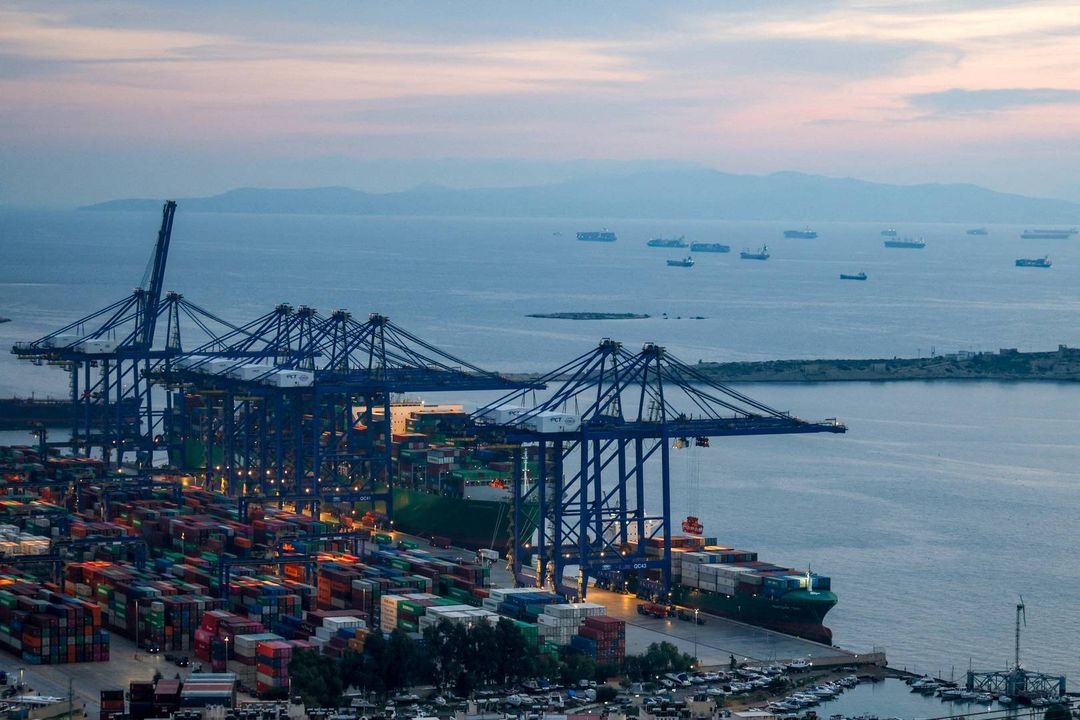
China formally clarified this week that Piraeus Port in Greece is not for sale, responding to remarks made by the U.S. Ambassador to Athens in the previous week. The statement aims to dispel speculation surrounding Piraeus Port, one of China's most strategic investments in Europe.
Piraeus Port is operated by China's state-controlled COSCO Shipping and has long been regarded as a key gateway for the "Belt and Road Initiative" to Europe. In recent years, as geopolitical competition between the United States and China has extended to European ports, diplomatic messages from Washington have intensified pressure on Athens.
U.S. Ambassador's remarks triggered China's response
Last week, the U.S. Ambassador to Greece made comments regarding the fate of Piraeus Port, stating that Athens should diversify its strategic infrastructure and used language that implied uncertainty about Piraeus' future. China characterized these remarks as "misleading and unwarranted interference."
In its statement, the Chinese side emphasized:
Piraeus Port is not for sale,
there has been no change to COSCO's long-term plans for the port,
China-Greece economic cooperation will not be shaped by comments from other countries.
COSCO's greatest success in Europe
Piraeus Port is known as COSCO's most successful and fastest-growing investment in Europe. Since the company took over a significant portion of the port's operating rights in 2016:
container handling capacity has tripled,
Piraeus has become one of the Mediterranean's largest container ports,
it has established itself at the center of the Africa-Asia-Europe trade corridor.
Today, Piraeus serves as a gateway to Europe, particularly for ships arriving from the Far East. From here, fast intermodal connections are provided to the Balkans, Central Europe, and Eastern Europe.
Geopolitical dimensions: U.S.-China competition has shifted to ports
The diplomatic tension surrounding Piraeus Port is an indication that strategic competition between the United States and China is being conducted through logistics infrastructure.
The U.S. has explicitly stated it views the transfer of strategic ports to Chinese control as risky for European countries.
China, on the other hand, views port investments as a natural part of commercial and economic development.
Piraeus Port therefore carries not only commercial but also geopolitical significance.
Greece attempts to maintain balance
For many years, the Athens government has been developing economically focused cooperation with China while maintaining political alignment with its allies in NATO and the EU. For this reason, the Piraeus Port issue remains a sensitive area for Greek politics.
Greek officials have previously stated that COSCO's improvements at the port have contributed to the Greek economy and that the conditions of the port's privatization remain in effect.
Current situation
China's statement confirms that there will be no change to Piraeus Port's ownership structure in the near term. It also demonstrates China's determination to maintain its presence in the Mediterranean. Despite U.S. statements, COSCO's role at Piraeus currently appears secured.
Key Points:
China has announced that Piraeus Port is not for sale.
The statement serves as a response to remarks made by the U.S. Ambassador to Greece.
The port is one of China's most strategic investments in Europe.
COSCO's presence at the port will continue unchanged.
Piraeus is one of the most important logistics hubs on the Africa-Asia-Europe corridor.
Author: SedatOnat.com
We would be delighted to receive your feedback.
We wish you good reading in advance.

