

Union Pacific-Norfolk Southern Merger Faces Competitor Criticism: BNSF, CPKC and CSX Deem Application Insufficient
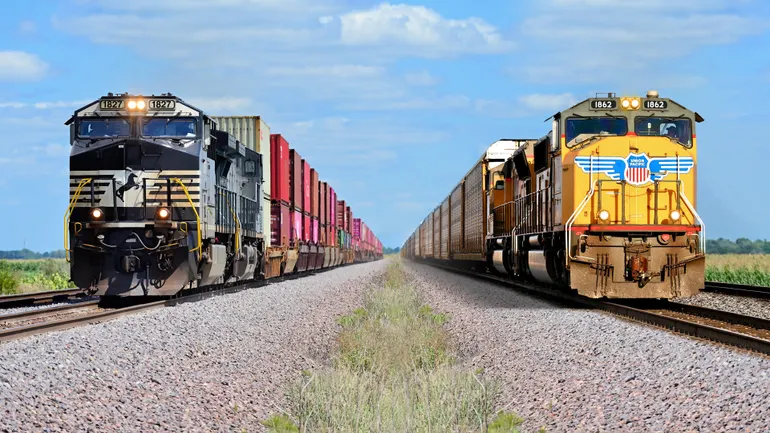
Union Pacific and Norfolk Southern faced sharp criticism from competing rail carriers after refiling their merger application with the Surface Transportation Board (STB). The two rail giants refiled on April 30, adding data to support claims of cost savings and supply chain strengthening, after their initial application filed on December 19, 2025, was deemed incomplete. Major competitors including BNSF Railway, CPKC, and CSX participated in the comment period that ended on May 8, stating that the amended application remains insufficient.
BNSF Railway argued that Union Pacific and Norfolk Southern have exaggerated their estimates for truck-to-rail diversions. According to a docket filed on behalf of BNSF by Kirkland & Ellis LLP lawyers, nearly all public benefits claimed by the two companies rely on truck-to-rail conversion assumptions. BNSF emphasized that Union Pacific does not promise to pass efficiency gains or cost reductions to customers in the form of lower rates. While recent trends show some shippers shifting to rail or intermodal services due to higher trucking rates and fuel costs, BNSF contends that competitors have overstated this trend.
Canadian railway CPKC stated that the amended application does not serve shipper interests and "puts supply chains and economy at needless risk," according to President and CEO Keith Creel's May 11 press release. Creel noted that Union Pacific and Norfolk Southern do not appear to have met the requirement of submitting a detailed market impact analysis of projected future shares of rail traffic for key commodities and corridors. In a docket filing submitted to STB, CPKC stated that for the application to be considered complete, UP and NS must include a market analysis containing revenues and traffic volumes for major interregional or corridor flows by commodity group. This market analysis is part of STB's regulation for "major and significant transactions," per the agency's code of regulations.
Florida-based CSX argued that Union Pacific and Norfolk Southern have not provided sufficient evidence to make their case under STB rules established in 2001. Per CSX's docket filed with STB, the two parties do not offer any proposal to enhance rail-to-rail competition. Instead, Union Pacific and Norfolk Southern claim that the creation of the proposed transcontinental railroad will enhance competition "on its own." In their amended application, the two companies stated that the merger's efficiencies of being a single-line rail service alone would make it more competitive to trucking. CSX stated that Union Pacific and Norfolk Southern have not yet complied with the Board's order to submit ordinary-course competition and efficiencies analyses of their proposed merger, which STB directed them to submit before refiling.
While Union Pacific and Norfolk Southern maintain that their refiled application is comprehensive and complete and provides all necessary information, competing rail carriers assert that the application fails to comply fully with STB regulations and that public benefit evidence remains weak. This merger application represents one of the largest consolidation attempts in the Türkiye rail sector in recent years.
Key Takeaways:
1. Union Pacific and Norfolk Southern's April 30 refiled merger application was deemed incomplete by BNSF, CPKC, and CSX.
2. BNSF Railway stated that truck-to-rail diversion estimates in the application are exaggerated and lack customer rate reduction commitments.
3. CPKC argued that Union Pacific and Norfolk Southern failed to provide the detailed market impact analysis required by STB.
4. CSX claimed that the two companies did not provide sufficient evidence of enhanced rail-to-rail competition and failed to comply with 2001 rules.
5. While Union Pacific and Norfolk Southern defend their application as comprehensive and complete, competitors assert non-compliance with STB regulations.
[820011]

