

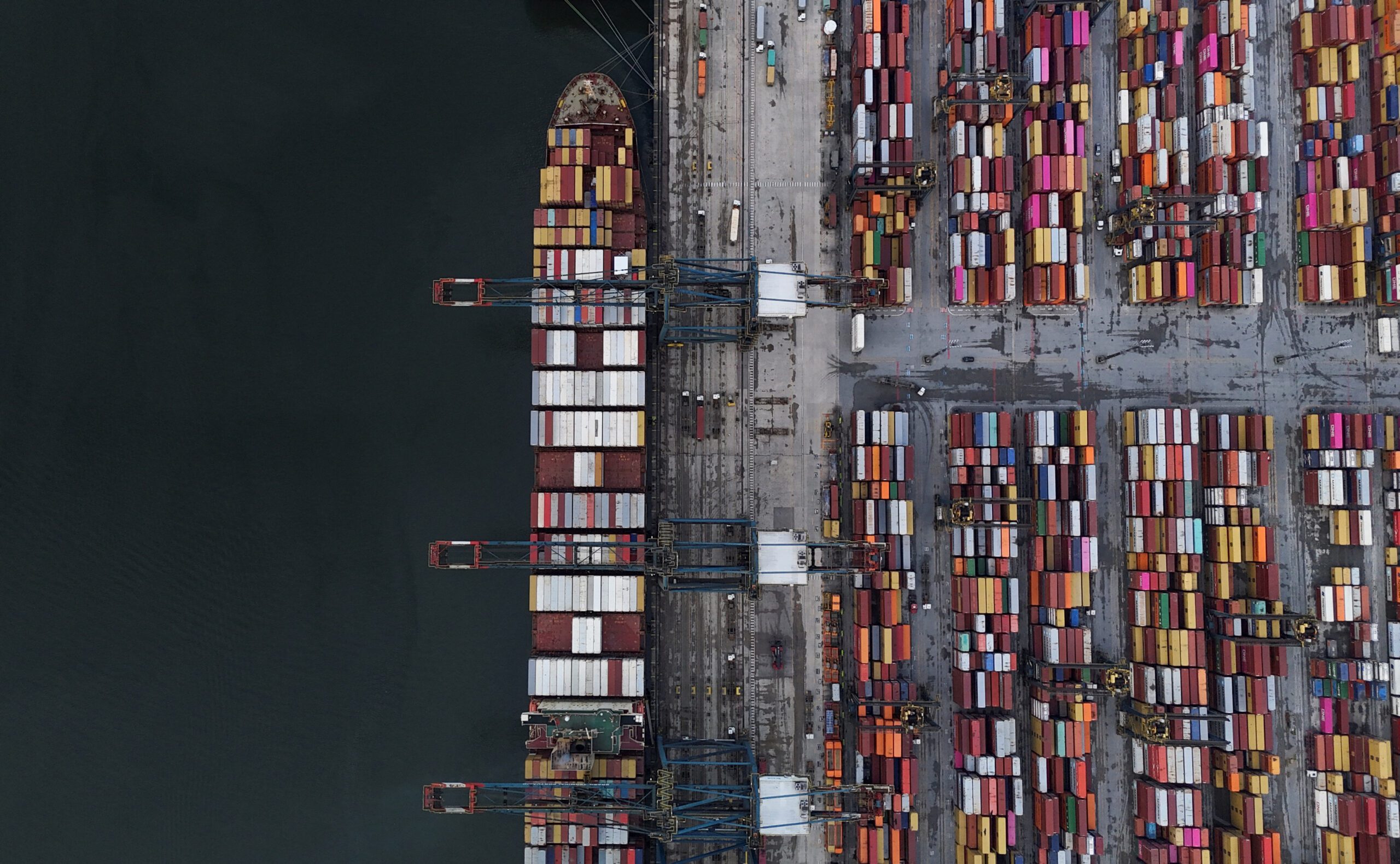
The impact of the energy crisis on the global economy in recent months is appearing in supply-chain stress gauges that flashed red during the pandemic, giving central banks reason to guard against a resurgence of high inflation. According to Bloomberg data, logistics activity indicators have reached their highest levels since the 2020-23 period, while disruptions from the Iran war bear similarities to what happened during Covid-19. The logistics sector, which captures the movement of goods across global trade, accounts for an estimated 10% of world GDP and is experiencing strain from supply-chain disruptions similar to the pandemic era.
The Federal Reserve Bank of New York's Global Supply Chain Pressure Index has risen for three straight months after three quiet years, with April seeing an especially pronounced increase to the highest level in almost four years. The World Bank's Global Supply Chain Stress Index is flirting with its pandemic peak. This measure, which focuses on container shipping fluidity and ports, reflects the direct consequence of many cargo carriers avoiding the Red Sea since late 2023 for safety and insurance reasons. Longer routes around southern Africa add time and fuel costs while stretching capacity.
Vincent Clerc, CEO of the world's No. 2 container carrier A.P. Moller-Maersk, explained that the company expects an extra $500 million in monthly costs through the second quarter. The Copenhagen-based line plans to charge customers more to fully recoup added energy expenses and can slow ship speeds to conserve fuel. "What is impacting freight rates is the energy shock and our belief is that those energy costs are so high that nobody can just shoulder them," Clerc said. In the US, delivery times in ISM reports have lengthened by the most since 2022, and input prices have risen at the fastest pace in four years.
Shanella Rajanayagam, trade economist at HSBC Holdings, warned that "the closer we get towards actual quantity constraints on key commodities, the more upwards pressure we're likely to see on prices." Japan's manufacturing PMI has reached its highest since January 2022, but the jump was partly linked to stockpiling on war concerns. Input delivery times increased by the most since the April 2011 Tohoku earthquake.
The Logistics Managers' Index, prepared by Associate Professor Zac Rogers of Colorado State University, shows mounting pressure across transportation, inventory and warehousing costs. Warehousing capacity is shrinking at the quickest pace since March 2024, and predictions for inventory cost growth are nearing "extreme rates of expansion" over the next 12 months. Transport costs have hit the highest reading since spring 2018, just shy of the all-time record. Experts note that while higher costs and slower deliveries have not yet led to widespread parts shortages, certain commodities including aluminum, bearings and electrical components are identified to be in short supply and require monitoring.
Key Takeaways:
1. Global supply chain stress indexes are approaching pandemic-era highs as the energy crisis increases price pressures across logistics networks.
2. Maersk announced an extra $500 million in monthly costs expected through Q2 and plans to pass these energy expenses to customers.
3. Cargo carriers avoiding the Red Sea are taking longer routes around southern Africa, creating capacity constraints and adding fuel costs.
4. US delivery times have lengthened by the most since 2022 while input prices have risen at the fastest pace in four years.
5. Warehousing capacity is shrinking at the quickest pace since March 2024 and transport costs have hit the highest level since spring 2018.

