

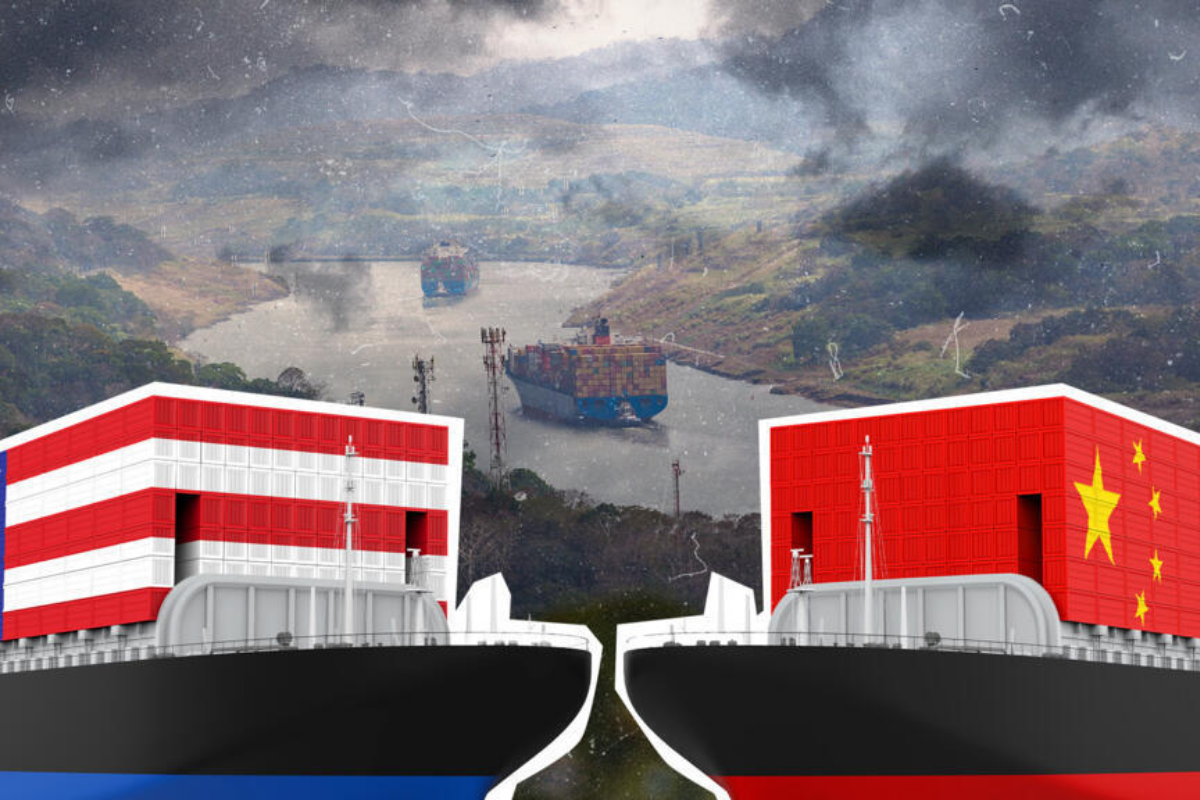
Panama President José Raúl Mulino said his country was being squeezed by the escalating geopolitical tension between the United States and China. The dispute centers on control of the strategic ports at the entrance to the Panama Canal. Mulino said the crisis triggered by the cancellation of port concessions held by Hong Kong-based CK Hutchison was not a direct political issue between Panama and China; a "high-level" message from the Chinese government indicated the disagreement would be handled through international arbitration courts.
In numbers, the Panama Canal carries roughly 5% of world maritime trade, which has turned the ports at its entrance into one of the hot spots of strategic rivalry between Washington and Beijing. CK Hutchison's concessions — held for nearly 30 years — were terminated by a Panama Supreme Court ruling in January, a decision linked to US pressure to curb Chinese influence. The Panama government transferred provisional operations to APM Terminals and Terminal Investment Limited. The prior operator labelled the move "unjust expropriation" and is preparing for international arbitration.
Mulino defended the ruling: "We didn't seize the ports, we took them over because they had no contracts" — and emphasized he did not want to escalate tensions with China. Separately, Panama-flagged vessels face heightened inspections and detentions in China; that pattern triggered a joint statement by the US and allies supporting Panama's sovereignty. China called the statement "misleading" and accused Washington of politicizing the matter. Mulino said: "The waves of the dispute between two great powers are dragging us along," calling the situation unfair to Panama. The government's next steps remain undecided.
From a supply chain perspective, the crisis acts on container shipping in three dimensions: first, terminal operating continuity — service-level agreements and dwell times may be renegotiated during the transition to APM Terminals; second, the multi-year arbitration process creates uncertainty around port-asset valuation and future foreign investment appetite; third, the inspections of Panama-flagged vessels in China may push flag-changing costs and flag-state selection criteria onto operator agendas. Panama has long been a conventional choice for Turkish shipowners; this inspection pressure could accelerate flag-portfolio diversification strategies. With Panama Canal accounting for 5% of world trade, this geopolitical struggle has become a core parameter in MSC, Maersk, COSCO and other major operators' operational risk assessments.
Key Takeaways:
1. Panama's Supreme Court ended CK Hutchison's 30-year port concessions in January; the prior operator is heading to international arbitration over alleged 'unjust expropriation.'
2. Panama transferred provisional port operations to APM Terminals and Terminal Investment Limited; Mulino defended the move with 'we didn't seize them — we took over because they had no contracts.'
3. A 'high-level' message from Beijing confirmed China will pursue the dispute through international arbitration courts.
4. Heightened inspections and detentions of Panama-flagged vessels in China prompted a US-allied joint statement; China called it 'misleading.'
5. The Panama Canal carries about 5% of world maritime trade; SLA renegotiation, multi-year arbitration uncertainty and flag-portfolio diversification are now on operator agendas.

