

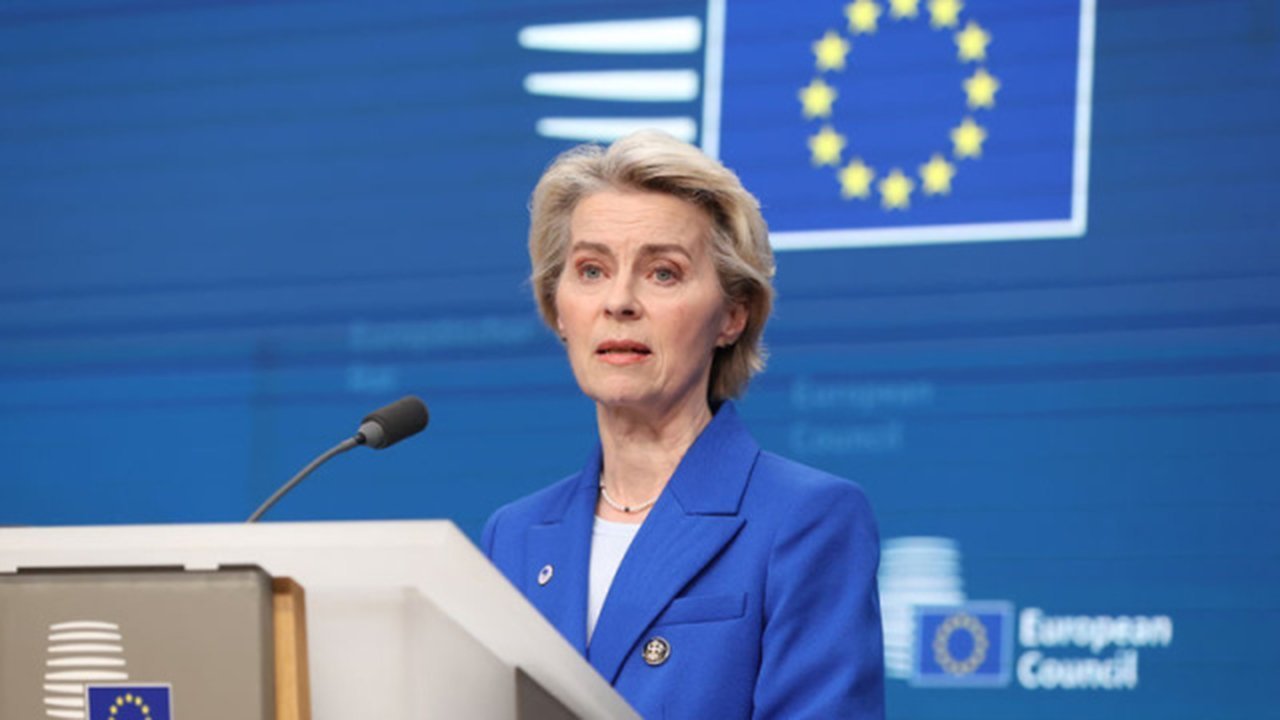
European Commission President Ursula von der Leyen, speaking at a press conference during the CDU/CSU party workshop in Berlin, sharply criticised Europe's reliance on imported fossil fuels. "Our heavy medium-term dependency on imported fossil fuels makes us vulnerable; since the start of the Middle East crisis we've paid €27 billion extra for gas and oil imports without obtaining a single additional molecule of energy," she said.
Stressing the need to cut dependency, Von der Leyen said every kilowatt-hour produced in Europe contributes to economic stability, affordability and European independence. She framed Europe as facing its second major energy crisis in four years: "Putin cut off gas flows in 2022; now it's the Strait of Hormuz."
Short-term measures she cited included delivering targeted support to the most vulnerable households and EU-wide coordination. Von der Leyen recalled that the EU has the world's broadest free-trade network and that every agreement strengthens Europe's strategic autonomy. She called for increased defence investment, noting that the mutual-assistance obligation in Article 42(7) of the EU Treaty already applies — what matters is implementation capacity. Capability gaps in air defence, drones (UAVs) and cyber security must be closed.
On Iran, Von der Leyen said it is too early to lift sanctions, citing significant reasons behind them. She pointed to the Iranian regime's treatment of its own citizens as a core driver of international sanctions and argued that lifting them would require fundamental change inside Iran — currently premature.
Key Takeaways:
1. Von der Leyen says Europe is vulnerable due to fossil fuel dependency.
2. Since the Mideast crisis began, the EU has paid €27 billion extra for energy imports.
3. Europe is facing its second major energy crisis in four years (Putin gas in 2022 → Hormuz in 2026).
4. Calls for increased EU investment in air defence, UAV and cyber security capability.
5. Lifting Iran sanctions is premature; meaningful change in Tehran is required first.

