

UAE Unveils 'Union Strait' Concept to Bypass the Strait of Hormuz: Architecture Firm Znera Behind the Vision
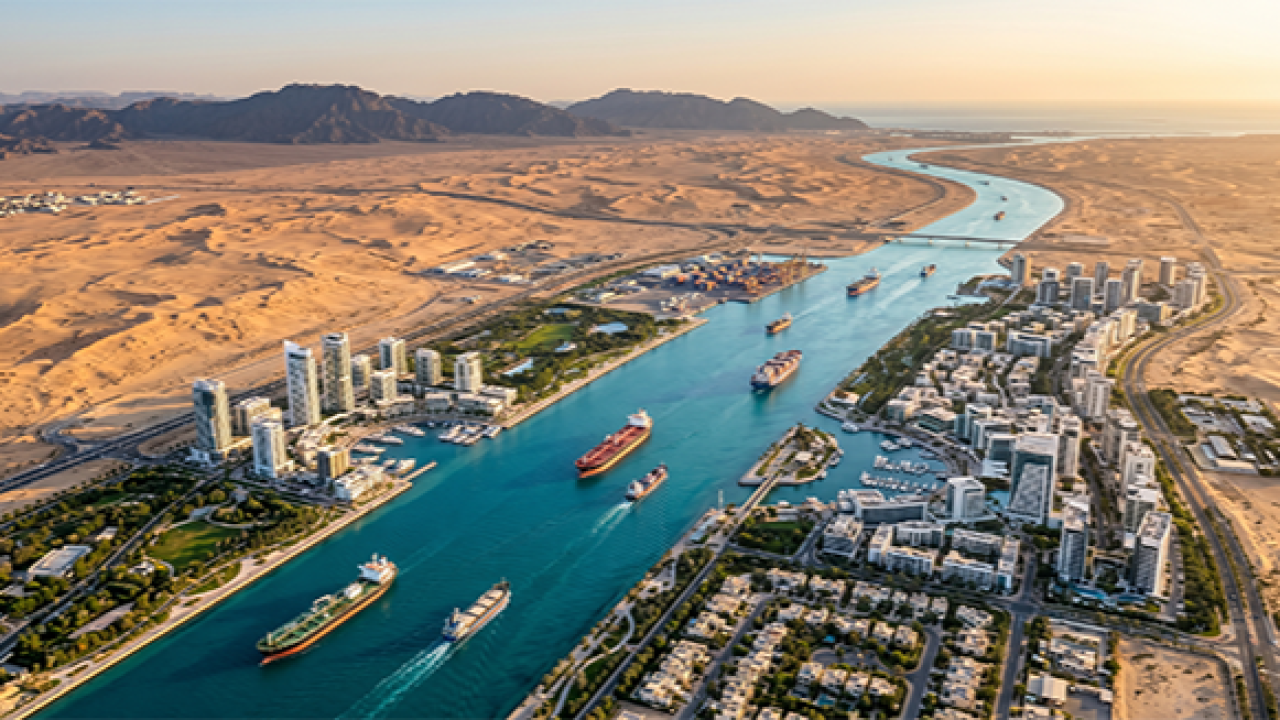
Dubai-based architecture firm Znera caught the attention of global energy markets with a canal concept to bypass the Strait of Hormuz. The 'Union Strait' concept was proposed to neutralize the geopolitical risks that have escalated in the region. The proposal is not yet a concrete construction plan; it is positioned as a bold vision for the United Arab Emirates (UAE)'s strategic future.
The Strait of Hormuz functions as a single chokepoint for world energy supply. The waterway connecting the Persian Gulf to the Gulf of Oman witnesses roughly one fifth of global oil trade. In the first six months of 2025, an average of 20.9 million barrels per day of crude flowed through the narrow corridor. Military activity in the Middle East, nuclear tensions with Iran and recurring strait closure threats expose the route's overreliance.
Znera co-founder Nils Remess has previously emphasized that the firm does not see architecture as merely designing buildings. The Union Strait proposal reflects that view. Designers describe the canal as the UAE's 'national backbone.' The idea is not limited to a new route for oil tankers; it envisions smart cities, logistics hubs and trade zones built from scratch along the waterway, transforming the country's east-west axis.
As with any grand vision, the Union Strait raises serious questions. Given the geographic line the canal would cross, excavation costs are expected to reach hundreds of billions of dollars. While the UAE is comfortable with major infrastructure projects, the financing model for a build of this scale is still unclear. The project reads less as a Suez Canal-style engineering achievement and more as a nation-building strategy.
Key Takeaways:
1. Dubai-based Znera proposed the 'Union Strait' canal concept to bypass the Strait of Hormuz.
2. The Strait of Hormuz carries roughly one fifth of global oil trade; 20.9 million barrels per day in early 2025.
3. Znera co-founder Nils Remess describes the canal as the UAE's 'national backbone.'
4. The plan envisions smart cities, logistics hubs and trade zones along the canal route.
5. Costs are estimated in the hundreds of billions of dollars; the financing model is still unclear.

