

The Iran war that erupted on February 28, 2026, and the closure of the Strait of Hormuz are putting the U.S. dollar-dominated global oil trading system to a harsh test. With roughly a fifth of global oil supplies from the Gulf disrupted, Asian economies — which depend on the Middle East for about 60% of their imports — have been dealt a tough blow. As the blockade enters its 13th week, there are growing signs that major Asian importers are adapting by striking direct arrangements with Gulf producers, often with Tehran's consent.
In recent days, several oil tankers have crossed Hormuz with their tracking systems switched off to avoid detection, following direct contacts between leaders in purchasing countries and Iran. Last week, a Panama-flagged tanker carrying 2 million barrels of Kuwaiti and Emirati crude passed through the Strait en route to Japan following discussions between Prime Minister Sanae Takaichi and Iranian President Masoud Pezeshkian. Iran has also struck arrangements with China, Iraq and Pakistan to move oil and LNG out of the Gulf.
The precise structure of these bilateral and trilateral deals remains largely opaque. But it is highly likely that many are being settled outside the traditional oil trading system, either through currencies other than the U.S. dollar or through informal barter arrangements. Regardless of whether these trades include explicit transit fees to Tehran — something Tokyo has denied — the pattern reinforces Iran's de facto control over traffic through the critical waterway. Iran seeks to enshrine this influence in any future settlement with Washington, a demand President Donald Trump has firmly rejected.
However the standoff is ultimately resolved, the current disruption is likely to leave a lasting imprint on oil trade patterns. Crossing Hormuz is now likely to carry a persistent geopolitical risk premium, embedding higher costs into Middle East crude and forcing importers to rethink supply security. Indian Prime Minister Narendra Modi visited the United Arab Emirates on Friday to discuss long-term supply agreements and expand strategic storage. The timing of the trip — in the middle of a regional war — underscores the urgency of New Delhi's situation and may signal a broader turn toward bilateral energy diplomacy across Asia.
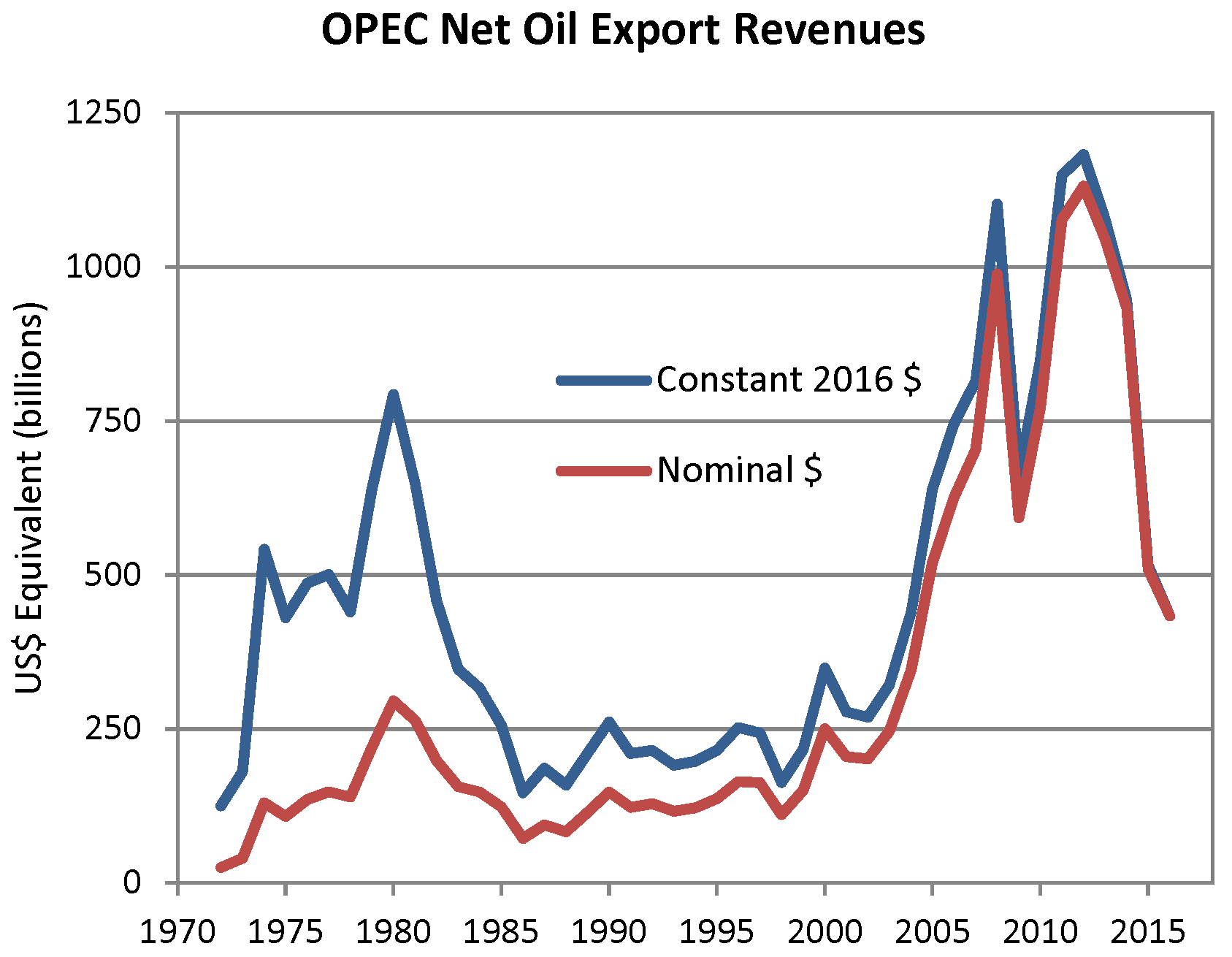
These evolving trade patterns add to the slow erosion of the dollar's dominance in global oil trade. Modi's talks in Abu Dhabi followed a 2023 agreement between India and the UAE to settle bilateral trade in rupees and dirhams rather than dollars. Today's oil trading architecture was designed in the 1970s and 1980s to avoid such fragmentation. The creation of crude futures markets in New York and London brought transparency and liquidity to a system previously dominated by producer-set prices — and entrenched the U.S. dollar as the system's core currency. In recent years, the U.S. has dramatically expanded the use of sanctions, driving the development of a vast oil trading network that bypassed the dollar and Western shipping. Today, just 10% to 20% of global oil trade is estimated to occur in non-dollar currencies. But the shock of the Iran war and the partial shutdown of one of the world's most important energy arteries could accelerate that shift. With Asia accounting for over a third of global oil consumption and more than half of global imports, any move toward state-driven trading relationships in this region would push the market toward a much more fragmented global energy trading system.
Key Takeaways:
1. The 13-week Hormuz blockade has disrupted a fifth of global oil supplies, severely impacting Asian economies.
2. Major importers including Japan, China, India and Pakistan are turning to direct bilateral deals with Tehran and Gulf producers.
3. Tankers cross Hormuz with tracking systems switched off; many deals are settled in currencies other than the U.S. dollar.
4. Iran is reinforcing its de facto control over the critical waterway, seeking to enshrine this influence in any future Washington settlement.
5. The crisis may accelerate the erosion of the petrodollar system in place since the 1970s, leading to lasting fragmentation in global oil trade.

