

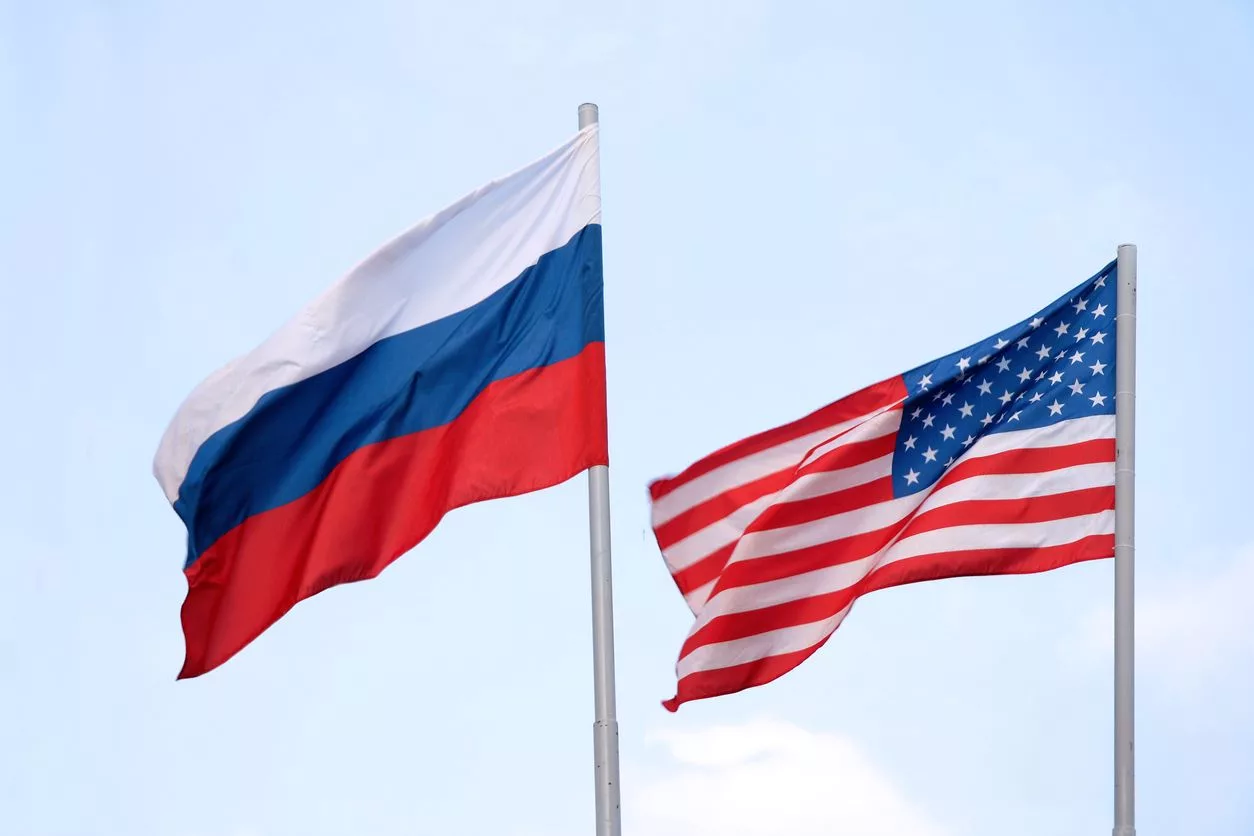
SupplyChainBrain reports; analyst view; as dust settles on President Donald Trump's stunning announcement of punitive "reciprocal" tariffs on practically every country in the world — including some uninhabited islands — a notable omission emerges from the target list: Russia. The U.S. outlet Axios reported that White House Press Secretary Karoline Leavitt explained on April 2 that the current U.S. sanctions on Russia "preclude any meaningful trade" — and for the same reason, Cuba, Belarus, and North Korea are not included. According to BBC News, Russian media argued on April 3 that the reason their country was not on Trump's reciprocal tariff list was due to sanctions. U.S.-Russian trade continues despite the war in Ukraine — though major crude oil and gas flows have been severed.
From a supply chain perspective, the history of the main U.S.-Russian sanctions regime comprises: (1) the Magnitsky Act 2012 (human rights); (2) Crimea Sanctions 2014 (Executive Order 13660); (3) CAATSA 2017 (Countering America's Adversaries Through Sanctions Act); (4) comprehensive sanctions following the 2022 invasion of Ukraine (SDN List — Specially Designated Nationals); (5) the G7 oil price cap ($60/barrel); (6) removal of major Russian banks from the SWIFT financial network; (7) freezing of Central Bank of Russia reserves; (8) threats of secondary sanctions via the U.S., China, India, the UAE, and Türkiye. The Office of Foreign Assets Control (OFAC; Bradley Smith Acting Director) and the U.S. Treasury Department are the main U.S. sanctions enforcement authorities. The Bureau of Industry and Security (BIS), the Entity List, and the Foreign Direct Product Rule are the principal export controls.
From a supply chain perspective, the 2025 U.S.-Russian trade volume is estimated at $5 billion (down from $35 billion in 2021) — principal import categories include fertilizers (urea, potash); uranium (via Kazatomprom); palladium (Norilsk Nickel); titanium (VSMPO-AVISMA); main energy and metals categories. U.S. exports to Russia consist mainly of pharmaceuticals and medical devices (under humanitarian exemptions). Russia's primary shadow fleet tanker strategy involves circumventing the G7 oil price cap through tankers flagged under Liberia, Panama, and Marshall Islands; principal price cap evasion methods. Lloyd's List Intelligence, Kpler, Vortexa, S&P Global Commodity Insights, and OPIS are the main crude oil trading analytics firms. Ukraine-U.S. relations and Trump's 2025 mineral deal negotiations (with Volodymyr Zelensky) are principal geopolitical developments.
From a supply chain perspective, the U.S.'s main import dependencies from Russia comprise: (1) enriched uranium — approximately 30% of U.S. nuclear reactors (being banned under the 2024 Russian Uranium Ban — by end of 2027); (2) palladium — automotive catalytic converters; (3) fertilizers — agricultural production; (4) titanium — aerospace (Boeing, Airbus); principal strategic dependencies. Westinghouse Electric (Brookfield-owned), Centrus Energy, Cameco (Canada), and Orano (France; formerly Areva) are the main Western uranium enrichment firms. The U.S. Geological Survey (USGS) and its Critical Minerals List are the main U.S. strategic minerals analyses. The Defense Production Act (DPA) and the CHIPS and Science Act are the principal U.S. domestic production push statutes. Trump's decision not to include Russia on the tariff list is being interpreted as a potential signal of Ukraine ceasefire diplomacy — talks between Trump special envoy Steve Witkoff and Vladimir Putin represent the main diplomatic channel. In conclusion, Russia's absence from the tariff list reflects a fundamental redesign of U.S. geopolitical messaging globally — for supply chain managers, geographic diversification of Russian dependencies and secondary sanctions compliance appear to be the principal strategic priority.
Key Takeaways:
1. Russia is notably absent from Trump's April 2 tariff list.
2. Karoline Leavitt explained that existing sanctions "preclude meaningful trade."
3. Cuba, Belarus, and North Korea are excluded for the same reason.
4. U.S.-Russian trade has fallen from $35 billion in 2021 to $5 billion.
5. Uranium, palladium, fertilizers, and titanium are principal strategic dependencies.

