

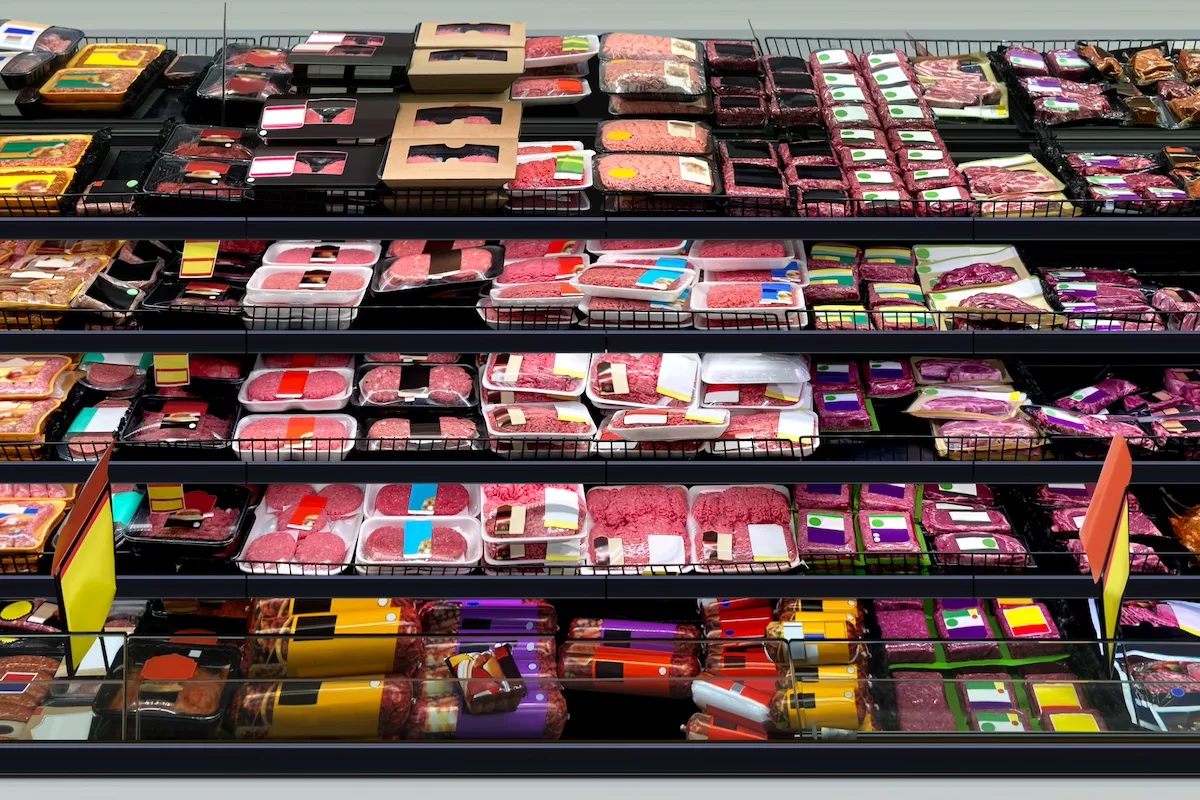
The U.S. Department of Justice (DOJ) is opening an antitrust investigation into the U.S. meat packing industry over allegations that companies are manipulating beef prices. According to The Wall Street Journal, the DOJ investigation will focus on National Beef Inc., Cargill Inc., Tyson Foods, and JBS NV, examining allegations that the four companies are colluding on what they pay cattle ranchers for live cattle and then setting consumer beef prices to boost profits. U.S. cattle herds have fallen to their lowest levels since 1951, which means that under basic supply-and-demand arithmetic, beef and carcass prices should be rising. From a supply chain perspective, the protein supply chain has a vertical structure comprising cow-calf operation, backgrounding, feedlot, and packing plant stages, with daily prices reported by the USDA Agricultural Marketing Service (AMS) via the 5-area daily weighted average.
\nIn reality, retail beef prices have climbed to record levels over the past year, yet cattle ranchers have failed to benefit fully. Together, National Beef, Cargill, Tyson Foods, and JBS NV control approximately 85% of the U.S. beef processing market and are frequently scrutinized for their alleged role in artificially inflating consumer beef prices. In January 2026, Tyson Foods and Cargill agreed to pay an $87.5 million class-action settlement related to price-fixing allegations across more than two dozen states. From a supply chain perspective, packer concentration is a historical concern regulated under the Packers and Stockyards Act of 1921 and the Sherman Antitrust Act. The USDA Grain Inspection, Packers and Stockyards Administration (GIPSA) and the FTC conduct joint monitoring for HHI (Herfindahl-Hirschman Index) concentration metrics in the meat packing industry.
\nPresident Donald Trump also opened an antitrust investigation into the four companies in 2020 during his first term, but that investigation did not result in any major enforcement action or penalties. Otherwise, U.S. cattle ranchers are facing drought conditions over the past year, higher prices for grain and feed, rising interest rates, and concerns about the resurgence of the New World screwworm, a parasitic fly reemerging for the first time in over 20 years just south of the U.S./Mexico border. From a supply chain perspective, the NWS (New World Screwworm) outbreak requires the reactivation of the sterile insect technique (SIT) program being run by the USDA APHIS and SENASICA (Mexico). The weekly capacity of 100 million sterile flies produced at the COPEG (Comisión Panamá-Estados Unidos) facility is critical to slowing the spread of the outbreak.
\nFrom a supply chain perspective, JBS is of Brazilian origin, is listed on the NYSE, and controls Pilgrim's Pride. Cargill is privately held and one of the world's largest agricultural trading companies. Tyson Foods is headquartered in Arkansas and is the U.S. market leader in the chicken, beef, and pork trinity. National Beef is controlled by Marfrig Global Foods. The cattle futures market trades through live cattle and feeder cattle contracts within CME Group, and these positions are used by packers for basis hedging. Captive supply and formula pricing practices are a core subject of allegations that they reduce cash market transparency. Ultimately, the DOJ investigation brings the structural concentration problem in the U.S. protein supply chain back to the forefront and signals a harbinger of the Trump administration's second-term approach to agricultural antitrust policy.
\nKey Points:
1. DOJ is opening a price-fixing antitrust investigation into National Beef, Cargill, Tyson, and JBS.
2. The four companies control ~85% of the U.S. beef processing market.
3. U.S. cattle herds are at their lowest level since 1951.
4. Tyson and Cargill agreed to pay an $87.5 million class-action settlement in January 2026.
5. New World screwworm is reemerging, creating additional pressure on cattle ranchers.

