

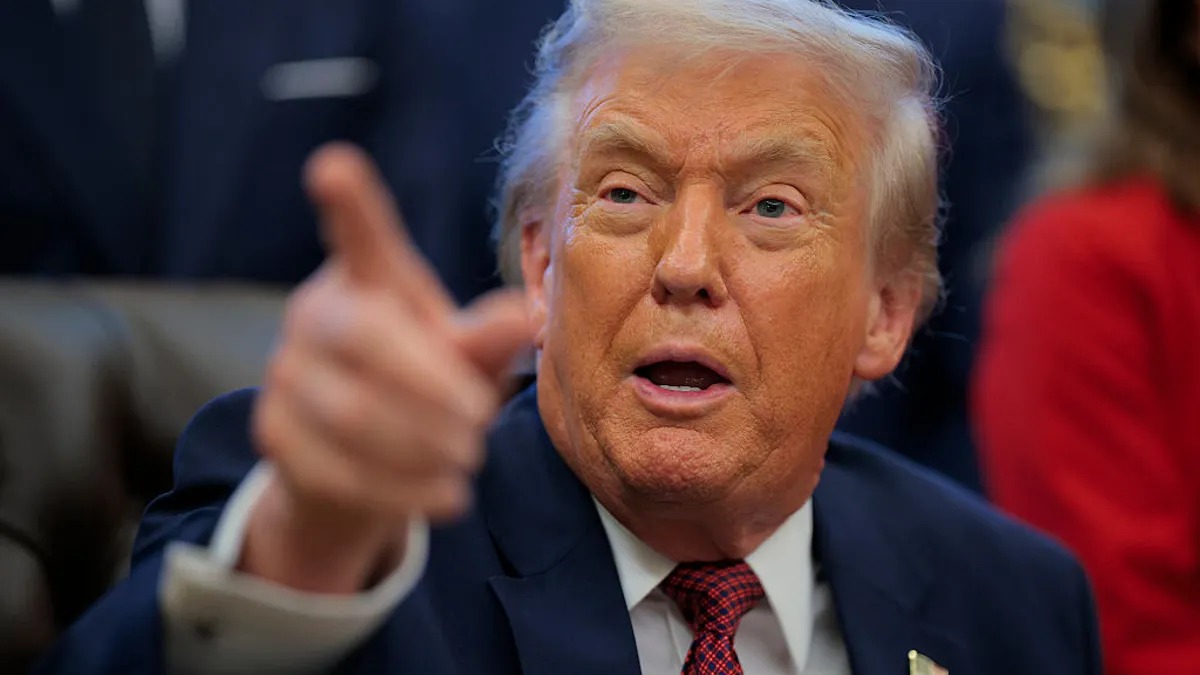
U.S. President Donald Trump has directed the launch of a comprehensive federal investigation into alleged price fixing and other anti-competitive practices within U.S. food supply chains, responding to mounting political and consumer pressure over rapidly rising grocery prices. According to Food Dive, the presidential executive order calls for the establishment of specialized task forces within the Department of Justice (DOJ) and Federal Trade Commission (FTC).
\nThe signed executive order extends beyond investigatory authority alone. The directive grants the DOJ and FTC broad powers to initiate enforcement actions against companies, propose new regulatory approaches, and even launch criminal proceedings where warranted. Grand jury investigations may be activated if evidence warrants. In this respect, the investigation is regarded as one of the most aggressive competitive actions directed at the U.S. food sector in recent years.
\nBackground: Accelerating Food Inflation
\nThe Trump administration faces intense criticism over accelerating food inflation, particularly during 2024–2025. According to Urban Institute data, U.S. consumers are paying 32% more per month for food compared to 2019. Price increases in meat, coffee, and essential food items have brought structural vulnerabilities in the food supply chain back into focus.
\nIn the presidential executive order, Trump specifically identified meat processing, seed, fertilizer, and equipment sectors as carrying "vulnerabilities" to price fixing and competition violations. Trump further emphasized that anti-competitive conduct by foreign-controlled corporations poses "a particular threat to the stability and accessibility of America's food supply."
\nFocus on Foreign-Controlled Companies
\nOne notable aspect of the investigation is its particular emphasis on foreign-controlled food companies. Two major players in the U.S. meat sector have long faced scrutiny over foreign ownership:
\n- \n
JBS: Brazil-based, one of the world's largest beef producers.
\n Smithfield Foods: The U.S.'s largest pork producer, controlled by China-based WH Group.
\n
WH Group decided this year to spin off Smithfield's North American operations. This move is interpreted as a consequence of growing concerns about China's influence over the U.S. agriculture sector.
\nMeat Sector on Defense
\nThe Trump administration's focus on meat processing is directly linked to beef prices reaching record levels. The President recently rolled back some tariffs on products such as beef and coffee with the aim of reducing consumer prices.
\nHowever, industry representatives contend that elevated prices stem not from cartels or price fixing, but from structural supply-side issues. Meat Institute CEO Julie Anna Potts summarizes the situation as follows:
\n "Despite high consumer prices for beef, beef packers have been losing money because the price of cattle is at record highs."
According to Potts, a tightening in cattle supply coupled with strong demand is eroding processors' margins. As a result of this pressure, Tyson Foods announced plans to lay off more than 4,000 workers and close one of its largest facilities. These developments indicate a profitability crisis is unfolding in the sector.
\nLegal and Supply Chain Implications
\nThe launched investigation is adding uncertainty to the U.S. food supply chain. Potential outcomes include:
\n- \n
antitrust lawsuits against major food companies,
\n tighter oversight of mergers and acquisitions,
\n new regulations on pricing, supply, and contractual practices
\n
These developments will directly impact not only producers but also distributors, retailers, and logistics providers.
\nStrategic Assessment
\nTrump's move reflects a view of food supply chains as no longer merely an economic domain but also a matter of politics and national security. Should the investigation uncover serious violations, a redefinition of the competitive regime in the U.S. food sector could come into play. Otherwise, the debate may shift toward the structural causes of food inflation rooted in supply, production, and agricultural policies.
\nKey Points:
\n- \n
Trump launched a federal investigation into price fixing allegations in food supply chains.
\n DOJ and FTC will establish specialized task forces.
\n Criminal investigations and grand jury proceedings may be deployed if warranted.
\n U.S. food prices are 32% higher compared to 2019.
\n Focus sectors: meat processing, seed, fertilizer, and equipment.
\n Foreign-controlled companies face heightened scrutiny.
\n
----------
\n\n--------------------
\nAuthor: SedatOnat.com
\n--------------------
\n\nYour feedback would make us happy.
\nWishing you good reading ahead.
\n
