

IATA: Supply Chain Crisis Will Cost Airlines at Least $11 Billion in 2025, Order Backlog at All-Time High
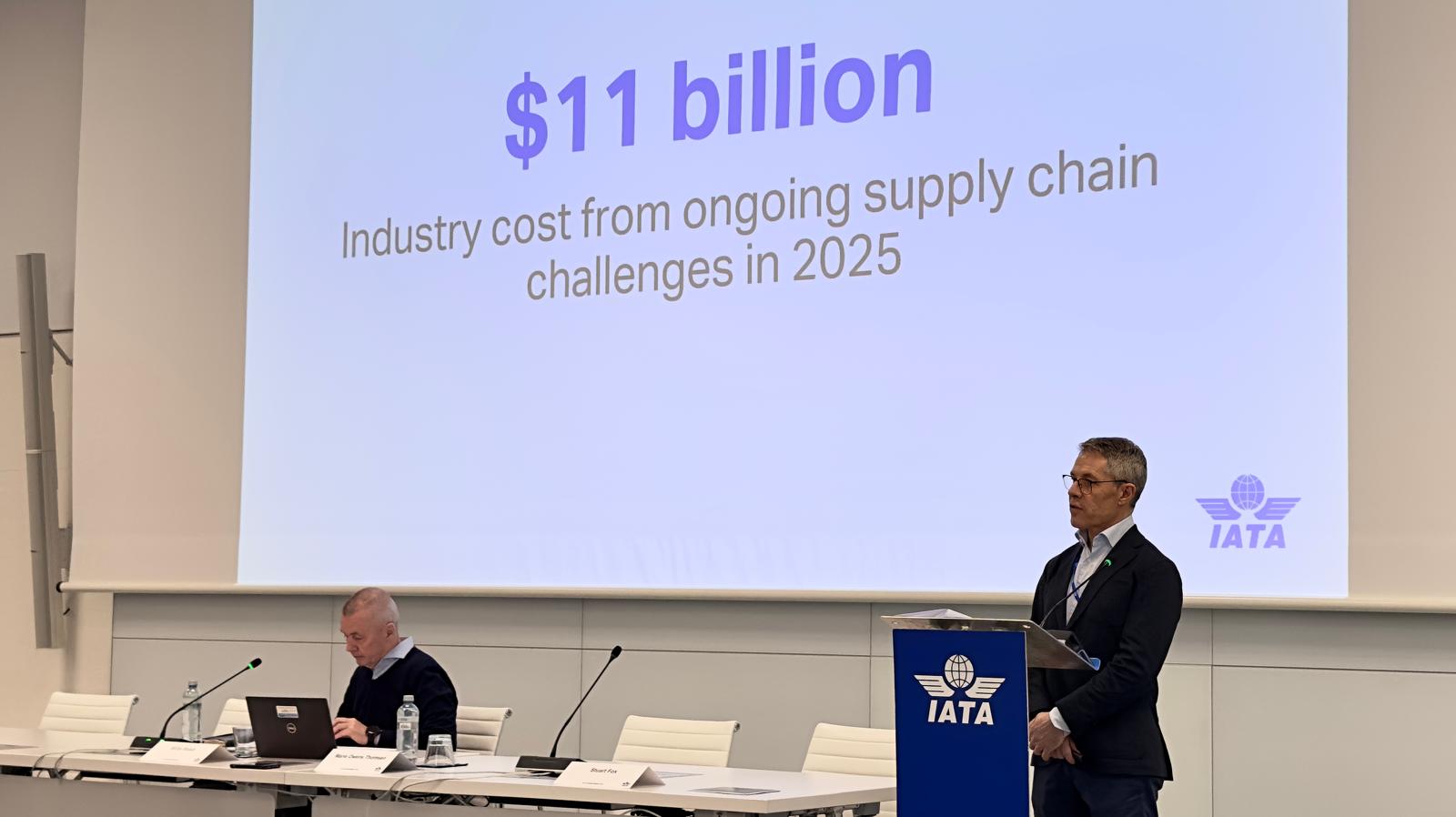
The International Air Transport Association (IATA) released a comprehensive analysis of the supply chain crisis weighing on global aviation at its Media Day 2025. Presenting the findings, IATA Director of Flight and Technical Operations Stuart Fox stressed that the current situation does more than delay deliveries — it adds billions of dollars in extra costs to airlines.
According to the joint IATA-Oliver Wyman report "Reviving the Commercial Aircraft Supply Chain", global supply chain bottlenecks are expected to add at least $11 billion to airline costs in 2025. The report shows the commercial aircraft backlog stands at 17,000 — an all-time high. Despite that, global commercial aircraft deliveries in 2024 remained below pre-pandemic levels.
The result: airlines run aging aircraft longer, lifting operating costs and slowing environmental targets. Fox called it "an invisible but very tangible cost spiral for airlines."
The report says the supply chain issues are structural, not a post-pandemic transition. IATA emphasises that delivery delays and rising costs slow fleet renewal — with both economic and environmental consequences. The situation is especially risky for small and mid-sized carriers: maintenance cost inflation, scarcity of spare engines and delivery uncertainty complicate operational planning. Fox said "the industry moving together" is critical for addressing the crisis.
Key Takeaways:
1. IATA-Oliver Wyman report: airline supply chain bill ≥ $11 billion in 2025.
2. Commercial aircraft backlog at 17,000 — an all-time high.
3. 2024 deliveries are still below pre-pandemic levels; fleet renewal is slowing.
4. Operating older aircraft longer raises costs and delays environmental targets.
5. Stuart Fox: the crisis is structural; industry-wide cooperation is critical.

