

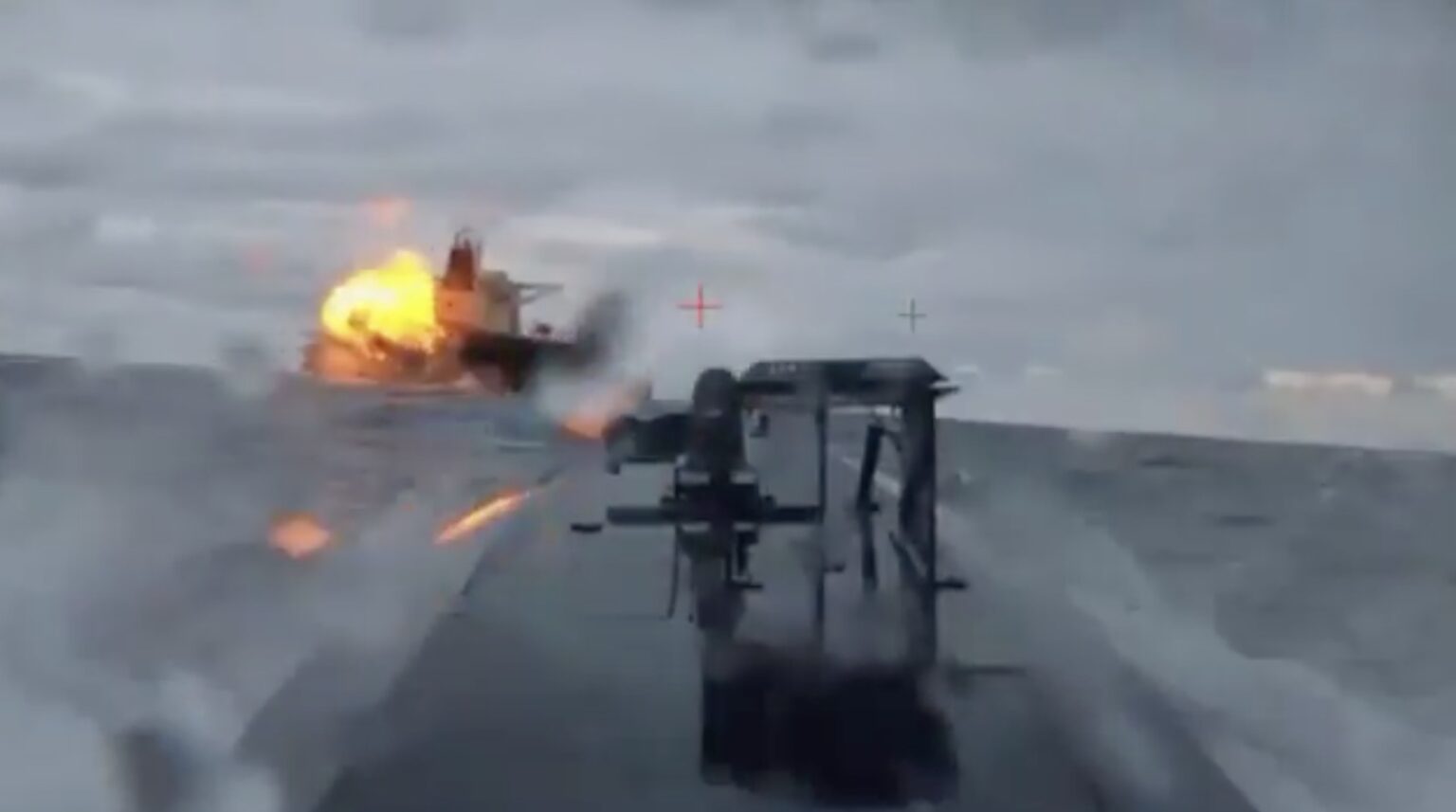
Ukraine's security service SBU continues to expand operations targeting Russia's clandestine oil tanker network known as the shadow fleet in the Black Sea. As of December 10, the SBU confirmed an attack on the Comoros-flagged oil tanker Dashan using Sea Baby-class unmanned marine drones. This marks Ukraine's third strike against Russia-linked tankers within a week; previous attacks had targeted the Kairos and Virat tankers.
During the attack, Dashan was transiting within Ukraine's exclusive economic zone (EEZ) en route to Russia's Novorossiysk terminal. According to Ukrainian sources, the tanker was part of the shadow fleet actively engaged in circumventing Russia's sanctions, a flotilla Moscow uses to bypass international restrictions. Initial reports indicated successive violent explosions in the vessel's stern area, causing the tanker to lose maneuvering capability. Footage of the attack circulated widely on social media.
According to incoming reports, Dashan was not carrying cargo during the attack (unladen). This indicates that the SBU's operation was specifically targeting shadow fleet logistics while deliberately minimizing environmental risks. However, the strike has created a new dimension of risk regarding war insurance for all tanker traffic in the Black Sea.
Shadow Fleet and Sanctions Impact
Shadow fleet comprises predominantly aging vessels with opaque ownership structures that Russia deploys to circumvent its oil exports around G7/EU price ceilings and expanded sanctions regimes. These vessels:
Disabling AIS,
Changing flags (particularly under Comoros, Palau, and similar registries),
Conducting offshore STS (ship-to-ship) transfers,
Employing complex offshore routes
to evade sanctions enforcement. Ukraine's targeting of shadow fleet tankers represents part of Kyiv's economic warfare strategy aimed at striking Moscow's oil revenues.
Shock Waves in the Insurance Market
Recent attacks have triggered sharp price movements, particularly in the Black Sea war-risk insurance market. Hull & War specialists report premiums have surged between 200–250 percent within a week. Risk categories including floating mines, drone attacks, and underwater threats have made the Black Sea one of the world's highest-risk maritime corridors.
Following the Dashan strike, insurers have begun demanding additional premiums for:
All tankers calling at Russian ports,
Vessels transiting near Ukraine's EEZ,
Vessels suspected of shadow fleet connections
This is also reflected in freight rates.
Moscow's Response: Threats of Escalated Retaliation
Following the Dashan strike, Russian President Vladimir Putin stated in remarks that Moscow would escalate retaliatory measures, saying "Russia would move against tankers of countries that help Ukraine". This rhetoric suggests that not only Ukraine but also regional states and Western-backed logistics flows could face increased risk.
Putin further indicated that cutting Ukraine's "access to the sea" could be brought into play, signaling messages that could escalate military tension in the Black Sea.
Black Sea Strategic Corridor at Risk
The Black Sea remains a critical commercial hub for the transport of grain, oil, and oil products. The region is shared by Bulgaria, Georgia, Romania, Türkiye, Russia, and Ukraine. For this reason, attacks of this nature within the EEZ affect not only the targeted tankers but also all regional supply chain flows.
Ukraine's attacks on shadow fleet vessels aim to impose economic pressure against Moscow's sanctions-bypass mechanisms; however, this strategy is profoundly affecting commercial risks, freight rates, and insurance costs in the Black Sea.
Conclusion
The Dashan strike demonstrates that Ukraine is systematically deploying Sea Baby drone warfare capabilities against shadow fleet tankers. This trend points to a continued environment of high volatility and elevated war insurance costs in the Black Sea heading toward 2026.
Key Points:
Dashan was struck from the stern section by Sea Baby drones within Ukraine's EEZ.
This is the third shadow fleet operation following Kairos and Virat strikes.
War-risk insurance premiums have surged sharply following regional attacks.
Putin stated retaliation could encompass "tankers of countries supporting Ukraine".
Shadow fleet sits at the center of Russia's sanctions-bypass mechanism.
Author: SedatOnat.com
Your feedback would make us happy.
Wishing you happy reading in advance.

