

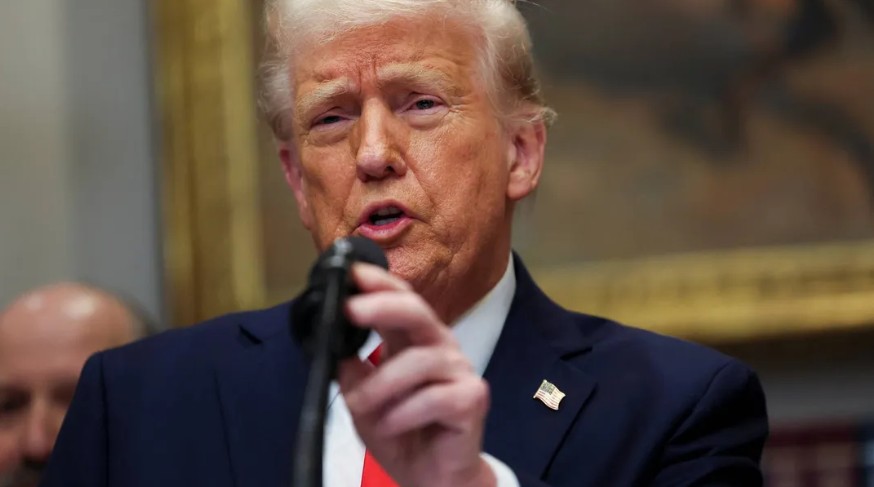
U.S. President Donald Trump implemented 25% punitive tariffs on products imported from Canada and Mexico on March 4. The decision was taken after failed negotiations between Trump and the two countries on trade matters.
\nThe tariffs specifically target basic industrial products such as steel and aluminum. This directly affects the construction, automotive, and white goods sectors in the United States. Experts note that cost increases in these sectors will be passed on to consumer prices and create inflationary pressures.
\nCanadian Prime Minister Justin Trudeau stated that the tariffs are unjust and unacceptable. Trudeau emphasized that Canada's trade relationship with the United States is beneficial to both countries and announced that Canada would take retaliatory measures. The Canadian government plans to apply similar tariff rates on certain products imported from the United States.
\nMexican President Andrés Manuel López Obrador delivered a similar response. Obrador stated that this U.S. step would damage the friendly relations between the two countries. The Mexican government is also considering implementing retaliatory tariffs against the United States.
\nThe U.S. Chamber of Commerce argues that the tariffs will harm American businesses and lead to job losses. The Chamber called on the Trump administration to reconsider the tariffs. Additionally, some U.S. companies are considering moving their production abroad due to rising costs.
\nThe European Union is closely monitoring the situation. EU Trade Commissioner Cecilia Malmström warned that this U.S. move could trigger global trade wars. The EU stated it would take action to protect its interests if necessary.
\nThe Chinese government contends that the U.S. protectionist policies harm the world economy and emphasized the importance of free trade. China plans to combat protectionism through cooperation with other countries.
\nEconomists say that such tariffs create uncertainty in global trade and negatively affect investment. They also warn that trade wars could slow economic growth worldwide.
\nThe tariffs are also a matter of debate in U.S. domestic politics. Democrats argue that Trump's action damages international relations and puts the U.S. global leadership role at risk. There are also opponents of the tariffs among Republicans. Some lawmakers contend that the tariffs contradict free market principles and will harm the American economy.
\nThe long-term effects of the tariffs remain uncertain. However, in the short term, producers and consumers in the United States will begin to feel negative impacts. Cost increases are expected especially in sectors that use steel and aluminum.
\nKey Points:
\n- \n
Donald Trump has begun applying 25% tariffs on products imported from Canada and Mexico.
\n The tariffs target basic industrial products such as steel and aluminum.
\n Justin Trudeau and Andrés Manuel López Obrador announced they would take retaliatory measures against the tariffs.
\n The U.S. Chamber of Commerce stated that the tariffs will harm American businesses.
\n The European Union and China expressed concerns about the U.S. protectionist policies.
\n Economists say that the tariffs create uncertainty in global trade and may negatively affect economic growth.
\n In U.S. domestic politics, the tariffs are being criticized by both Democrats and some Republicans.
\n
---
\n\n-------------------
\n
