

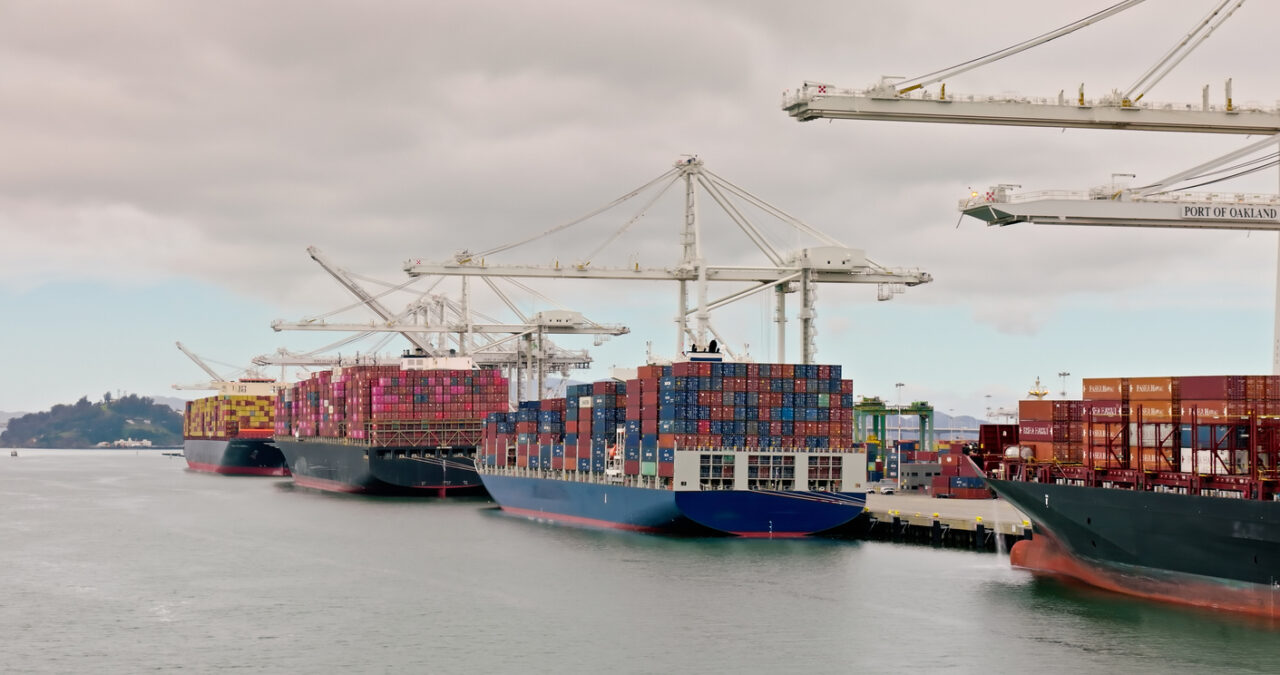
Port of Oakland achieved two critical milestones in 2024 in pursuit of its goal to become "the cleanest and greenest port in the United States." The port's Power Source Disclosure Report, verified by the California Energy Commission, revealed that 86% of the electricity supplied to the port's tenants and facilities in 2024 came from renewable or zero-carbon sources.
According to the report's details, the energy portfolio comprised:
62% from renewable sources (geothermal, solar, biomass),
24% from large-scale hydroelectric sources.
This level is equivalent to nearly twice California's 44% Renewable Portfolio Standard target and positions Oakland among the leaders in sustainable energy use among U.S. ports.
"This is a turning point"
Andre Basler, Director of Public Utilities at Port of Oakland, emphasized that energy transformation is a strategic priority for the port:
"This achievement reflects our commitment to building a resilient, cost-effective and sustainable energy portfolio for the port and its tenants. Despite market challenges, we continue to focus on energy supply that reduces emissions and supports California's energy goals."
Basler's statement highlights Oakland's effort to not only consume renewable energy but also secure energy security and price stability over the long term.
Major step forward with energy storage agreement
The port signed a 20-year Energy Storage Service Agreement (ESSA) with Trolley Pass Project LLC to support renewable energy use. Through this agreement, Oakland secured 4 MW of capacity in a 400 MW battery storage system in San Bernardino County.
The project, with a total cost not exceeding $13.3 million, will:
Balance the fluctuating output of renewable energy generation,
Reduce dependence on grid electricity,
Support California's goal of transitioning to 100% clean electricity by 2045 under Senate Bill 100,
Help the port meet its Resource Adequacy (RA) requirements.
This agreement is regarded as one of the most important steps in securing the port's long-term energy supply.
Regional collaborations strengthening
Port of Oakland, as a publicly owned energy provider, is a member of the Northern California Power Agency (NCPA). Through NCPA, the port collaborates with other regional public agencies on:
energy sharing,
sustainable pricing models,
equipment modernization,
scaling clean energy projects
and similar initiatives.
This collaboration enables tenants to access more resilient and affordable energy while helping the port rapidly approach its carbon-neutral vision.
Key Takeaways:
Port of Oakland sourced 86% of its electricity from renewable/zero-carbon sources in 2024.
Portfolio composition: 62% renewable, 24% hydroelectric.
Achievement reached nearly twice California's RPS target.
Port entered into a 20-year energy storage agreement with 4 MW capacity.
ESSA will balance fluctuating renewable energy output and enhance energy security.
Oakland is expanding regional energy collaborations through its NCPA membership.
Author: SedatOnat.com

