

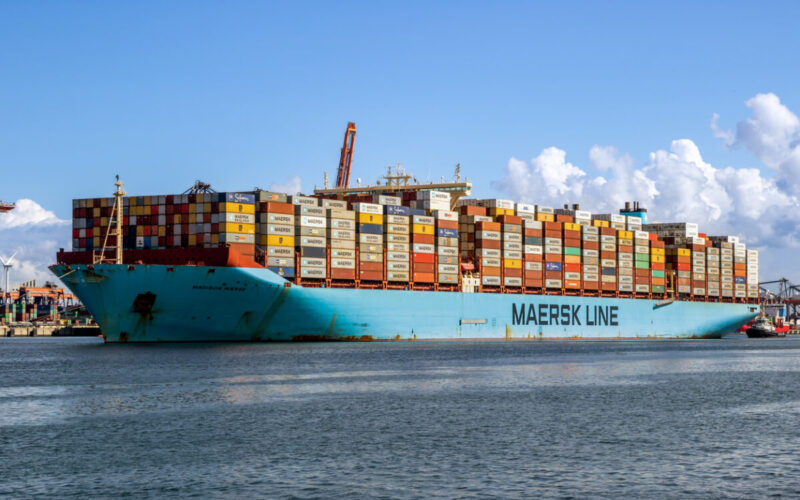
A new supply chain survey conducted by A.P. Moller – Maersk across more than 900 companies throughout Europe reveals that uncertainty in the global logistics environment will persist for at least another two years. According to the findings, more than three-quarters of supply chain leaders expect geopolitical risks, tariffs, and trade regulations to continue affecting operations through 2027.
78% of survey respondents believe that geopolitical factors and trade barriers will create operational consequences over the next 12–24 months. While 48% report experiencing "serious concern" about the current geopolitical environment, 80% say that supply chain challenges are directly impacting business growth.
European Companies Accelerate Source Diversification
Firms seeking to build resilience against disruptions are increasingly diversifying their supply sources.
In the 2024 survey, this figure stood at 53%, but by 2025, 75% now source from or plan to source from multiple geographies in the near term.
80% of companies are building stronger relationships with logistics providers and critical suppliers.
60% are investing in digital tools that enhance supply chain visibility.
75% are reconfiguring their networks to adapt to new trade routes.
These trends show that European companies are pursuing a strategy of "redistributing risk rather than avoiding it" in response to both U.S.–China tensions and the EU's strategic autonomy objectives.
Tariffs Among the Most Significant New Shocks
Aymeric Chandavoine, Maersk's President for Europe, noted that the tight operational conditions of the past five years have created an urgent need for companies to "take action now."
Lars Karlsson, Head of Maersk Global Trade & Customs Advisory, described the pressure that sudden import tariffs announced by the U.S. in April 2025 have placed on companies:
"Many supply chain managers are losing sleep over this."
According to Karlsson, companies need to:
consolidate all global customs data on a single digital platform,
ensure that sudden tariff changes are automatically fed into their systems,
develop cost-effective and rapid rerouting strategies.
European Companies' 2026–2027 Outlook
The survey also captures the risk levels European firms expect regarding trade costs and policies:
46%: Expect fluctuations in import and export costs.
43%: Anticipate rising trade tariffs.
40%: Expect high uncertainty in global trade policies.
These projections indicate that European companies will continue to face stress, particularly from:
U.S. tariffs,
China production risks,
the EU's green regulations,
logistics infrastructure bottlenecks.
Maersk: Global Leader in Integrated Logistics
Headquartered in Copenhagen, A.P. Moller – Maersk is a global powerhouse providing integrated logistics services, including ocean, land, and air transportation across more than 130 countries. With approximately 100,000 employees, the company is targeting net-zero greenhouse gas emissions across all operations by 2040.
Maersk's survey is an important part of the trade and supply chain advisory services the company provides to its customers. The data shows that despite mounting risks ahead, European companies will accelerate their investments in digitalization, diversification, and supply chain resilience in the coming years.
Key Takeaways:
80% of supply chain leaders believe disruptions will continue through 2027.
Geopolitical risks and tariffs are among companies' greatest concerns.
Source diversification rates surged from 53% to 75% in just one year.
Companies are investing in visibility, digitalization, alternative routes, and supplier relationships.
Digital customs data management has become critical in defending against tariff shocks.
European companies are bracing for high costs and policy uncertainty in 2026–2027.
Author: SedatOnat.com

