

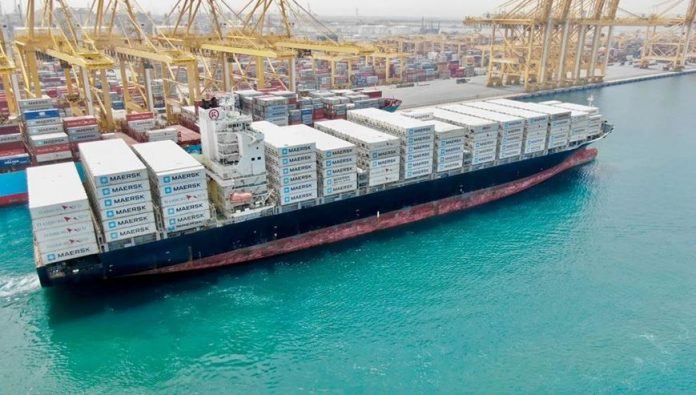
Danish maritime giant Maersk has revised the Peak Season Surcharge (PSS) it applies to refrigerated container (reefer) shipments from India's Jawaharlal Nehru, Mundra, and Pipavav ports to Iraq.
This change increases transportation costs for reefer container shipments from India to Iraq. Maersk typically applies such surcharges during peak demand periods, with the aim of offsetting rising operational costs.
Maersk has previously implemented similar surcharge adjustments on different routes. For instance, in 2020, the company applied a Peak Season Surcharge (PSS) for dry container shipments from Southern Europe to Far East Asia.
Additionally, in 2020 Maersk increased Freight All Kinds (FAK) rates for shipments from the Indian subcontinent and Middle East to the Mediterranean and Northern Europe.
Such surcharges and price increases are common in the maritime shipping sector and typically stem from factors including demand fluctuations, changes in fuel prices, and increases in operational costs. In refrigerated container transportation particularly, energy consumption and maintenance costs are higher due to the requirement for temperature-controlled environments.
Trade volumes between India and Iraq have been growing in recent years. On this route, where various products such as agricultural goods, pharmaceuticals, and textiles are transported, reefer containers play a crucial role. Refrigerated containers are particularly used for transporting temperature-sensitive products such as perishable food items and pharmaceuticals.
Maersk's revision of this surcharge may increase logistics costs for exporters and importers. Consequently, companies need to update their cost calculations and adjust their budgets accordingly. Additionally, cost optimization can be achieved by evaluating alternative shipping routes or different logistics service providers.
For companies operating in the maritime shipping sector, closely monitoring pricing policies of major carriers like Maersk is important. This allows them to adapt quickly to market conditions and gain competitive advantage.
In conclusion, Maersk's revision of the Peak Season Surcharge (PSS) applied to reefer container shipments from India to Iraq impacts trade activities and logistics costs in the region. It is recommended that companies update their strategies and operational planning to account for these changes.
Key Points:
Maersk has revised the Peak Season Surcharge (PSS) applied to reefer container shipments from India's Jawaharlal Nehru, Mundra, and Pipavav ports to Iraq.
Such surcharges are applied in the maritime shipping sector to offset demand fluctuations and rising operational costs.
Trade volumes between India and Iraq are increasing, and reefer containers are particularly used for transporting temperature-sensitive products such as perishable food items and pharmaceuticals.
Maersk's surcharge revision may increase logistics costs for exporters and importers; therefore, companies need to update their cost calculations.
For companies operating in the maritime shipping sector, it is important to closely monitor pricing policies of major carriers and adapt quickly to market conditions.
We would be delighted to receive your feedback.
Wishing you happy reading.

