

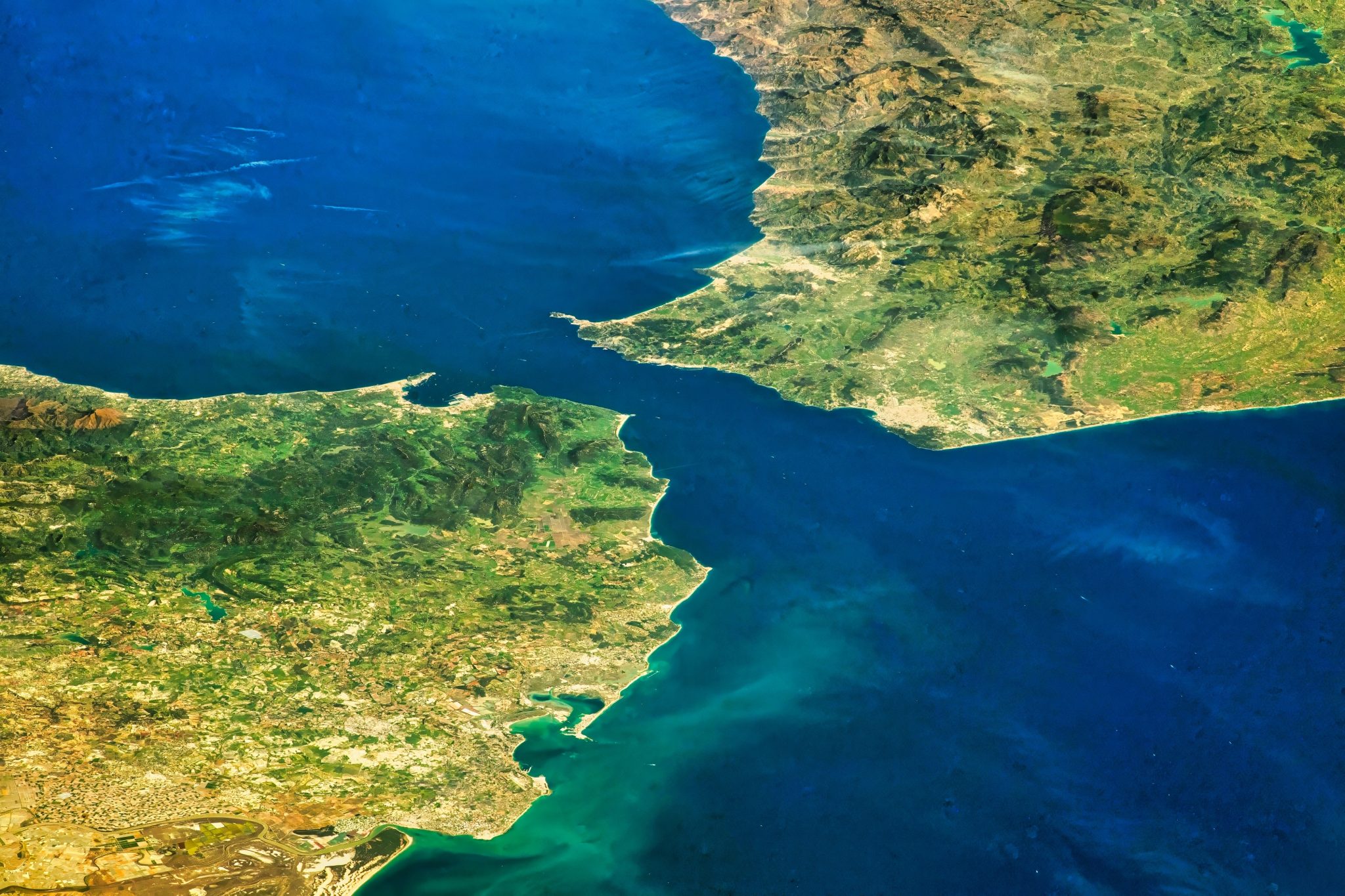
The project to link Spain and Morocco with a rail tunnel across the Strait of Gibraltar, while technically feasible, has been assessed as "extremely complex" due to engineering, geological, and economic challenges.
This conclusion emerged from the first findings of a feasibility study conducted by the Spanish government, as reported by local media. According to the report, the project can be executed with advanced engineering solutions, but entails an unprecedented level of difficulty in terms of cost, timeline, and infrastructure risks.
Tunnel to be decided in 2027
Authorities have announced that a final decision will be made in 2027 following the completion of feasibility studies.
Throughout this process, both Spain's Ministry of Transport, Mobility and Urban Agenda (MITMA) and Morocco's Ministry of Equipment and Water are jointly conducting technical and economic assessments.
The project aims to strengthen Europe-Africa connections and create a new land transport corridor across the Mediterranean.
Geological and engineering challenges
According to the feasibility report, the primary challenge is the geological structure and depth of the Strait of Gibraltar.
At its narrowest point, the strait stretches 28 kilometres, with sea depths reaching approximately 300 metres. These conditions require specialized engineering solutions due to high water pressure, seismic activity risk, and complex geotechnical conditions.
The report highlights the route between Spain's Tarifa region and Morocco's Tangier (Tanca) city as a potential tunnel corridor.
Under this route, the tunnel is planned as a double-track railway system. Additionally, ventilation, emergency exit galleries, and maintenance tunnels would be integrated into the infrastructure.
A strategic project linking Europe and Africa
If realized, the Spain–Morocco tunnel would directly connect the European and African continents by rail for the first time.
The project would link to European TEN-T networks via the Malaga–Algeciras rail line and provide direct access to North African logistics hubs.
According to experts, once completed, the tunnel would spark a revolution not just between the two nations, but in trade and transport corridors across Europe, the Mediterranean, and Africa.
Economic and environmental dimensions
Beyond technical feasibility, economic viability remains a subject of debate.
Initial estimates suggest the project would cost between €20 and €25 billion.
Experts note that an investment of this magnitude would need to be financed through the European Union, the African Development Bank, and public-private partnerships.
From an environmental standpoint, the tunnel is expected to provide a transport alternative that reduces carbon emissions. The rail connection is projected to significantly lower emissions compared to road and air transport.
Political dimension and regional implications
Relations between Spanish and Moroccan governments have been reinvigorated through cooperation agreements signed in 2022. The tunnel project is now viewed as a flagship initiative symbolizing this new era of bilateral relations.
However, some European analysts approach the project with caution regarding political risks and regional instability.
Notably, infrastructure security in North Africa and financing sustainability are among the factors that could complicate the project.
Conclusion: Technically feasible, but a challenging path
The feasibility report's conclusion: "The Strait of Gibraltar rail tunnel can be technically constructed, but presents unprecedented engineering and financial challenges."
The decision to be made in 2027 will either establish this project as a symbol of Europe–Africa integration or record it in history as one of logistics' most ambitious concepts.
Key Points:
The Spain–Morocco rail tunnel will be constructed beneath the Strait of Gibraltar.
Feasibility report: The project is "extremely complex but technically viable."
Final decision: To be announced in 2027.
Challenges: Geological risks, seismic activity, high water pressure.
Estimated cost: €20–25 billion.
The tunnel will connect Europe and Africa by rail for the first time.
The project has strategic importance for regional trade, environment, and energy efficiency.
Author: SedatOnat.com

