

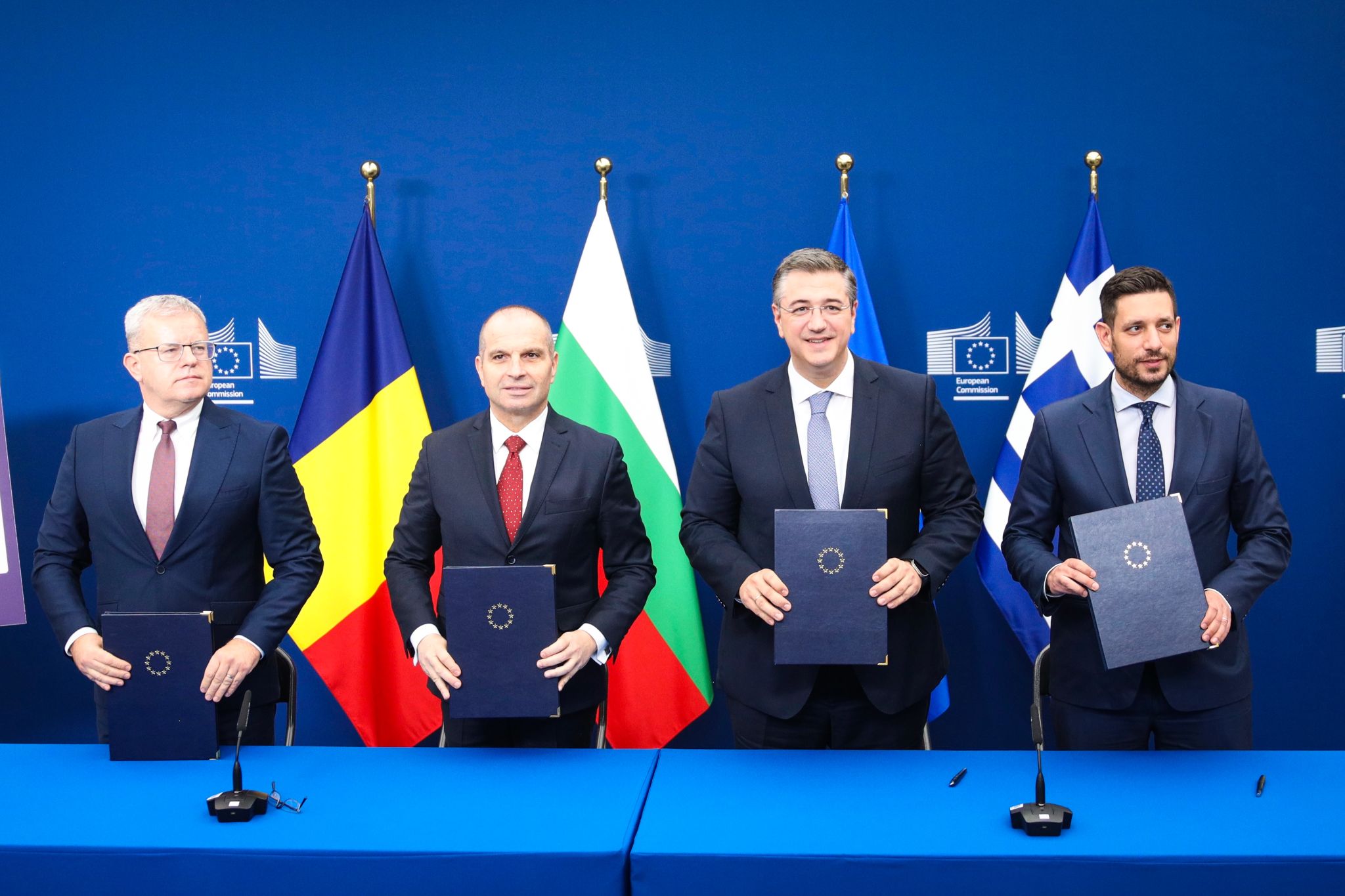
Greece, Bulgaria and Romania have launched a new multilateral cooperation initiative dubbed the Black Sea–Sea of Islands Corridor Platform (BACP), which holds increasing strategic importance in the European Union's transport policy. Announced with the participation of EU Transport Commissioner Apostolos Tsitsikostas, the platform aims to create a shared framework for the planning, construction and operation of cross-border transport infrastructure among the three nations.
The platform's formal definition reads, "A framework for regional cooperation aimed at enhancing cross-border transport infrastructure and its planning and implementation, as well as facilitating seamless logistics." However, its practical implications are considerably broader; BACP signals a new logistics integration project aligned with the EU's TEN-T strategy along the Balkans and the Sea of Islands–Black Sea axis.
What Is BACP Aiming For?
The initiative's objectives are organised under three main headings:
Establishing a joint priority list for cross-border links
Coordinating the three countries' transport investments within the framework of EU financing
Enhancing the efficiency of multimodal corridors (rail, road, port chains) in both east-west and north-south directions
The increased funding allocated by the EU to Central and Southeast Europe in the 2024–2030 period is making such regional platforms more financially significant.
Why Now? Geopolitical and Economic Background
The heightened security risks in the Black Sea since late 2022, the impact of the Red Sea crisis on European supply chains, and the Balkans' rising role in the EU's logistics strategy form the principal dynamics behind the three countries' decision to establish a common platform.
Against this backdrop, the platform's objectives align with the following strategic framework:
Connecting Black Sea ports (Constanța, Varna, Burgas) with Sea of Islands ports (Piraeus, Thessaloniki, Alexandroupolis) through modern rail and road corridors,
Creating new corridors with shortened transit times to the European internal market via the Balkans,
Completing the EU's North Sea–Baltic, Mediterranean and Orient/East-Med TEN-T corridors with stronger integration,
Aligning military mobility requirements in the region (EU & NATO Military Mobility) with commercial logistics.
Infrastructure Focus Areas
Although BACP remains a platform in its early stages, the likely focal areas become apparent when considering the projects on which the three countries' transport ministries have been working in recent years:
Alexandroupolis–Burgas rail corridor (Sea of Islands–Black Sea rapid freight line)
Thessaloniki–Sofia–Ruse modernisation
Romania–Bulgaria Danube river crossings (new bridges)
Intermodal terminal network (Varna, Thessaloniki, Ruse, Plovdiv connections)
Customs digitalization & border efficiency programs
Beyond improving supply chain efficiency, these projects will strengthen the integration of cargo flowing through the Balkans with the Eastern Mediterranean.
What Does It Mean for the Logistics Sector?
The platform targets three critical benefits for supply chain actors in Central and Southeast Europe:
Seamless logistics: Standardising customs, terminal and border coordination to reduce delays
Modal shift: Accelerating rail projects to promote lower-carbon corridors
Transit diversification: Supporting the EU's efforts to create alternative secure transit routes due to Black Sea and Red Sea crises
According to experts, BACP could lead to all multimodal lines passing through the Balkans becoming "a jointly planned network" by the 2026–2032 period.
European Parliament and Commission Pressure
The EU Commission is providing substantial financing support, particularly for investments aligned with TEN-T Core Network Corridors. The institutionalisation of BACP within this framework will provide the three countries with stronger access to CEF – Connecting Europe Facility funds as well as long-term investment planning advantages aligned with EU strategies.
Key Takeaways:
BACP is a new regional transport cooperation platform between Greece–Bulgaria–Romania.
Its objective: cross-border infrastructure planning, multimodal integration and "seamless logistics".
The platform targets the coordination of new TEN-T aligned corridors along the Black Sea–Sea of Islands axis.
Likely project areas: Alexandroupolis–Burgas rail, Thessaloniki–Sofia–Ruse modernisation, new Danube bridges, intermodal terminal network.
The region may become the centre of Europe's new secure transit corridors strategy post-2029.
Author: SedatOnat.com

