

Trump-Xi Summit Heads for 'Board of Trade' Mechanism — $30 Billion Tariff Cuts on Non-Sensitive Goods, 'Board of Investment' on the Table (Jamieson Greer)
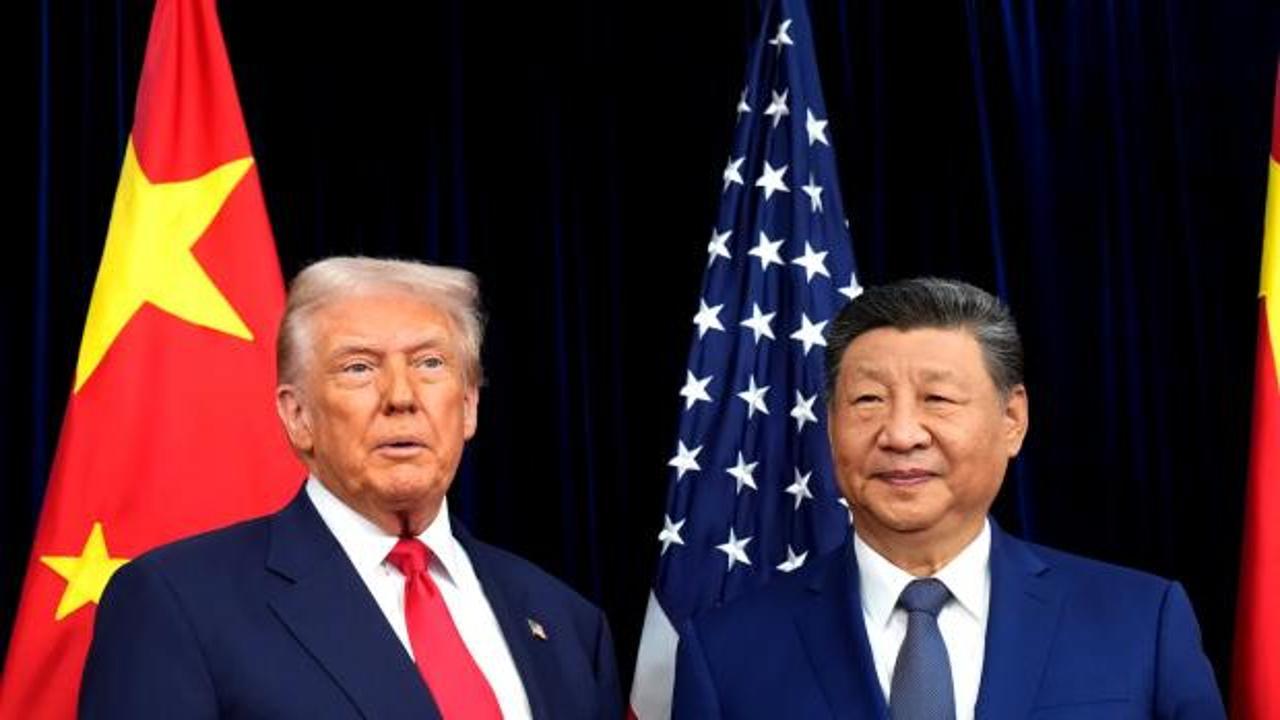
The US and China are reported to be close to agreeing — at the Donald Trump – Xi Jinping summit expected to be held this week — on a new mechanism that would revive trade in non-sensitive goods. According to these reports, the two sides plan to lower tariffs on roughly $30 billion of products posing no national-security risk, thereby increasing two-way trade. The Board of Trade mechanism — first put on the agenda by US Trade Representative (USTR) Jamieson Greer in March 2026 — is expected to be one of the most important items at the summit. Greer said, "We are not asking China to change the way it runs its economy. But a way can be found to make trade between the two systems more balanced", signalling that Washington no longer demands an economic-model change from Beijing and is instead focusing on trade balance in non-strategic sectors.
Under the Board of Trade, the aim is to expand trade in energy, agriculture and consumer products, while restrictions on technologies critical to national security would remain in place. The talks are reported to include the expansion of US sales of energy and agricultural products to China; a reduction in the additional tariffs China imposes on US oil, liquefied natural gas (LNG) and coal products is said to be on the table. On the US side, new exemptions could be introduced on tariffs covering consumer electronics, footwear and some industrial goods. The two sides are also expected to discuss a separate investment-focused structure called the Board of Investment — but US politicians and the automotive, steel and technology sectors have warned the Trump administration that Chinese investments could weaken the American manufacturing base. Analysts argue that an agreement could directly affect not only the two economies but global markets, with a de-escalation of the trade war potentially easing pressure on equities, commodity prices and global supply chains. Because restrictions in technology, chips and security would persist, the framework being shaped between the two sides is characterised more as a managed-trade model than a full normalisation.
From a supply chain perspective, this development is critical along four axes. First, the operational meaning of the Board of Trade mechanism is a selective unwinding — under a "non-sensitive product group" definition — of the layered Section 301 + Section 232 tariff stack the US has applied since 2018: US energy exporters (Cheniere LNG, Sempra, ConocoPhillips, EOG oil, Peabody/Arch coal) and agricultural exporters (ADM, Cargill, Bunge — soy/corn/wheat) stand to gain directly, while a 5-25% cost relief is expected on Chinese consumer-electronics (Anker, DJI), footwear (Li-Ning, ANTA) and industrial-goods (capital equipment, machinery) lines in the US market. Second, consumer-electronics exemptions could ease the nearshoring/friendshoring pressure on supply chains of firms such as Apple, Walmart and Best Buy — this does not mean that production capacity that has shifted toward Mexico, Vietnam, India and Türkiye over the past 24 months will return to China, but the pace of further shift is likely to slow; the implication is that the FDI-capture window for Turkish manufacturers may narrow and should be watched. Third, the persistence of technology-chip-security restrictions signals that on the TSMC, Samsung and ASML axis the chip-export-control regime (in particular advanced logic ≤7nm + HBM3/HBM4 + EUV) will be preserved — this red line means that the NVIDIA H100/H200 vs. Huawei Ascend bipolar AI-silicon ecosystem continues. Fourth, under the Board of Investment heading, warnings from the automotive-steel-technology sectors point to a tighter CFIUS + IEEPA filter on US entry by Chinese players such as BYD, CATL, Geely (Volvo/Polestar), Nio and Tonghua Iron & Steel via brownfield investment/JV/technology licensing; from a Türkiye perspective, the role of Türkiye as a Customs-Union-based transit production base for the EU for Chinese automakers (BYD's Manisa plant decision + Chery, Leapmotor) can be expected to continue growing.
Key Takeaways:
1. The Trump-Xi summit is reportedly close to an agreement under a "Board of Trade" mechanism that would lower tariffs on roughly $30 billion of non-sensitive goods.
2. The mechanism was placed on the agenda in March 2026 by US Trade Representative Jamieson Greer; Washington is no longer asking Beijing to change its economic model, and is now focused on trade balance.
3. China would reduce its additional tariffs on US oil, LNG and coal imports; the US could introduce new tariff exemptions on consumer electronics, footwear and some industrial goods.
4. Chinese investments would be discussed under a "Board of Investment" track; however, the US automotive, steel and technology sectors have warned against the risk of Chinese investments weakening US manufacturing.
5. Restrictions in technology, chips and security would remain in place — a managed-trade model is emerging, rather than full normalisation.
6. An agreement is assessed as capable of easing pressure on global equities, commodity prices and supply chains.
7. Supply chain impact: gains for US energy (Cheniere/Sempra/ConocoPhillips/Peabody) and agricultural (ADM/Cargill/Bunge) exporters + cost relief for Chinese consumer electronics (Anker/DJI) and footwear (Li-Ning/ANTA) + risk of slowing nearshoring momentum (Mexico/Vietnam/India/Türkiye) + continued TSMC/Samsung/ASML chip-export controls + Türkiye's role as a Customs-Union-based EU transit production base for Chinese automakers (BYD/Chery/Leapmotor).

