

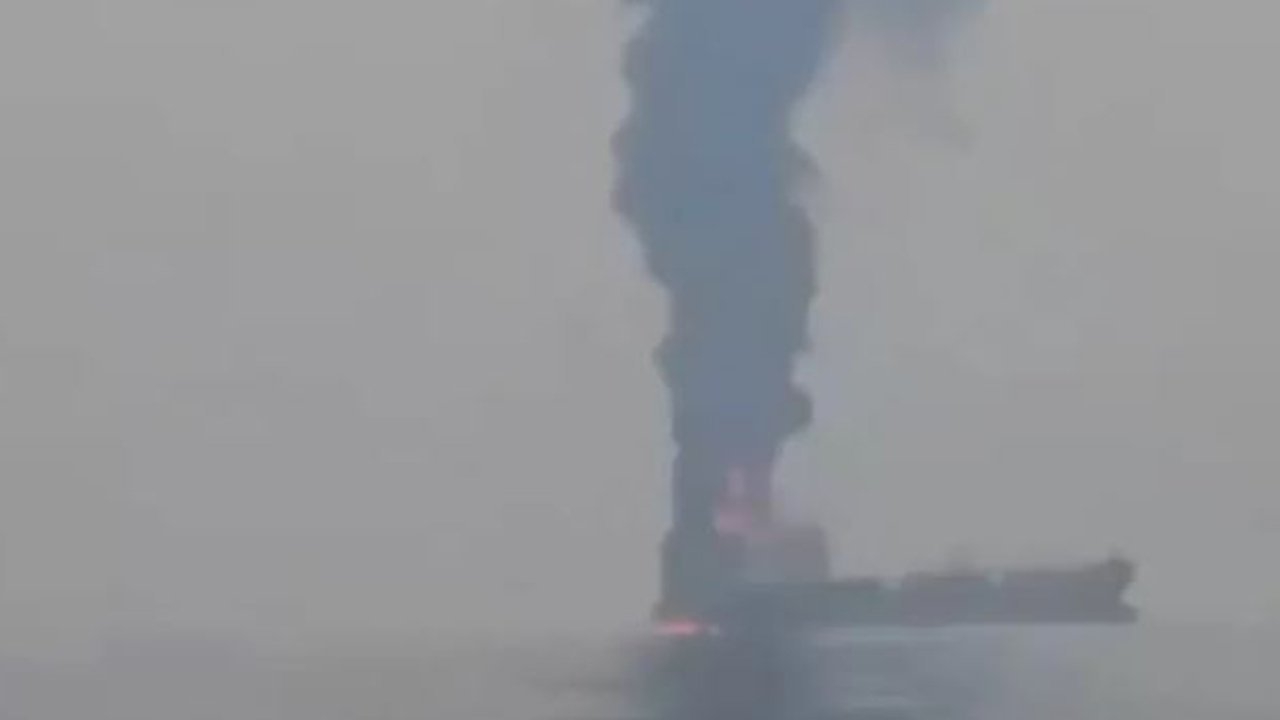
Chinese business and finance outlet Caixin has reported that on Monday, 4 May 2026, a Chinese-owned oil tanker was attacked for the first time off Al Jeer Port in the United Arab Emirates, at the entrance to the Strait of Hormuz. According to Caixin, the vessel — described as having "CHINA OWNER & CREW" — suffered a fire on its deck following the incident.
The attack landed in a period when Iran's influence over the Strait of Hormuz remains the central geopolitical fact in regional oil shipping. Al Jeer Port, attached to Ras Al Khaimah, sits very close to the strait's mouth — directly on a corridor heavily transited by VLCCs, LR2 tankers and dry bulk tonnage. An unnamed source quoted by Caixin said the incident is "psychologically very difficult to accept," arriving at a moment when China has become one of the most critical buyers in global crude flows.
The vessel's name, tonnage, cargo volume, destination, crew status, the weapon system used and the ship's ultimate fate have not been officially confirmed. The incident overlapped with the U.S. naval blockade on Iran, President Trump's Freedom Project escort operation, and reports of Iran-U.S. final-agreement talks mediated by Pakistan — a triple-pressure context that magnifies uncertainty over who carried out the attack and on what grounds.
From a supply chain perspective, three dimensions matter. First, China's Iran-origin crude purchases largely move on flag-of-convenience tankers (Panama, Liberia, Marshall Islands); a direct strike on a Chinese-owned and Chinese-crewed hull opens a new physical-security risk category for the Iran-China energy corridor. Second, insurance pressure is likely to add Al Jeer and the Hormuz entrance to UKMTO, JMIC and BMP5 war-risk-zone definitions, with P&I clubs reviewing additional premiums and cancelable cover for Chinese-owned tonnage. Third, the absence of clear attribution intensifies political pressure on Beijing to lean on its existing regional naval footprint — its Djibouti base and Gulf of Aden anti-piracy mission — particularly during the open Iran-U.S. negotiation window.
Key Takeaways:
1. Caixin reported the first attack on a Chinese-owned oil tanker off Al Jeer Port, UAE, on Monday, 4 May.
2. A fire broke out on the vessel's deck; its name, tonnage and crew status remain officially unconfirmed.
3. The strike occurred at the Strait of Hormuz entrance, overlapping the U.S.-Iran blockade and Pakistan-mediated negotiations.
4. A direct hit on a Chinese-owned, Chinese-crewed vessel opens a new physical-security risk category for the Iran-China energy corridor.
5. P&I clubs may review additional premiums and cancelable cover for Chinese-owned tonnage following the incident.

