

OECD: Diversification Is Essential in Critical Mineral Supply Chains, Türkiye an Exceptional Trade Hub
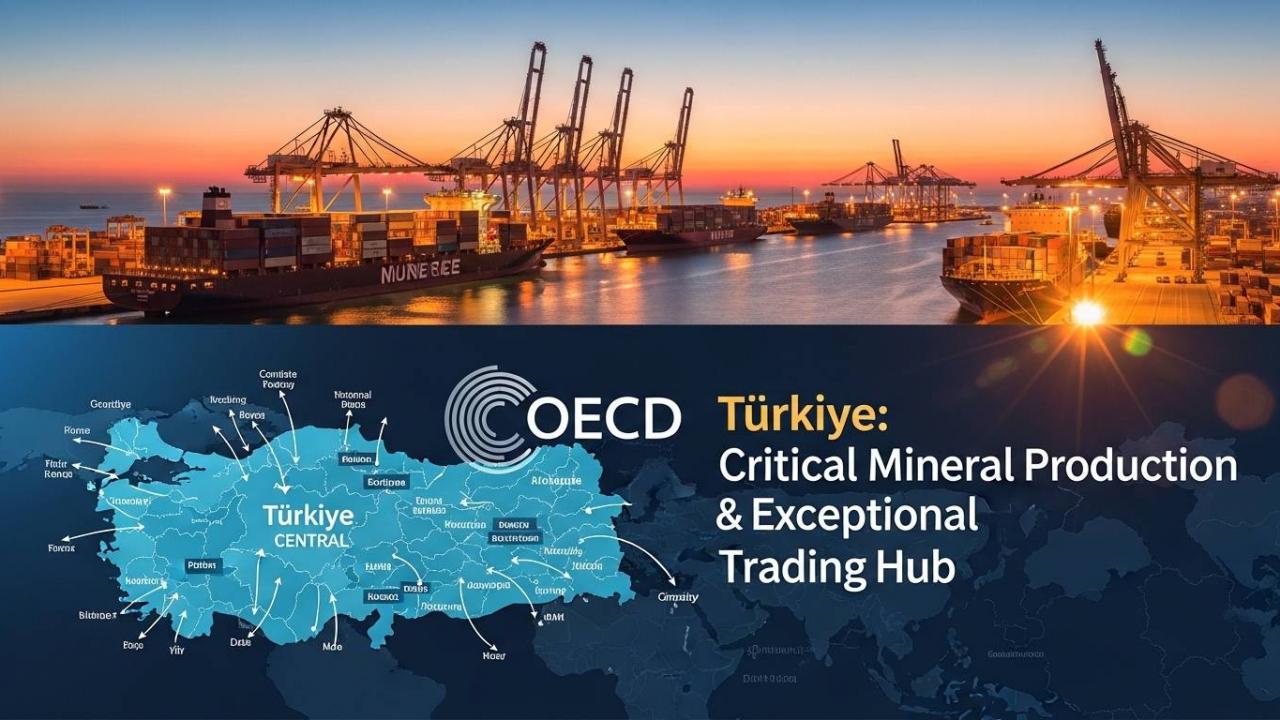
OECD Trade and Agriculture Director Marion Jansen pointed to bottlenecks in the supply of critical minerals — whose importance has risen with the green transition — and highlighted Türkiye's geographical position and reserves as making it an exceptional trade hub. Speaking to the Anadolu Agency, Jansen said critical mineral supply security has moved up the agenda as OECD members invest more aggressively in the green transition.
Jansen stressed that diversification is the central principle in critical mineral supply, arguing that the current market structure produces fragility. She said markets are excessively concentrated, sometimes at the raw material stage and sometimes at the processing stage, and noted that in some cases 90 percent of the global market for a particular product can sit in a single country — a structure she described as not good. The structure leaves importing countries exposed to export restrictions, geopolitical shocks and supply chain vulnerabilities.
Highlighting Türkiye's position in global critical mineral supply, Jansen described it as already a meaningful actor. She noted Türkiye is a supplier of an important product like boron and also holds significant reserves in a range of rare earth elements, adding that it is among the countries where further investment can be made and that can take a role in the diversification process.
Geography is also a major advantage, the OECD director added, noting Türkiye's bridging role between Asia, Africa and Europe. She said that in facilitating the logistics and transit of critical minerals coming from different regions, Türkiye is in an extremely well-placed location and is therefore an exceptional trade hub. Jansen also referenced Türkiye's membership in the OECD officially supported export credits arrangement, giving the country a voice in export-credit financing cooperation.
As global green-transition investment accelerates, demand for lithium, cobalt, nickel and rare earth elements continues to climb. The OECD is championing multi-supplier strategies and friend-shoring frameworks to cut single-source dependency in critical mineral supply. Türkiye's boron reserves and existing transit infrastructure appear well aligned with this framework, with the capacity to anchor a diversification corridor.
Key Takeaways:
1. OECD Director Marion Jansen said 90 percent of the global market for some critical minerals is concentrated in a single country.
2. Rising green-transition investment has pushed critical mineral supply security to the top of the OECD agenda.
3. Türkiye is a major boron supplier and holds significant rare earth element reserves.
4. Türkiye's transit position between Asia, Africa and Europe makes it an exceptional trade hub for critical mineral logistics.
5. OECD is promoting multi-supplier and friend-shoring strategies to cut single-source dependency.

