

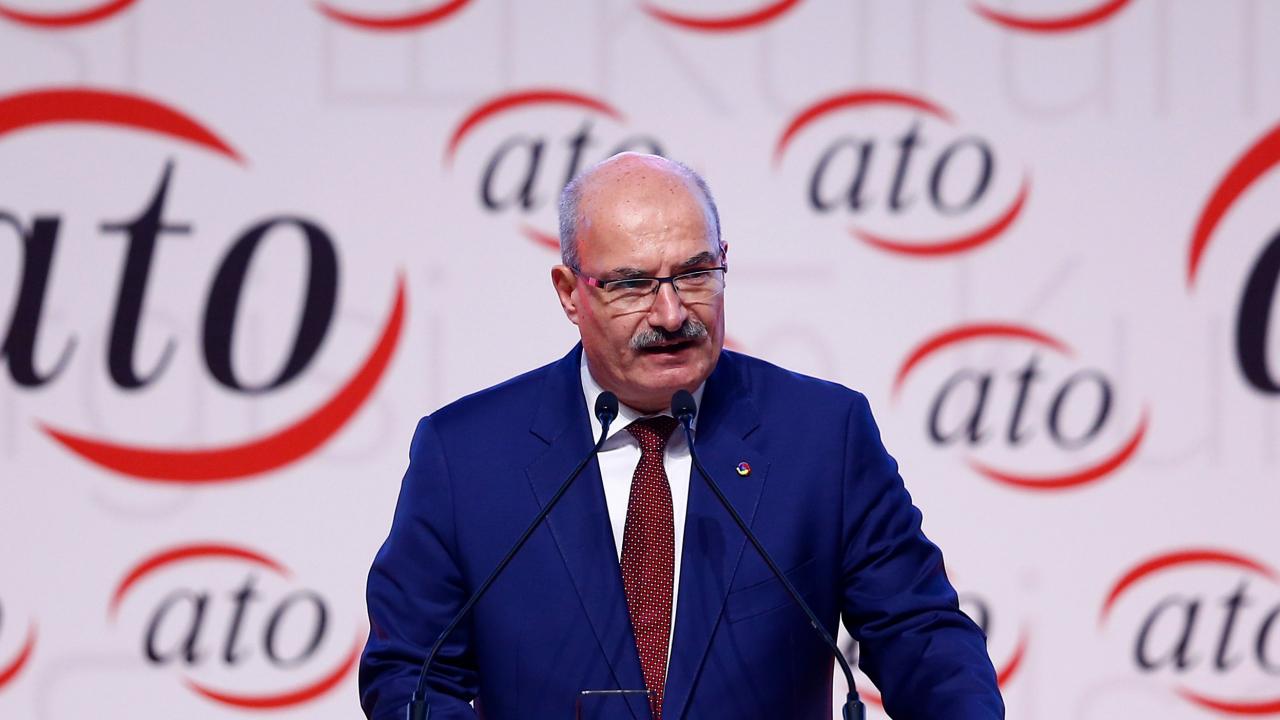
Gürsel Baran, chairman of the Ankara Chamber of Commerce (ATO), called for a structural simplification of Türkiye's corporate tax regime, arguing that the current seven-tier system creates compliance friction and undermines fairness and competition. Baran proposed consolidating the schedule into a single 15% rate for all companies, citing Ireland — where domestic and foreign investors alike have paid a 12.5% rate for years — as the best European reference for attracting investment and lifting per-capita income. The call comes at a moment when global cost pressures have eroded corporate margins and small and medium-sized enterprises bear the bulk of the tax load with limited access to deductions and exemptions.
Baran framed the proposal against a backdrop of geopolitical disruption that has shaken energy and trade balances. He stressed that effective restrictions on the Strait of Hormuz have produced an unprecedented bottleneck in maritime logistics, sending costs higher across the chain — from energy and fertilizer to freight insurance — and pushing global inflation. According to ATO, governments from Europe to Asia are awaiting an agreement on Hormuz, while in the meantime domestic policy levers such as tax design must work harder to keep producers and traders competitive.
The chairman welcomed the headline measures of the Türkiye Century: Strong Center for Investment Program announced by the President. Under that framework, the corporate tax for manufacturer-exporters falls from 20% to 9% and for non-manufacturer exporters from 20% to 14%; exemptions on transit trade and overseas purchase-sale earnings will be expanded; the exemption on high-value-added service exports will rise to 100%; companies relocating their regional headquarters to the Istanbul Finance Center will receive a 20-year corporate tax exemption (95% if relocating to other locations); and a One-Stop Office will streamline investment workflows. Digital company services and easier financing access were highlighted as supports for the start-up ecosystem and high-value-added production targets.
For the broader supply chain, Baran's argument is that the same logic applied to exporters should be extended inward. Small and medium manufacturers, distributors and component suppliers — the backbone of domestic production — would gain stronger equity bases, healthier capital expenditure cycles and more bargaining room with upstream and downstream partners under a unified low-rate regime. Coupled with simplified bureaucracy and digital onboarding, a single-rate model could narrow the informal economy, broaden the long-run tax base, and reinforce Türkiye's positioning as an investor-friendly hub for inbound supplier networks rebalancing away from traditional Asian sourcing corridors.
Key Takeaways:
1. Ankara Chamber of Commerce chair Gürsel Baran proposed consolidating Türkiye's seven-tier corporate tax into a single 15% rate.
2. Ireland, which applies a 12.5% rate to domestic and foreign companies alike, was cited as the proposal's reference model.
3. The Hormuz bottleneck is pushing energy, fertilizer, logistics and insurance costs higher and feeding global inflation.
4. The Türkiye Century program already cuts corporate tax for manufacturer-exporters from 20% to 9% and grants 20-year exemptions for relocations to the Istanbul Finance Center.
5. A unified low-rate regime would strengthen the equity base of SME-heavy domestic suppliers and lift competitiveness across the chain.
[3624989]

