

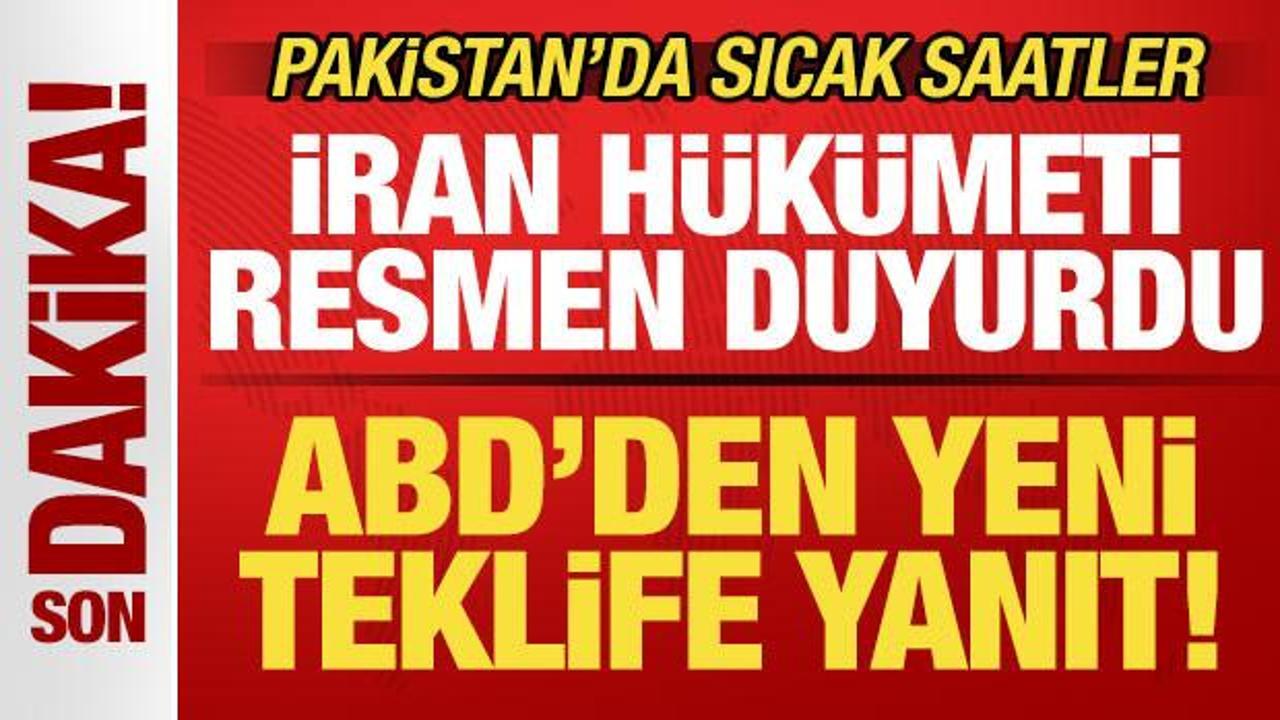
Iranian Foreign Ministry Spokesperson Esmaeil Baghaei announced that a U.S. response has arrived to Iran's 14-article proposal delivered through Pakistan. Speaking on Iranian State Television, Baghaei said: "The U.S. side has conveyed its views on the plan we proposed to the Pakistani side. Those views are currently under review." The statement followed Donald Trump's declarations this week that he would reject Iran's Strait of Hormuz proposal and confirmed that the negotiation channel remains open via Pakistan.
Baghaei formally denied two media claims. First: "Our 14-article proposal is focused on ending the war. The framework first calls for a pause, then resolution of details within a 30-day window. The nuclear issue is not among these articles." In other words, Iran's nuclear program is not included in this package; it is being left as a separate file. Second: "The claim that Iran has committed to clearing mines from the Strait of Hormuz is a media fabrication." Baghaei further stated that Iran fundamentally rejects negotiating under ultimatum, adding that the guarantee of any prospective deal is the country's power on the ground.
From a supply chain standpoint, this statement matters on four dimensions. First, the 30-day resolution window gives the market a concrete uncertainty bracket — if the U.S. response is positive, P&I insurance premiums at the Strait of Hormuz and the Brent geopolitical premium could ease by early June. Second, the exclusion of the nuclear file from the package leaves Europe and Israel's probability of triggering the JCPOA / E3 mechanism on a separate trajectory; for supply chains this means UNSCR 2231 snapback risk remains live. Third, the denial of mine-clearance commitments means the IMO and international P&I clubs will continue to assume mine presence in their risk routings; full Hormuz normalization stretches to a 30+ day timeline. Fourth, conducting negotiation through Pakistan adds a political premium to supply chain investments along the China-Pakistan Economic Corridor (CPEC) — in this equation Pakistan's mediator role lifts Karachi and Gwadar ports into a new strategic category.
Key Takeaways:
1. Iran spokesperson Baghaei: U.S. response to Iran's 14-article proposal arrived via Pakistan and is under review.
2. The 14 articles are focused on 'ending the war'; framework: a pause + 30-day resolution window.
3. Nuclear issue is not in this package — it remains a separate file.
4. Iran denied as 'media fabrication' the claim it would clear Strait of Hormuz mines.
5. Iran rejects 'negotiation under ultimatum'; the guarantee of any deal is power on the ground.
[3625026]

