

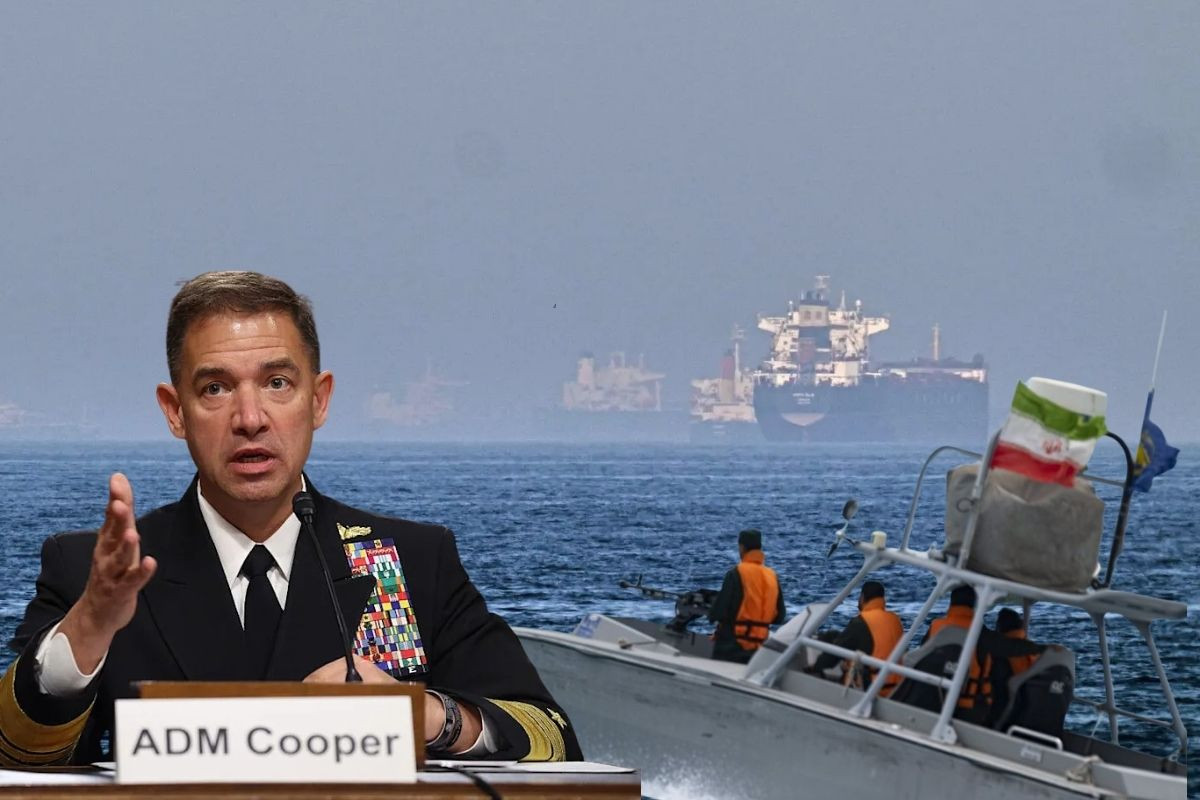
U.S. Central Command (CENTCOM) Commander Admiral Brad Cooper said that while U.S. and Israeli air strikes have significantly degraded Iran's military capabilities, Tehran continues to control the Strait of Hormuz. Cooper made the remarks alongside AFRICOM Commander General Dagvin Anderson at the Senate Armed Services Committee hearing titled "The Conflict with Iran and Military Readiness in Africa."
Cooper stated that the U.S. and Israel have conducted more than 1,450 strikes against Iran's weapons-production facilities, destroying over 85% of Iran's ballistic missile, UAV, and naval-industrial base. He told senators that rebuilding Iran's navy would take "a generation" and that recovering UAV and missile production would take years. U.S. forces have destroyed more than 90% of Iran's 8,000-piece naval mine inventory, preventing their deployment in the strait.
On the Strait of Hormuz, Cooper said: "Iran's ability to halt trade through the straits has been significantly reduced, but their voices are loud and these threats are clearly heard by the trade sector and the insurance sector." He added that the U.S. retains the military option to reopen the Strait of Hormuz, but that this is a decision for policymakers. He noted that the 7 April ceasefire remains in effect despite the U.S. naval blockade of Iranian ports and last week's exchanges of fire. Asked whether China or Russia is providing intelligence to Iran, Cooper declined to answer publicly, saying the topic should be discussed in classified session.
From a supply-chain perspective, the most critical message lands in insurance and freight: even as Iran's ability to "fully halt trade" weakens, as long as deterrent posture is maintained, war-risk insurance premiums and transit times will remain elevated. The "open-closed" strait variable is not a binary switch but a spectrum: the combination of an ongoing blockade, Iran retaining "some capabilities," and a fragile ceasefire could keep tankers favouring the Cape of Good Hope route through the medium term.
Key Takeaways:
1. Cooper: 1,450+ strikes destroyed over 85% of Iran's ballistic missile/UAV/naval base.
2. Rebuilding the navy will take 'a generation'; UAV/missile recovery years.
3. More than 90% of Iran's 8,000-piece naval mine inventory destroyed.
4. U.S. retains the military option to reopen Hormuz — but the call is for policymakers.
5. 7 April ceasefire still in effect despite blockade and exchanges of fire.

