

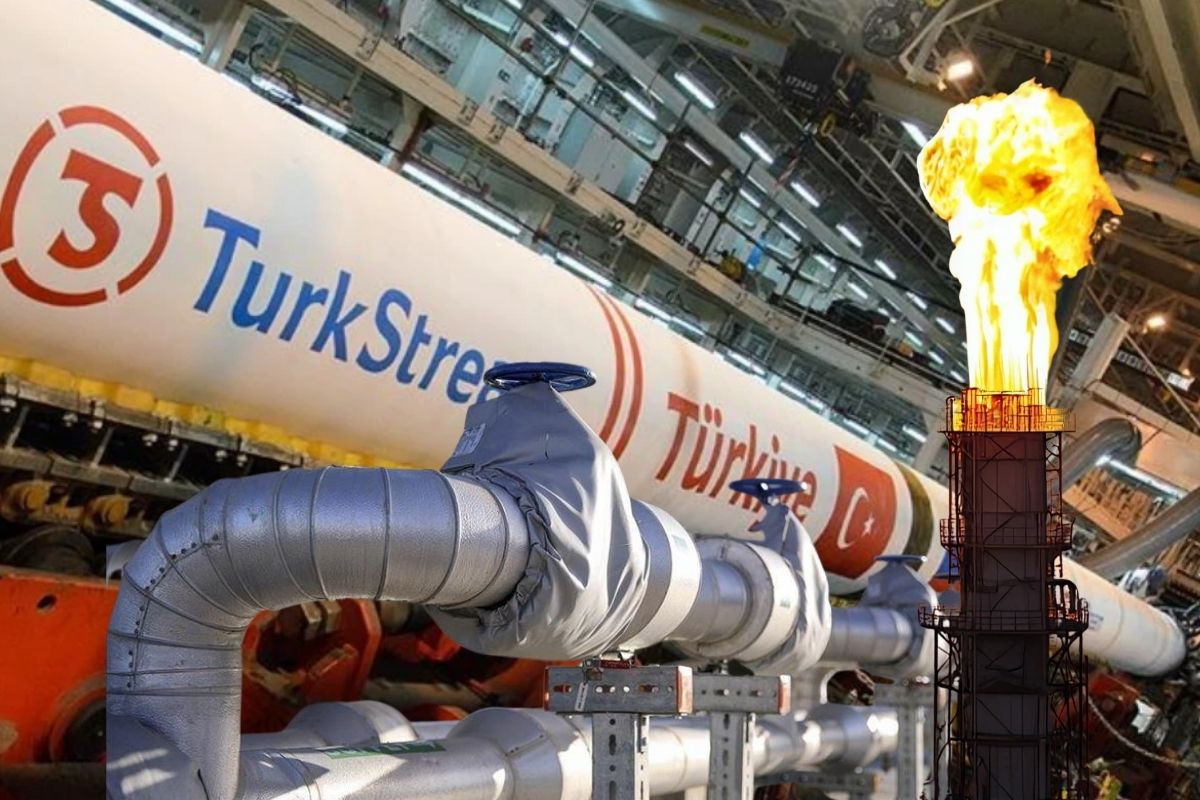
The European Parliament ruled to phase out Russian gas imports by November 2027; the January-April figures for this year, however, tell a different story. Per Russian news agency TASS calculations based on ENTSO-G (European Network of Transmission System Operators for Gas) data, the volume of Russian gas sent to Europe via TurkStream rose 7% year-over-year to 6.2 billion cubic meters in the period. EU countries had agreed late last year on a regulation to stop pipeline gas imports from Russia — at war with Ukraine since February 2022 — with imports ending in stages and fully discontinued by 1 November 2027 at the latest, including long-term contracts.
On a monthly view the picture shifts. Per Turkrus, April flows showed a clear slowdown: average daily flow westward was 41 million m³ with line utilization at 72%. Total monthly flow reached 1.23 billion m³ — down 28% from March and 2% below the same month last year. Even so, the first-four-months total continues to show that Russian gas flows strongly into the European market via the Türkiye route.
The structural backdrop is that after Ukraine transit ceased, TurkStream became the only remaining active Russian pipeline to Europe. The line — running under the Black Sea with annual capacity of 31.5 billion m³ — both meets Türkiye's gas needs and carries energy into South and Southeast Europe. Russia's 2025 Europe-bound flow via the line set a record at 18.1 billion m³. Analysts argue the pipeline further strengthens Türkiye's role as a regional energy hub.
From a supply chain and energy procurement perspective, the gap between the EU's November 2027 phase-out timetable and actual flows raises several strategic questions. First, the handling of long-term contracts after 2027 remains undefined; second, Türkiye's gas hub strategy may position itself as a route through which Russian gas is "rebranded" before flowing to Europe; third, the speed of LNG and Azeri-gas diversification in South and Southeast European markets (Bulgaria, Hungary, Slovakia, Greece) will be decisive. April's monthly slowdown may reflect seasonal demand softness, but the year-to-date trend is firm — widening the tension between EU policy goals and physical infrastructure realities.
Key Takeaways:
1. TASS / ENTSO-G data: Russian gas to Europe via TurkStream rose 7% YoY in January-April 2026 to 6.2 billion m³.
2. April monthly flow eased to 1.23 billion m³ (avg. 41 million m³/day, 72% line utilization); -28% vs March, -2% YoY.
3. After Ukraine transit ceased, TurkStream is the last active Russian pipeline to Europe; annual capacity 31.5 billion m³.
4. The EU plans to fully end Russian pipeline gas imports — including long-term contracts — by November 2027; flows hit a record 18.1 billion m³ in 2025.
5. Türkiye's gas-hub strategy sits at the gap between EU policy timetable and physical infrastructure reality — South/SE Europe's LNG and Azeri-gas diversification pace will be decisive.

