

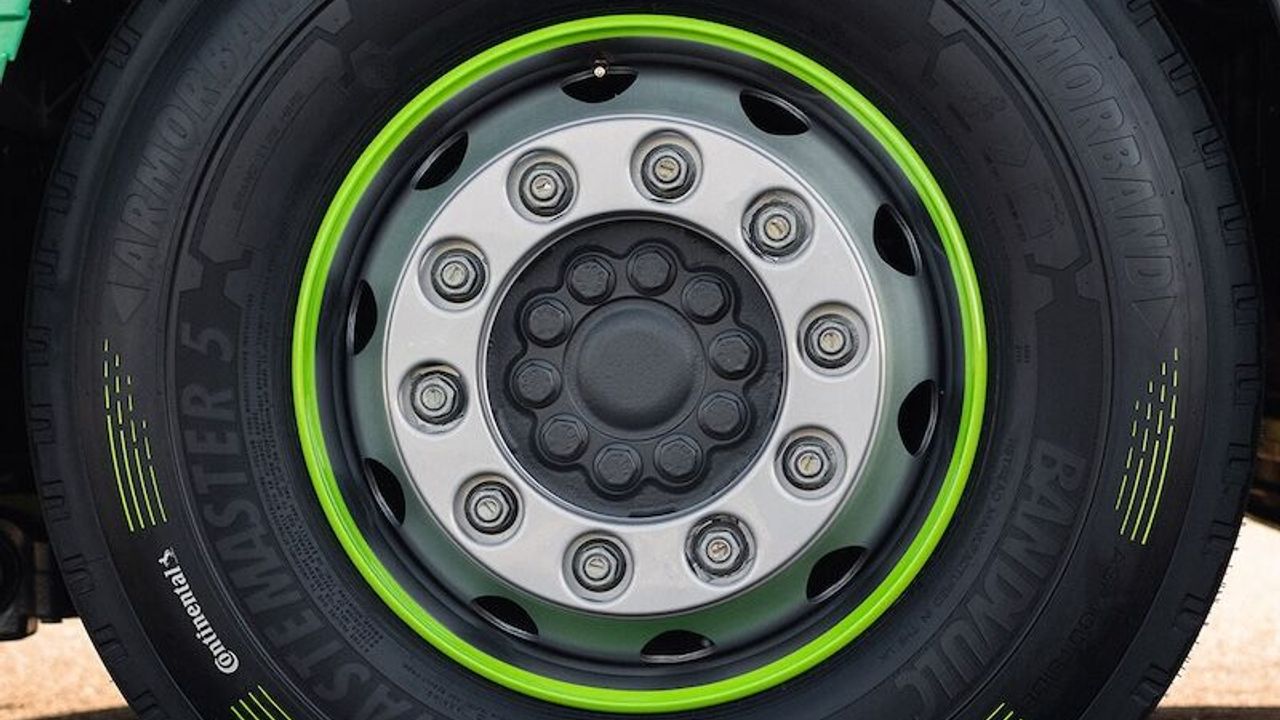
Maxion Wheels is opening a new chapter in heavy commercial-vehicle sustainability with the next-generation steel wheel it has developed for Daimler Truck's reECONIC concept vehicle. Drawing on advanced engineering and circular-materials strategies, the new wheel cuts carbon footprint by more than 50% versus a conventionally-produced wheel. The concept vehicle, with the new wheels, will be on display at IFAT Munich from 4 to 6 May.
The reECONIC's 32.5 kg, 22.5 x 9.00-inch steel wheel is built from a low-carbon steel produced via the electric arc furnace (EAF) route with a high share of recycled scrap content. The combined material choice and design optimisation cut a wheel's cradle-to-gate CO₂ footprint from 132.7 kg to 61.4 kg, with no compromise to performance, function or safety. Maxion focused on two core levers in the project: smart lightweighting design and circular materials use.
Maxion's proprietary lightweighting process optimises geometry and material use while preserving performance, safety and manufacturability. Applied to the reECONIC wheel, the process delivered a 2-kilogram weight reduction versus prior designs, lowering both material consumption and total carbon footprint. Roughly 75–85% of a steel wheel's carbon footprint sits in raw materials; by combining a high share of post-consumer recycled scrap with EAF-route low-emission steel, Maxion materially reduced both iron-ore mining and energy-intensive primary steelmaking demand.
From a supply chain and sustainable-design perspective the reECONIC partnership is notable on three dimensions. First, Daimler Truck positions reECONIC as a roadmap to serial-production applications; validated materials and processes will form the basis of new series vehicles and will be put through extensive real-world testing from the second half of 2026. Second, Maxion is presenting the low-CO₂ steel wheel not just as a concept but as a component ready for industrial-scale production — a global premium-OEM supplier position for the Turkish Maxion İnci-rooted player. Third, wheels — among the heaviest and most safety-critical parts of a commercial vehicle — sit at a key node in Scope 3 supply chain emissions; in the context of Daimler Truck's 2030 decarbonisation targets and Europe's CSRD reporting regime, low-CO₂ supplier contracts of this kind are likely to standardise in the period ahead.
Key Takeaways:
1. Maxion Wheels developed a next-generation steel wheel for Daimler Truck's reECONIC concept vehicle that cuts CO₂ footprint from 132.7 kg to 61.4 kg.
2. The 32.5 kg, 22.5 x 9.00-inch wheel uses EAF-route low-carbon steel with a high share of recycled scrap.
3. Daimler Truck positions reECONIC as a roadmap to serial production; real-world testing begins in the second half of 2026.
4. Roughly 75–85% of a steel wheel's carbon footprint sits in raw materials; Maxion also delivered a 2 kg lightweighting on top.
5. The concept wheel will be exhibited at IFAT Munich on 4–6 May; signals the standardisation of low-CO₂ supplier contracts under Scope 3 and CSRD.

