

Disruption in the Strait of Hormuz has paralysed one of the most critical corridors in the global fertilizer supply chain. Norway's Yara International, one of the world's largest producers of ammonia, nitrogen and processed fertilizers, warned that surging prices and shortages could trigger "a global auction" for fertilizer, according to CEO Svein Tore Holsether. Yara data show urea prices have risen 60–70% since the war that began in late February, and the price shock is hitting low-income countries that cannot finance high-cost supply hardest.
Gulf states form the backbone of global fertilizer flows. Saudi Arabia, the United Arab Emirates, Qatar and Oman together account for 30–35% of international urea trade and 20–30% of ammonia. Major loading ports include Jubail (Saudi Arabia), Ras Laffan (Qatar) and Sohar (Oman). Under normal conditions, roughly 30% of the world's fertilizer transits the Strait of Hormuz — making the chokepoint as strategic for fertilizer logistics as it is for energy. The Economist recently argued the Gulf is an even more central node for the global fertilizer industry than for the energy sector.
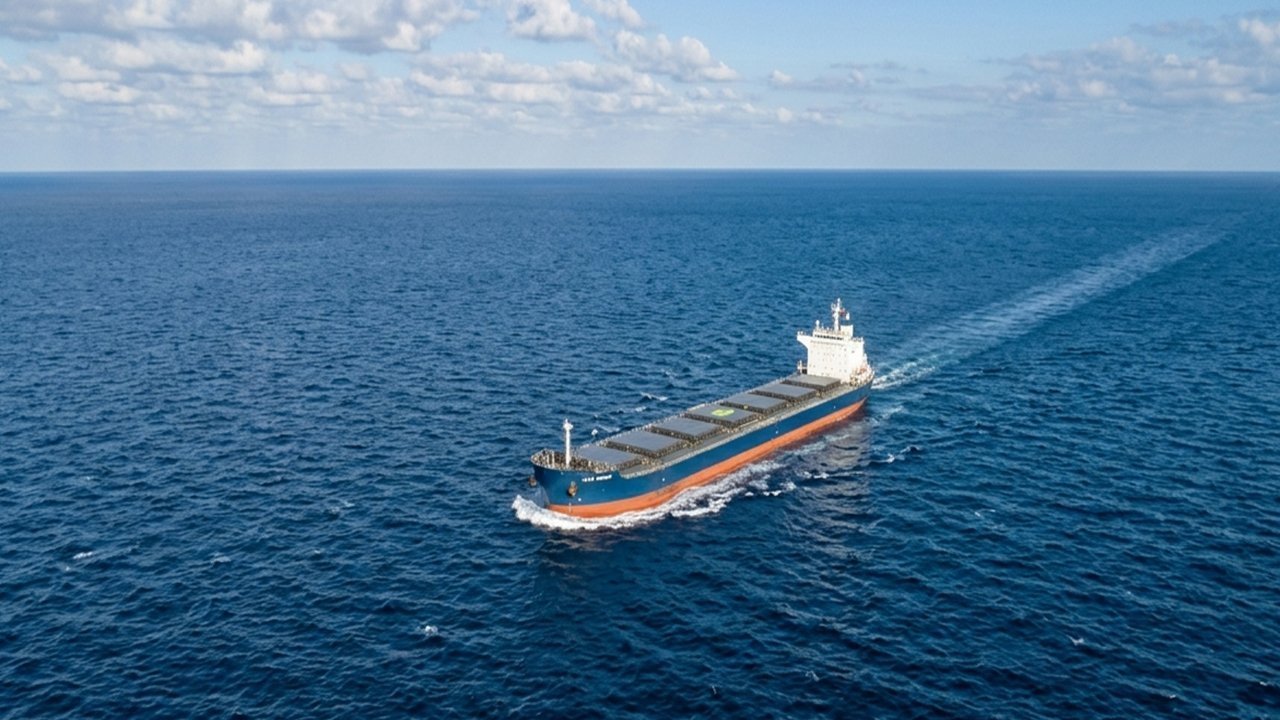
Industry sources estimate that around 300 dry bulk vessels are currently stuck in Gulf waters, with many loaded with fertilizer cargoes destined for African markets. The bottleneck is a particular concern for owners of handy, handymax, supramax and ultramax bulkers in the 20,000–65,000 dwt range, the workhorse fleet for processed fertilizers and feedstock such as urea. Storing cargoes that cannot be discharged is creating additional cost and operational headaches for owners and shippers alike.
Estimates based on data provider Kpler show that 1.9 million tons of fertilizer are now waiting west of the strait — equivalent to 12% of the total fertilizer volume that moved through this waterway in 2024. In other words, the cargo backed up in the Gulf today already represents nearly one-eighth of an entire year's flow. If the disruption persists, that figure is expected to climb quickly, a view reflected in upward pressure on global benchmark prices.
The crisis carries a second, equally critical dimension: the African planting calendar. Holsether stressed that despite Africa's potential as a major food producer, countries on the continent remain "huge food importers" and depend heavily on processed fertilizers, including diammonium phosphate (DAP) and urea, sourced from Gulf suppliers. Adequate fertilizer availability is decisive for yields and food security during planting seasons that run May–October in northern and central Africa and November–March in the south. If Yara's shortage-and-price scenario plays out, low-income countries unable to afford fertilizer face what Holsether described as "quite dramatic consequences."
Key Takeaways:
1. Yara CEO Svein Tore Holsether warned the Hormuz bottleneck could spark a "global auction" for fertilizer supply.
2. Industry sources estimate around 300 dry bulk vessels are stuck in Gulf waters, many carrying fertilizer cargoes bound for Africa.
3. Gulf states supply 30–35% of international urea trade and 20–30% of ammonia; about 30% of global fertilizer normally transits Hormuz.
4. Kpler data show 1.9 million tons of fertilizer are waiting west of the strait — equivalent to 12% of 2024 annual flow.
5. Urea prices are up 60–70% since the war began in late February; low-income fertilizer-importing nations, especially in Africa, will be hardest hit.

