

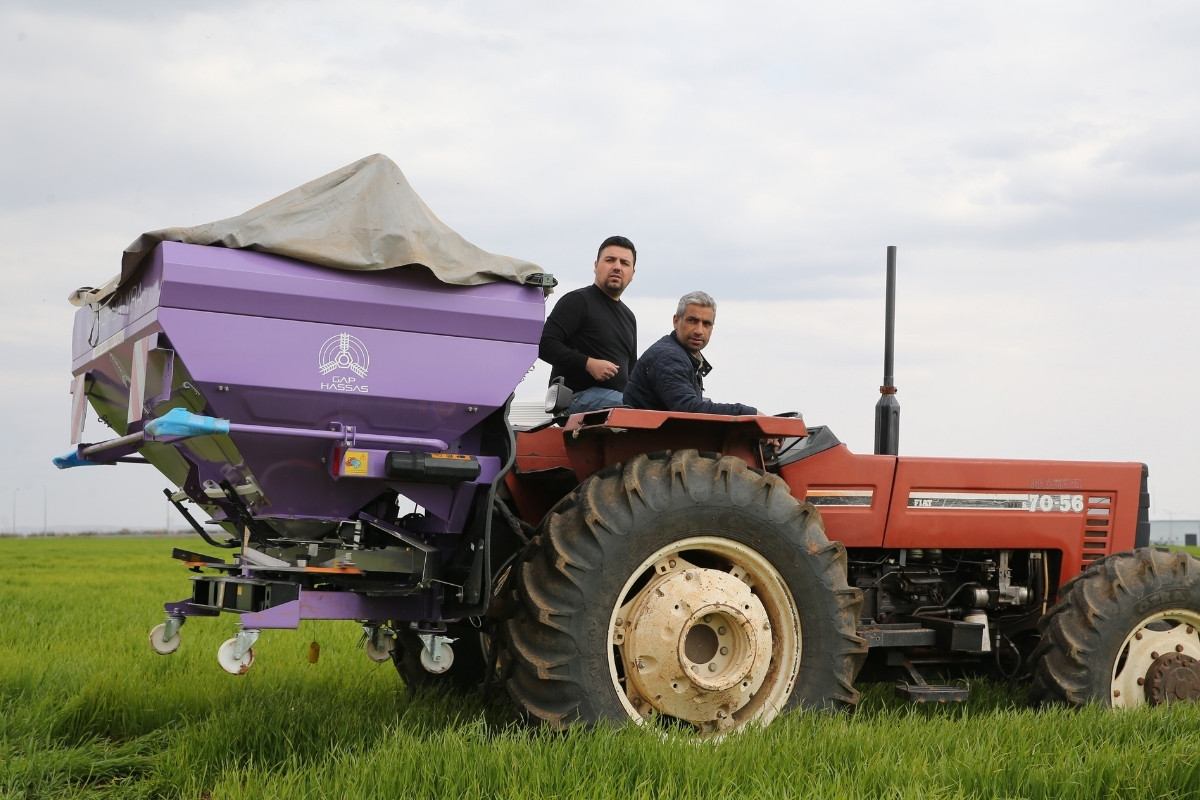
Türkiye's GAP Regional Development Administration (GAP BKİ), the agency responsible for the multi-province Southeastern Anatolia Project, said farmers using its homegrown "GAP Precision Software" platform have cut fertiliser costs by roughly 30%. Built under the "Diffusion of Precision Agriculture and Sustainable Practices" programme, the system combines satellite imagery and hyperspectral cameras to monitor crop development and soil needs remotely, then prescribes variable-rate fertilisation matched to each plot rather than a uniform per-hectare dose.
GAP BKİ President Hasan Maral told state news agency AA that the platform is now open to all producers across the southeast, with adoption past 3,500 farmers covering more than 250,000 decares (≈ 25,000 hectares). "Mainstreaming smart-agriculture technology is at least as critical as completing the irrigation programme," Maral said. On some pilot plots, producers have achieved the same yield using half the fertiliser, and in others half the irrigation water — a meaningful margin gain in a period of high input and energy costs.
Prof. Dr. Mehmet Ali Çullu of Harran University's Department of Soil Science and Plant Nutrition pointed to two distinct problems with uncontrolled fertilisation: untimely or excessive top-dressing of nitrogen fertilisers contaminates groundwater with nitrates and damages human health, while nitrogen gas emissions pollute the atmosphere. Once integrated with a tractor, the precision software ingests crop pattern and soil properties for the plot, then applies less fertiliser where the field profile demands less and more where it demands more.
From a supply chain and agtech standpoint the GAP platform produces three structural effects on Türkiye's agricultural input chain: (1) reduced demand for nitrogen-based fertiliser eases shipping volumes and storage load between domestic producers and distributors; (2) a lighter call on irrigation infrastructure provides breathing room for regional water management under drought conditions; and (3) the data flow from 250,000+ decares creates the foundation for a national agricultural data layer showing which input profile is optimal for which crop-soil-climate combination — a sovereign data substrate that private-sector agtech applications can build on.
Key Takeaways:
1. GAP BKİ's homegrown 'GAP Precision Software' has spread to over 3,500 farmers and more than 250,000 decares across southeast Türkiye.
2. Satellite imagery and hyperspectral cameras drive variable-rate fertilisation per plot; input costs are down by roughly 30%.
3. On some pilot plots producers matched standard yields with half the fertiliser or half the irrigation water.
4. Harran University's Prof. Dr. Çullu warned that uncontrolled nitrogen fertilisation pollutes groundwater with nitrates and emits atmospheric nitrogen gases.
5. The platform creates three structural effects: lighter fertiliser logistics, reduced irrigation load, and a national agricultural data layer for agtech.

