

Çeşmeli-Kızkalesi Highway 88% Complete: 2.5-Hour Drive Drops to 18 Minutes With Projected ₺3.038 Billion in Annual
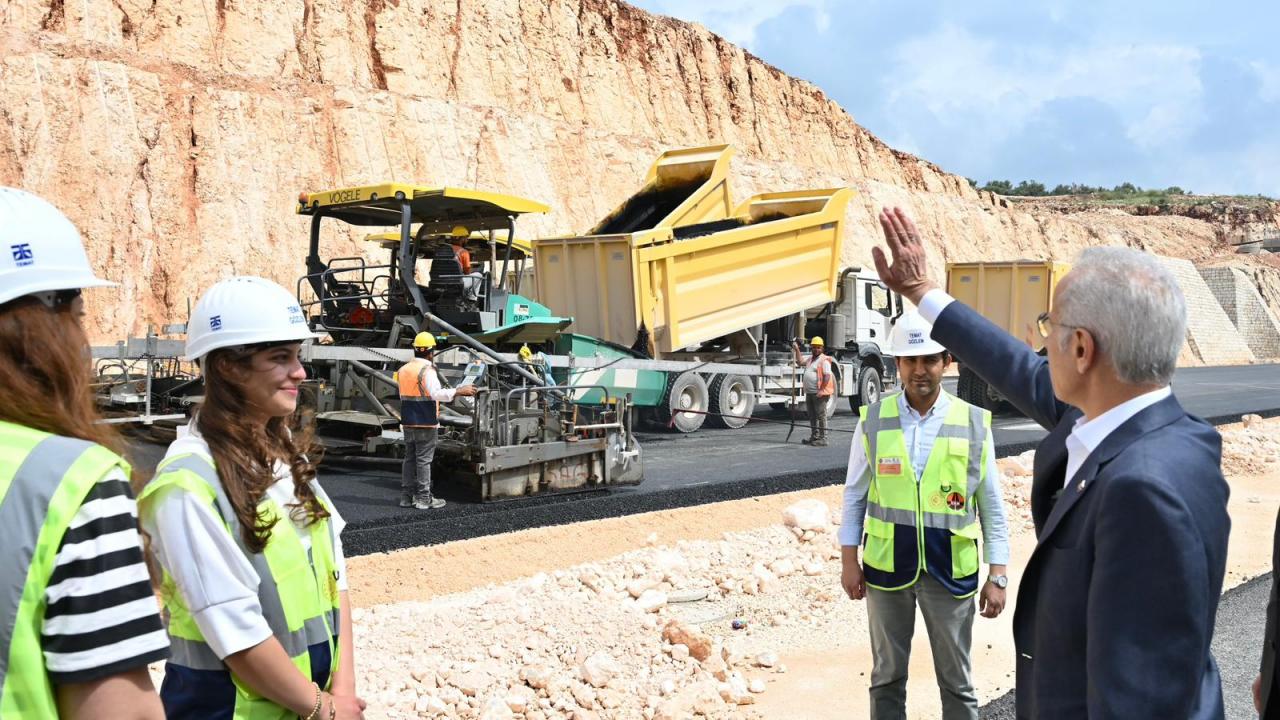
Transport and Infrastructure Minister Abdulkadir Uraloğlu announced that the Çeşmeli-Kızkalesi Highway on Türkiye's Mediterranean coast is now 88% complete, with 7 tunnels totalling 20,232 metres and 5 viaducts totalling 3,266 metres finished. Tunnels and viaducts make up roughly a quarter of the 52-kilometre motorway. Earthworks are 99% done across approximately 41 million m³ of cut-and-fill, while 131 of 140 bridges and engineering structures have been completed for 95% progress.
On the superstructure side, around 1.8 million tonnes of the 3.8 million-tonne asphalt and sub-layer target has been laid, putting the segment over 50% complete. "Very little remains; we are heading to the finish line," Uraloğlu said, signalling the project is in its final phase. Once open, the highway will plug Mersin, Adana, Osmaniye and Gaziantep directly into the national motorway network — knitting the Mediterranean coastal corridor into the inland continental logistics grid without interruption.
The strategic payoff is in the routing: traffic on the D-400 Mediterranean coastal road and the D-715 Konya–Mersin state road will join the existing motorway axis without crossing city centres. During the summer tourism peak this relieves both transit congestion and intra-city traffic — and cuts the existing summer-season journey time of up to 2.5 hours down to just 18 minutes. For heavy-truck flows tied to Mersin Port, Taşucu and the wider Gulf of İskenderun catchment, the corridor's improved travel-time and fuel profile will pass directly into freight cost.
From a supply chain perspective the return on the investment was quantified by the ministry: an annual ₺3.038 billion saving — ₺2.7 billion on time and ₺338 million on fuel — plus 17,100 tonnes of avoided CO₂ emissions per year. For Mersin's citrus exports, Mediterranean fresh-produce corridors and east–west automotive logistics, the highway is not just an infrastructure asset — it positions itself as the principal port-hinterland artery on Türkiye's Mediterranean corridor.
Key Takeaways:
1. Çeşmeli-Kızkalesi Highway has reached 88% physical completion, with 7 tunnels (20,232 m) and 5 viaducts (3,266 m) finished.
2. The 52 km motorway will plug Mersin, Adana, Osmaniye and Gaziantep directly into Türkiye's national network, integrating coastal and inland logistics.
3. D-400 and D-715 transit traffic will merge with the motorway without crossing city centres, easing both transit and urban congestion.
4. Peak summer travel times of up to 2.5 hours will drop to just 18 minutes — a step-change for tourism and freight movements.
5. Projected annual savings of ₺3.038 billion (time + fuel) and 17,100 tonnes of avoided CO₂; positioned as Türkiye's main Mediterranean port-hinterland artery.
[3624685]

