

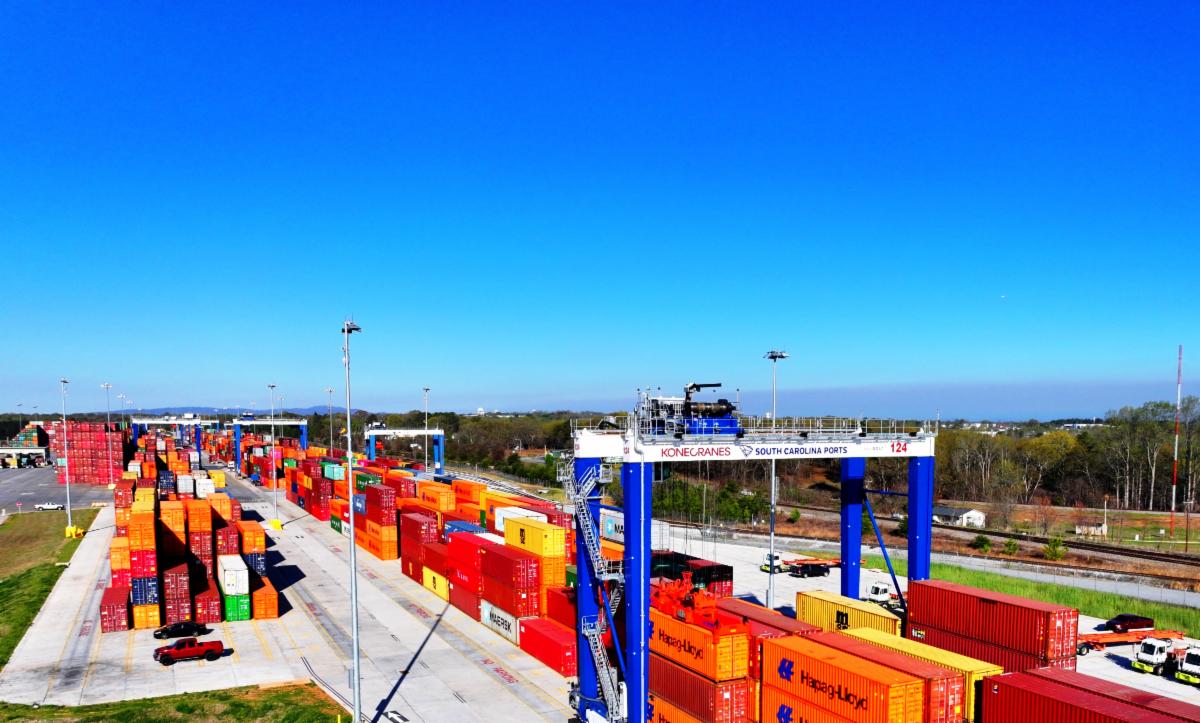
Inland Port Greer continues to anchor intermodal traffic in the U.S. Southeast, posting nearly 200,000 rail moves in 2025 — a record year. The facility offers strong rail connectivity to the Port of Charleston via Norfolk Southern and serves regional markets as a high-volume, short-haul intermodal solution.
Located along the I-85 corridor between Atlanta and Charlotte, the inland port gives shippers access to 94 million consumers within a one-day truck drive. It runs 24/7 gate operations, 11-minute turn times and overnight rail service six days a week.
Since opening in 2013, Inland Port Greer has expanded rapidly. It now serves more than 150 customers across the Southeast, including manufacturers, retailers and consumer goods companies. Strong export demand helps balance container flows through the Port of Charleston.
Micah Mallace, president and CEO of South Carolina Ports, said the facility "has become a critical asset for the Southeastern supply chain." The inland port model points to a continued reshaping of U.S. supply chains away from coast-only flows toward inland nodes.
Greer's performance shows the strategic buffer model — designed to absorb coastal port congestion — is now scaling at a regional level. With rising automotive and retail manufacturing footprints, South Carolina's rail-anchored freight infrastructure is expected to keep growing.
Key Takeaways:
1. Inland Port Greer hit a record near 200,000 rail moves in 2025.
2. The facility connects to the Port of Charleston via Norfolk Southern.
3. It runs 24/7 gate operations and 11-minute turn times along the I-85 corridor.
4. It serves more than 150 customers, with 94 million consumers within a one-day truck drive.
5. South Carolina Ports CEO Micah Mallace called the site 'a critical asset for the Southeastern supply chain.'

