

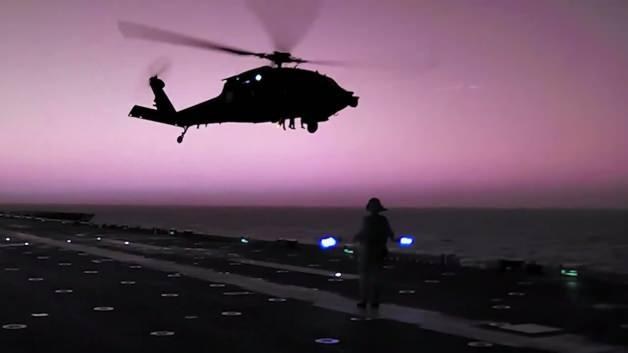
According to a statement by the U.S. Central Command (CENTCOM), U.S. Marines boarded the commercial vessel M/V Blue Star III in the Sea of Oman on suspicion of breaching the Iran blockade.
Following on-board inspection, the ship was released after no Iranian port was found on its route. The operation underscores the scope of U.S. maritime enforcement across the Middle East — a recurring agenda item for supply chain operators.
U.S. forces have continued blockade enforcement across the Middle East uninterrupted, with a total of 39 vessels rerouted to date to ensure compliance. These inspections add a new compliance-risk layer for owners operating in the Strait of Hormuz, Sea of Oman and Arabian Sea corridors.
For supply chains, the critical point is that adding an Iranian port to a route materially raises the risk of stop-and-search. For cargo owners and P&I insurers, transits near Hormuz increasingly require rigorous route documentation, preserved AIS signals and verifiable cargo origin records.
Key Takeaways:
1. U.S. Marines boarded M/V Blue Star III in the Sea of Oman.
2. After confirming no Iranian port on the route, the vessel was released.
3. 39 vessels have been rerouted to date under U.S. blockade enforcement.
4. Hormuz, Sea of Oman and Arabian Sea routes now carry a new compliance risk layer.
5. Owners and P&I insurers face heightened pressure on route documentation and AIS continuity.
[362777]

