

U.S. Navy F/A-18 Super Hornet From USS Abraham Lincoln Disables Iran-Flagged VLCC Hasna in the Gulf of Oman
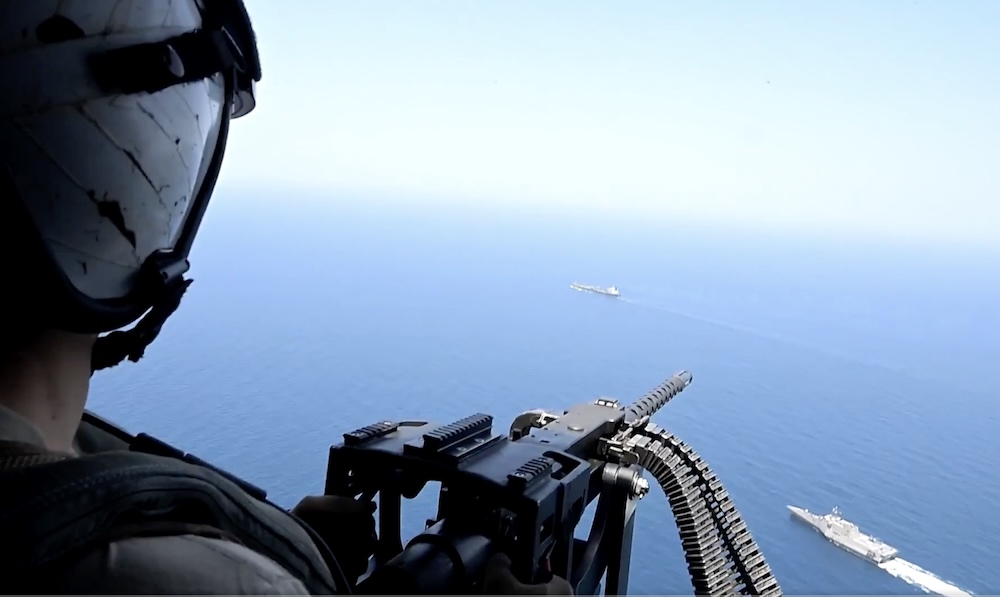
A U.S. Navy F/A-18 Super Hornet launched from USS Abraham Lincoln has disabled the Iran-flagged VLCC Hasna in the Gulf of Oman. The 7 May 2026 dispatch from Splash247 by editor Sam Chambers reports that the tanker was alleged to have attempted to breach the U.S. naval blockade on Iran. CENTCOM-sourced imagery and confirmations show that Hasna began turning toward shore after the strike; no official statement has been made on crew casualties.
The incident is one of the most direct U.S.-Iran encounters in the Strait of Hormuz theatre over the past 24 months. Coming in the same window as the Trump administration's "Freedom Project" convoy-escort operation and the reported Pakistan-mediated Iran-U.S. final-agreement track, the engagement suggests a step up to an escalatory phase in the kinetic enforcement of the blockade. Splash247's lead piece characterised the event in 19th-century naval terms — "gunboat diplomacy returns".
For the supply chain, the engagement is likely to inject a new wave of volatility into Brent and WTI oil curves, tanker war-risk premiums and Asia-Europe freight rates. Major carriers including Maersk, Hapag-Lloyd and MSC are running Hormuz transit on limited tonnage. Saudi-UAE bypass flows via Oman and Saudi road/rail corridors have not yet absorbed the missing Iranian crude volume. The episode reinforces — for shippers — daily-spot tanker volatility and the need for flexibility buffers when planning bulk shipments of fertiliser, grain and steel.
Key Takeaways:
1. A U.S. Navy F/A-18 Super Hornet from USS Abraham Lincoln disabled Iran-flagged VLCC Hasna in the Gulf of Oman.
2. Splash247 framed the event as 'gunboat diplomacy returns to Hormuz'; CENTCOM has shared official imagery.
3. The strike came in the same window as Trump's 'Freedom Project' escort operation and reported Pakistan-mediated Iran-U.S. talks.
4. Volatility is expected in Brent/WTI curves, tanker war-risk premiums and Asia-Europe freight rates.
5. Maersk, Hapag-Lloyd and MSC are running Hormuz transit on limited tonnage; bypass flows have not absorbed the missing volume.

