

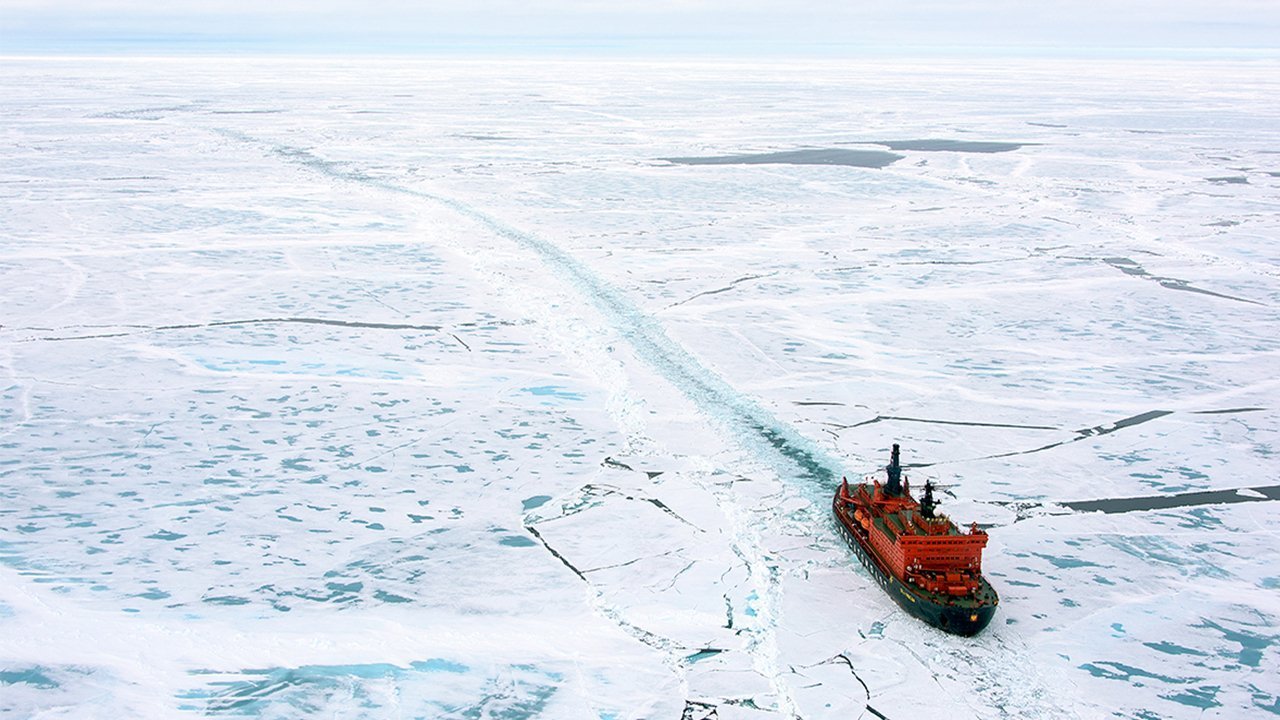
Russia is spending $26 billion to modernize Northern Sea Route infrastructure, aiming to make year-round Arctic Ocean navigation a reality by 2030. At this month's St. Petersburg International Transport and Logistics Forum, the State Atomic Energy Corporation Rosatom's Director General Alexey Likhachev said Russia is accelerating technological R&D and the construction of special vessels. Rosatom manages the Russian portion of the Arctic port infrastructure.
Likhachev: "The Northern Sea Route's transition from pilot projects to regular shipping requires effort to ensure that the route and the trans-Arctic transport corridor can sustain year-round navigation by the 2030s." Deputy Kirill Komanov set three main goals to build the trans-Arctic corridor: a full icebreaker escort system, expanded scale of ice-class transport vessels and improved infrastructure for multimodal connectivity.
Rosatom's Special Representative for Arctic Development Vladimir Panov emphasized that the Arctic sea route passes through only six countries, with 70% of its waters belonging to Russia, and called the route far safer than traditional ones.
Rosatom operates the world's only nuclear-powered icebreaker fleet, with eight vessels in service and four under construction. These vessels break ice several metres thick, enabling year-round operations on the Northern Sea Route; nuclear-powered icebreakers can operate continuously for seven years without refueling and have near-zero carbon emissions. In February 2026 the icebreaker Siberia of this type joined the fleet.
Key Takeaways:
1. Russia is spending $26 billion on Northern Sea Route infrastructure, targeting year-round navigation by 2030.
2. Rosatom CEO Alexey Likhachev announced the plan at the St. Petersburg forum.
3. Three goals: icebreaker escort system, expanded ice-class transport vessels, multimodal infrastructure.
4. Vladimir Panov: the route passes through six countries; 70% of waters belong to Russia.
5. Rosatom's nuclear icebreaker fleet has 8 vessels in service and 4 under construction; Siberia joined in February 2026.

