

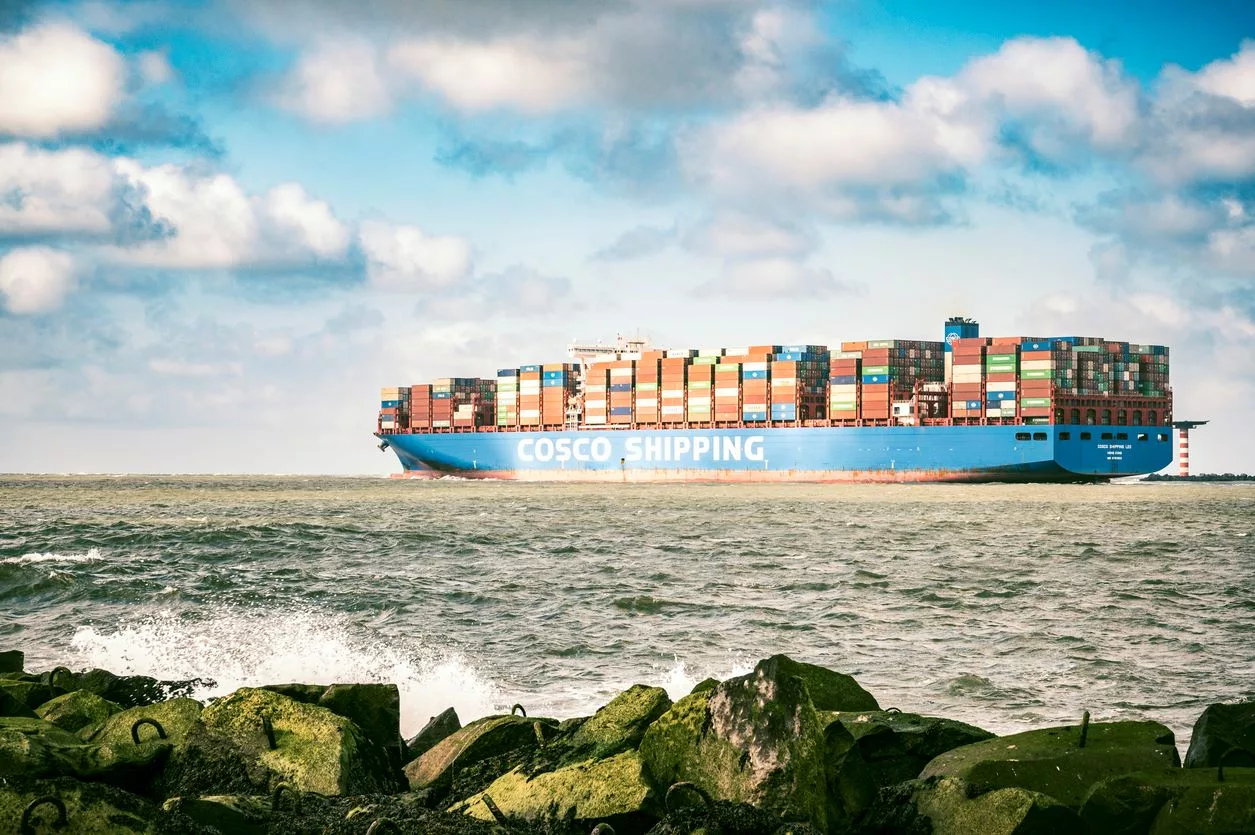
Trump administration begins imposing fees on Chinese vessels calling at American ports on October 14 — a move aimed at countering China’s dominance in commercial shipbuilding and revitalizing the United States’ own shipbuilding sector. China’s Ministry of Transport retaliated on October 10, announcing plans to charge American vessels when they call at Chinese ports. U.S.-linked vessels currently face charges of 400 yuan (56 dollars) per net ton when calling at Chinese ports, according to Chinese state media CCTV. The New York Times reports that this “tit-for-tat” escalation comes as trade relations between China and the U.S. deteriorate further. From a supply chain perspective, the Office of the United States Trade Representative (USTR) is investigating China’s shipbuilding dominance under a Section 301 investigation — and the USTR has subsequently initiated service fees.
From a supply chain perspective, the global shipbuilding sector is dominated by China, which produces over 50% of global total tonnage — South Korea accounts for 30%, Japan 15%, and the U.S. less than 1%. Major Chinese shipyards include China State Shipbuilding Corporation (CSSC); China Shipbuilding Industry Corporation (CSIC, which merged with CSSC); Yangzijiang Shipbuilding; New Times Shipbuilding; Hudong-Zhonghua Shipbuilding; Jiangnan Shipyard; Dalian Shipbuilding Industry; and Jiangsu Hantong. Major Korean shipyards include HD Hyundai Heavy Industries; HD Korea Shipbuilding & Offshore Engineering; Samsung Heavy Industries; Hanwha Ocean (formerly Daewoo Shipbuilding & Marine Engineering, or DSME); and HJ Shipbuilding & Construction. Major Japanese shipyards include Mitsui E&S; Imabari Shipbuilding; Tsuneishi Shipbuilding; Japan Marine United; Mitsubishi Shipbuilding; Kawasaki Heavy Industries; and Sumitomo Heavy Industries Marine & Engineering. Major European shipyards include Fincantieri (Italy); Damen Shipyards (Netherlands); Meyer Werft (Germany); Chantiers de l’Atlantique (France); Naval Group; BAE Systems Maritime; Babcock; Navantia (Spain); and Damen Shipyards.
From a supply chain perspective, U.S. shipbuilding has structurally contracted since World War II. The Jones Act (Merchant Marine Act of 1920) requires that commercial vessels operating in U.S. inland waterways be U.S.-built, U.S.-owned, U.S.-flagged, and U.S.-crewed. Major U.S. shipyards include General Dynamics NASSCO; General Dynamics Bath Iron Works; General Dynamics Electric Boat; HII Newport News Shipbuilding (Huntington Ingalls Industries); HII Ingalls; Bollinger Shipyards; Austal USA; Eastern Shipbuilding; Marinette Marine (Fincantieri); and Philly Shipyard (owned by HD Hyundai). The SHIPS for America Act is legislation pending in the Senate designed to revitalize the U.S. shipbuilding sector. Trump 2.0 is establishing a Maritime Executive Office at the White House to coordinate maritime policy. Programs such as the Maritime Security Program (MSP), Tanker Security Program (TSP), and Cable Security Program subsidize U.S. strategic maritime capacity. The U.S. Navy remains the world’s largest fleet — though China’s PLA Navy (PLAN) has surpassed it in ship count.
From a supply chain perspective, China’s dominance in global commercial shipping is reflected in major Chinese maritime companies including COSCO Shipping Lines; OOCL (Orient Overseas Container Line, acquired by COSCO in 2018); China Merchants Group; Shanghai International Port Group (SIPG); China Shipping (merged with COSCO); Sinotrans; and SITC International. The USTR Section 301 Service Fee applies to Chinese-built, Chinese-owned, and Chinese-operated vessels, with a tariff structure that increases progressively per net ton. Flags of convenience (FOC) include registries in Liberia; Marshall Islands; Panama; Hong Kong; Singapore; Malta; Cyprus; Bahamas; Cayman Islands; and Antigua and Barbuda. Key maritime ownership and regulatory concepts include true ownership; beneficial owner; flag state; and port state control. Key sectoral organizations include the WTO; UNCTAD Review of Maritime Transport; BIMCO; and ICS (International Chamber of Shipping). Ultimately, the U.S.’s imposition of fees on Chinese vessels represents a clear marker of the geoeconomic transformation of global maritime trade.
Key Points:
1. Trump administration begins imposing port fees on Chinese vessels on October 14.
2. China announces retaliation on October 10 — charging U.S.-linked vessels.
3. Chinese port fee: 400 yuan (56 dollars) per net ton.
4. U.S. holds less than 1% of the global shipbuilding market.
5. USTR Section 301 provides the legal basis for the fee.

