

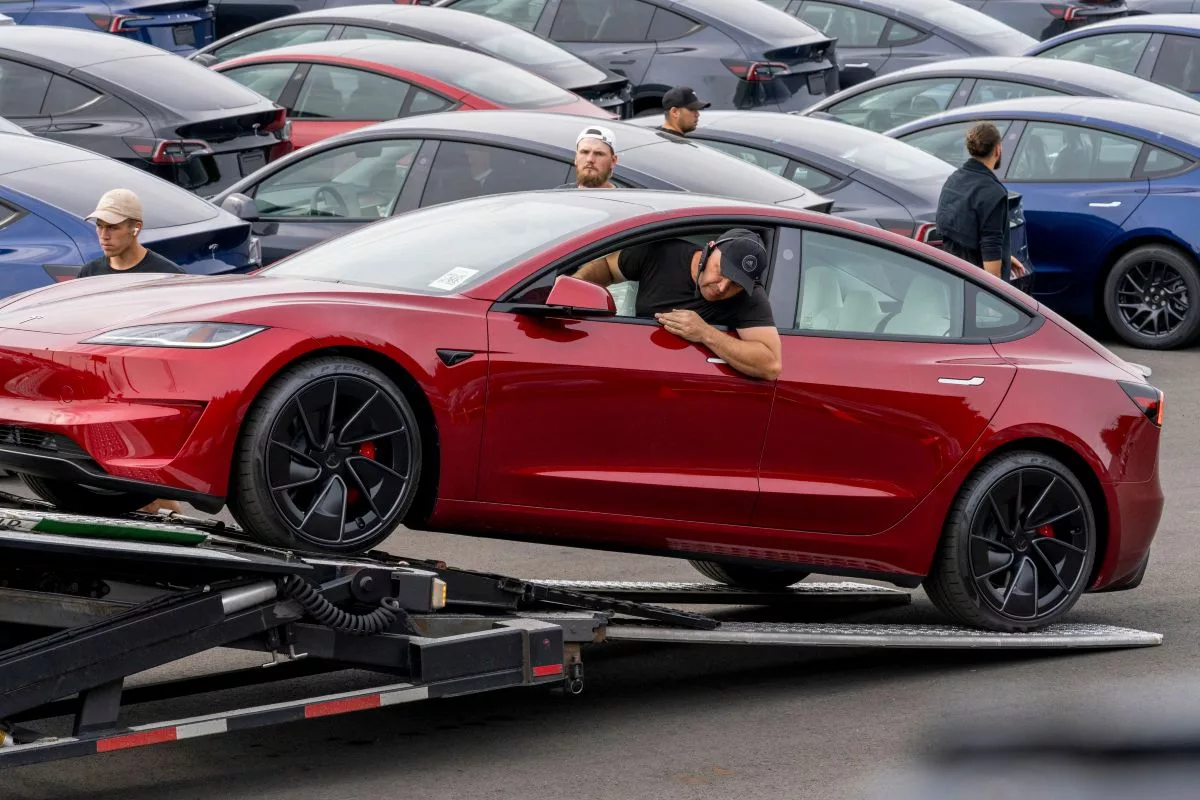
Tesla Inc.’s door handles are facing renewed scrutiny in the U.S. following federal automotive safety regulators' opening of an investigation into emergency releases in certain Model 3 vehicles. The National Highway Traffic Safety Administration (NHTSA) said it is evaluating claims that the mechanical door release is “hidden, unlabeled and not intuitive in an emergency,” according to a filing on the agency’s website. The move stems from a petition submitted by Kevin Clouse, a Tesla owner from Georgia, who reported in 2023 that he was trapped in his vehicle. From a supply chain perspective, Tesla Inc. is based in Austin, Texas (formerly Palo Alto) and was founded in 2003 by Martin Eberhard and Marc Tarpenning, with Elon Musk joining as an investor and executive in 2004. Its product portfolio comprises the Model S (2012), Model X (2015), Model 3 (2017), Model Y (2020), Cybertruck (2023), Semi, and Roadster.
From a supply chain perspective, NHTSA is the principal automotive safety regulator positioned under the U.S. Department of Transportation (DOT). The Office of Defects Investigation (ODI) conducts investigations and progressively includes processes of Preliminary Evaluation (PE), Engineering Analysis (EA), Recall Query (RQ), and Recall Management Division (RMD). FMVSS (Federal Motor Vehicle Safety Standards) are the federal regulations establishing vehicle safety standards. FMVSS 206 sets standards for door locks and door retention components. On the EU side, UNECE regulations such as R11 (door locks) play a similar role. NCAP (New Car Assessment Program) crash test protocols include Euro NCAP, IIHS (Insurance Institute for Highway Safety), JNCAP, C-NCAP, and ANCAP, which are regional versions of global vehicle safety assessment programs.
From a supply chain perspective, Tesla’s flush door handle design is preferred for aerodynamic advantage and aesthetics; however, access to the mechanical release in the event of electric opening mechanism failure remains contentious. The Model S, Model X, Model 3, and Model Y share similar architecture. Design differentiation occurs in the Cybertruck. The flush handle design is similarly used in the Lucid Air, Polestar 2, Xpeng P7, NIO ET7, Rivian R1S, Aston Martin DBX, and Range Rover Velar. NHTSA’s active investigations of Tesla span a broad range spanning Autopilot, FSD (Full Self-Driving), Phantom Braking, Battery Fire, Suspension Failure, Steering, and Yoke. Tesla’s recall timeline is distinguished by its strategy of resolving the majority of issues through OTA (Over-The-Air) software updates—however, hardware issues require physical service.
From a supply chain perspective, automotive recall is among the costliest events in OEM supply chains. Tier 1 supplier responsibility sharing, warranty reserves, recall reserve accounting, product liability insurance, D&O insurance, and recall risk financial management are fundamental tools in managing recall risk. Aisin, Magna, Continental, Bosch, ZF Friedrichshafen, Denso, Hyundai Mobis, Valeo, and Faurecia are among the leading global automotive Tier 1 suppliers. Tesla, through its vertical integration strategy, manufactures most critical components in-house—however, it sources electrical mechanisms, actuators, and controllers from suppliers such as Magna, Brose, Aisin, Witte Automotive, Huf Group, Kostal, and Methode Electronics. Bloomberg published the story with a photo drawn from the logistics distribution region in Seattle by M. Scott Brauer. In conclusion, NHTSA’s investigation into Model 3 door handles clearly demonstrates the importance of balancing EV design decisions under regulatory scrutiny.
Key Points:
1. NHTSA launches investigation into Tesla Model 3 emergency door handles.
2. Mechanical release is alleged to be hidden, unlabeled, and not intuitive.
3. Kevin Clouse reported in 2023 via petition that he was trapped in his vehicle.
4. Investigation is reported by Bloomberg.
5. Tesla’s flush handle design is under regulatory scrutiny.

