

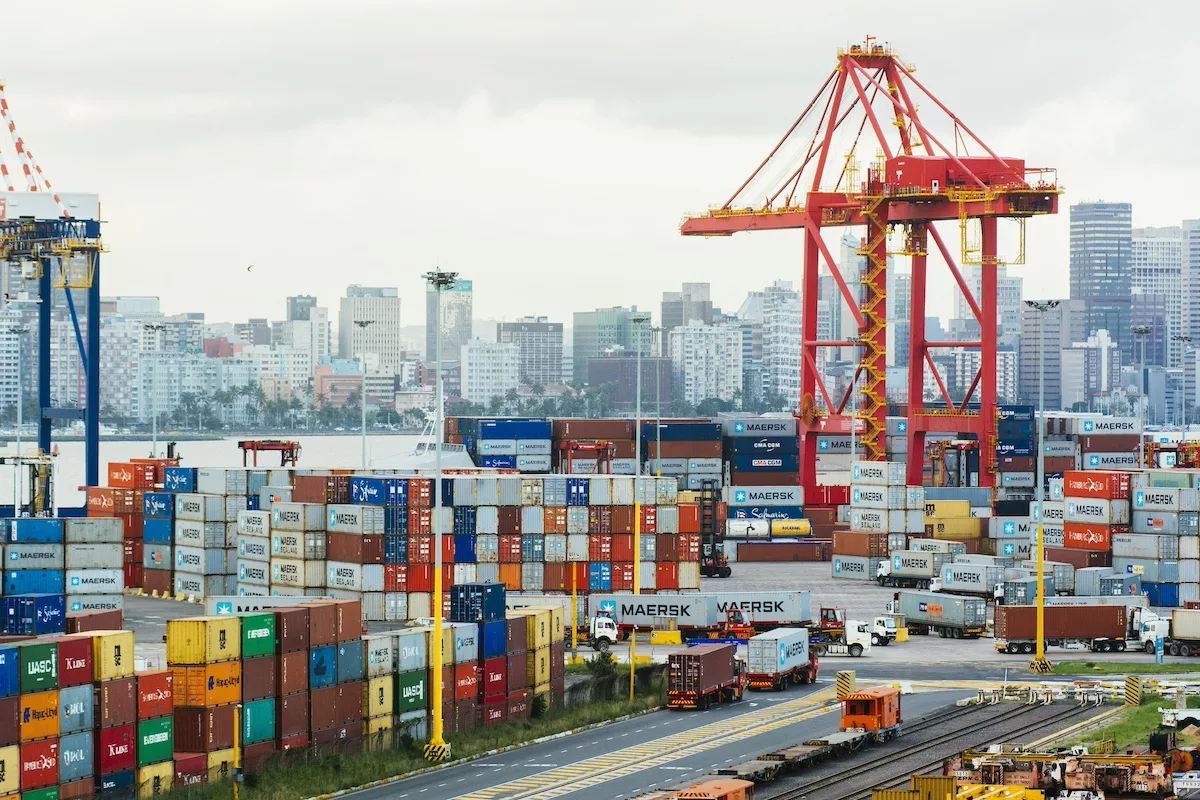
South Africa's port and logistics company Transnet SOC Ltd. has signed a concession agreement with a firm controlled by Filipino billionaire Enrique Razon to expand the main terminal at Durban, the continent's largest container hub. The signing, which Transnet describes as South Africa's first-ever port privatization deal, comes two years after the company granted International Container Terminal Services Inc. the right to purchase nearly half of Container Terminal Pier 2 and operate the facility for 25 years. Razon's firm is spending approximately 11 billion rand ($647 million) on its plans. From a supply chain perspective, Transnet, based in Johannesburg and owned by the South African government, is a railway, port, oil and gas pipeline operator. Transnet Port Terminals (TPT); Transnet Freight Rail (TFR); Transnet Engineering (TE); Transnet National Ports Authority (TNPA); and Transnet Pipelines (TPL) are its main business units.
"This groundbreaking partnership is a step forward in Transnet's ambition to be among the world's best ports," Transnet Chief Executive Michelle Phillips said at a ceremony in Durban on December 10. The agreement marks the largest initiative to inject private expertise to revitalize state-owned ports, which rank among the world's least efficient according to the World Bank. Pier 2 handles approximately 70 percent of Durban port's total traffic and more than 40 percent of South Africa's container volume, Phillips said. The introduction of new technology and equipment is expected to increase Pier 2's capacity by 40 percent and bring it to a level of 2.8 million twenty-foot equivalent units (TEU). From a supply chain perspective, ICTSI (International Container Terminal Services Inc.) is a Manila-based global-scale port operator founded by the Razon family — operating at 33 terminals across 6 continents.
From a supply chain perspective, Enrique Razon Jr. is one of the Philippines' wealthiest businessmen — with a net worth of 9-10 billion dollars as of 2025 according to Forbes. ICTSI ranks among leading global terminal operators alongside PSA International (Singapore); DP World (UAE); APM Terminals (Maersk); Hutchison Ports (CK Hutchison); Cosco Shipping Ports; SSA Marine; Eurogate; HHLA; Yilport (Türkiye); and Adani Ports (India). Durban is sub-Saharan Africa's largest container port — with Cape Town; Port Elizabeth; East London; Saldanha Bay; Richards Bay; and Mossel Bay serving as other major nodes in the South African port network. South Africa's port performance challenges see the country consistently rank among the lowest globally on the Container Port Performance Index (CPPI) — with Durban; Cape Town; and Ngqura frequently showing poor performance.
From a supply chain perspective, South Africa, as a BRICS member, is a significant player in global trade — with platinum; gold; diamonds; chromium; manganese; iron ore; coal; citrus; wine; automotive; and petrochemicals among its major export categories. BMW; Mercedes-Benz; Toyota; Volkswagen; Ford; Isuzu; and Nissan manufacture vehicles in South Africa. AGOA (African Growth and Opportunity Act) provides preferential access to the U.S. — though renewal and continuity uncertainty has increased with the Trump administration. SADC (Southern African Development Community) and AfCFTA (African Continental Free Trade Area) are the main frameworks for regional trade integration. Load shedding (rolling blackouts) and chronic issues at Eskom remain among the fundamental challenges to South Africa's economy. The concession model; BOT (Build-Operate-Transfer); and PPP (Public-Private Partnership) structures are standard tools in global port privatization. In conclusion, the Transnet-ICTSI deal represents both a symbolic and operational beginning to South Africa's logistics infrastructure reform.
Key Points:
1. Transnet and ICTSI sign 25-year concession agreement for Durban Pier 2.
2. Enrique Razon, a Filipino billionaire, is investing 11 billion rand ($647M).
3. Michelle Phillips, Transnet CEO, made the announcement on December 10.
4. Pier 2 handles 40 percent of South Africa's container volume.
5. Capacity is expected to increase by 40 percent to 2.8 million TEU.

