

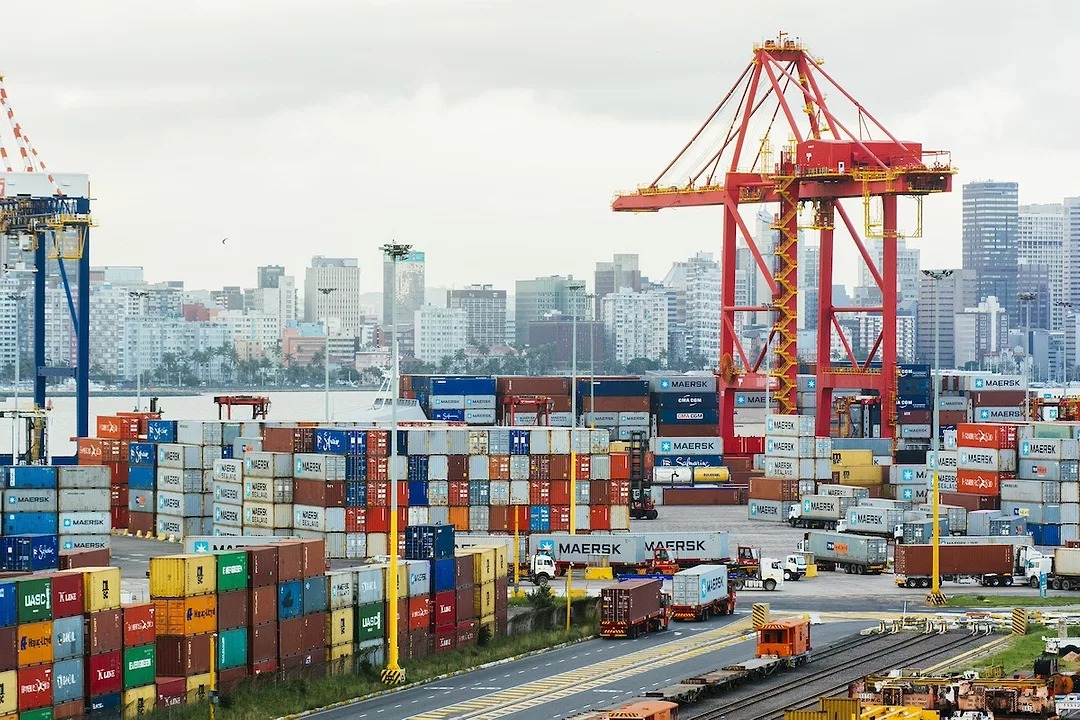
South Africa has crossed a historic threshold in port operations. State-owned Transnet SOC Ltd. has signed its first comprehensive port privatisation agreement with the private sector for the expansion and operation of the Pier 2 terminal at the Port of Durban, the continent's and the country's largest container port. According to Bloomberg, the agreement was concluded with International Container Terminal Services Inc. (ICTSI), led by Philippine billionaire Enrique Razon.
Defined by Transnet as "South Africa's first port privatization deal," this agreement follows on from the decision two years ago to sell ICTSI approximately half of Pier 2 and grant it the right to operate for 25 years. Under the newly signed concession agreement, Razon's company is committed to investing approximately 11 billion rand ($647 million USD) to modernize the terminal and increase its capacity.
Transnet CEO Michelle Phillips, speaking at a signing ceremony held in Durban on December 10, described the partnership as "a transformative step in line with Transnet's goal to rank among the world's best ports." According to Phillips, the agreement aims to bring not only financing but also private-sector expertise, technology, and operational discipline to address the port's chronic inefficiency problems.
Why Is Durban Port Critical?
Pier 2 forms the operational heart of Durban Port. The terminal handles:
approximately 70% of Durban Port's total throughput,
more than 40% of all container volume in South Africa
Despite this, Durban Port has long ranked in the lowest productivity category according to global port performance indices published by the World Bank. Delays, equipment shortages, low crane efficiency, and limited vessel working hours have been negatively affecting the country's export competitiveness.
Targeted Operational Improvements
With ICTSI's investment, a comprehensive transformation is planned for Pier 2. According to data shared by Transnet:
Terminal capacity will increase by 40% to 2.8 million TEU,
Gross crane moves per hour will rise from 18 to 28,
Ship working hours will double to reach 120 hours.
These improvements aim to reduce vessel turnaround time at the port, increase berth productivity, and accelerate container hinterland connections. According to Transnet, these developments will deliver direct logistics costs reduction and service quality improvement, enabling the port to attract new cargo volumes to Durban.
Public–Private Partnership Model and Regulatory Facilitation
A notable aspect of the agreement is South Africa's Finance Minister Enoch Godongwana's decision to exempt this partnership from the Public Finance Management Act (PFMA) framework. This exemption aims to reduce bureaucratic obligations during the concession period, enabling faster implementation of the investment. The public sector has justified this flexibility on the basis of the urgency of port modernization.
This approach demonstrates South Africa's commitment to improving state-controlled infrastructure through a concession-based private participation model rather than full privatization. According to experts, the Durban agreement could serve as an exemplary model for other South African ports.
Strategic and Regional Impacts
Durban Port is not only critical for South Africa; it is also the main export gateway for the Southern Africa hinterland (countries such as Zambia, Zimbabwe, and Botswana). Productivity gains at the port will:
accelerate mineral and agricultural exports,
enhance reliability in regional supply chains,
enable the port to recapture cargo volumes that have been diverted to alternative African ports.
In this context, the agreement is viewed as one of the most concrete examples of the growing trend toward private operator involvement in African ports.
Overall Assessment
South Africa's first port privatization agreement represents far more than financial relief for Transnet; it is a structural intervention to address long-criticized port performance. If the targeted increases in capacity and efficiency are realized, Durban Port could reinforce its role as a regional hub during the 2026–2030 period.
Key Points:
The agreement represents South Africa's first port privatization deal.
Investor: ICTSI (Enrique Razon); investment amount: 11 billion rand / $647 million USD.
Pier 2 capacity will increase by 40% to 2.8 million TEU.
Crane efficiency targeted at 18 → 28 GPM, ship working hours at 120 hours.
The partnership has been exempted from PFMA requirements to streamline bureaucratic processes.
Objective: reduce logistics costs and raise service quality.
Author: SedatOnat.com

