

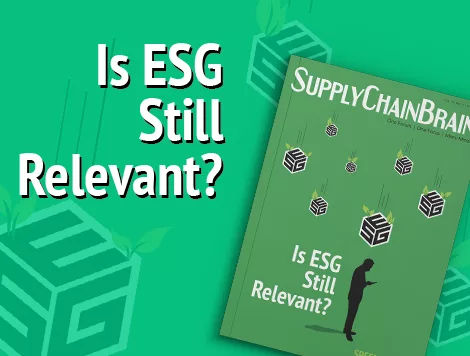
SupplyChainBrain reports that Robert J. Bowman, Editor-in-Chief of SupplyChainBrain, is releasing an annual ESG special issue. Analyst insights indicate that the Trump administration is pushing back against environmental regulations—evidenced by its withdrawal from the Paris Agreement on climate change (again). But do not let this lead you to believe that ESG—environmental, social, and governance—is no longer a concern of international business. On the contrary, companies are pressing forward with efforts to reduce the impact of their global supply chains on our air, water, land, and climate. Similarly, whether out of goodness of heart or growing pressure from consumers, there is increasing concern about human rights in factories, farms, mines, and warehouses. In response to this reality, we are returning with our annual special issue on ESG in supply chains. Here we have invited dozens of industry experts to update their latest thinking on a topic that affects every step of the product journey from design to disposal.
From a supply chain perspective, SupplyChainBrain is published by Keller International Publishing Corporation, with Robert J. Bowman as Editor-in-Chief. The annual ESG special issue is published as SCB Magazine Vol 29 No 2. Other leading industry publications include Supply Chain Management Review, Logistics Management, Modern Materials Handling, Inbound Logistics, DC Velocity, Journal of Commerce (S&P Global), Lloyd's List, Reuters Sustainability, and Bloomberg Green as major ecosystem publications. The Trump administration's rollback steps on ESG and sustainability regulations include: (1) a second withdrawal from the Paris Agreement (January 2025); (2) suspension of implementation of the SEC Climate Disclosure Rule; (3) relaxation of EPA air quality standards; (4) narrowing of NEPA (National Environmental Policy Act) interpretations; (5) elimination of federal DEI (Diversity Equity Inclusion) programs, representing major anti-ESG federal policy moves.
From a supply chain perspective, the leading ESG reporting frameworks include: (1) GRI (Global Reporting Initiative; CEO Robin Hodess; Amsterdam); (2) SASB (Sustainability Accounting Standards Board; now under ISSB); (3) ISSB (International Sustainability Standards Board; IFRS Foundation); (4) TCFD (Task Force on Climate-related Financial Disclosures); (5) CDP (formerly Carbon Disclosure Project; CEO Sherry Madera); (6) SBTi (Science Based Targets initiative); (7) UN Global Compact; (8) EU CSRD (Corporate Sustainability Reporting Directive); (9) EU CSDDD (Corporate Sustainability Due Diligence Directive); (10) California SB 253 (Climate Corporate Data Accountability Act) as leading reporting and regulatory frameworks. Major ESG ratings firms include MSCI ESG (CEO Henry Fernandez), Sustainalytics (owned by Morningstar), S&P Global Sustainable1, ISS ESG, Bloomberg ESG Data, FTSE Russell ESG Ratings, EcoVadis (CEO Pierre-François Thaler), Refinitiv ESG, and Moody's ESG Solutions as major ecosystem players.
From a supply chain perspective, the leading supply chain ESG technology platforms include EcoVadis, Sphera (CEO Paul Marushka), Sourcemap (CEO Leonardo Bonanni), Trase, Mighty Earth, Satelligence, Acclym (formerly Agritask), HowGood, Provenance, Worldly (formerly Higg), Watershed, Persefoni, Greenly, Sweep, Nzero, Plan A, SAP Sustainability Control Tower, Microsoft Cloud for Sustainability, IBM Envizi, and Salesforce Net Zero Cloud as major ecosystem players. Major ESG controversial issues include: (1) Scope 3 emissions calculation; (2) greenwashing; (3) modern slavery (UK Modern Slavery Act; Australia Modern Slavery Act); (4) forced labor (Uyghur Forced Labor Prevention Act; Xinjiang); (5) child labor; (6) conflict minerals (Dodd-Frank Section 1502; EU Conflict Minerals Regulation) as leading industry discussions. The U.S. Department of Labor and Customs and Border Protection (enforcer of UFLPA) are major U.S. federal authorities. In conclusion, Bowman's argument that ESG remains relevant reflects the reality that global supply chain sustainability demands persist independent of geopolitical fluctuations—making EU CSRD/CSDDD/EUDR compliance preparation a major strategic priority for supply chain managers.
Key Notes:
1. Robert J. Bowman (SCB): ESG continues to remain relevant despite the Trump withdrawal.
2. A second withdrawal from the Paris Agreement is a major federal policy signal.
3. Companies continue efforts to reduce the impact of their global supply chains.
4. EU CSRD, CSDDD, and EUDR represent major cross-border compliance pressures.
5. SCB Magazine Vol 29 No 2 is the annual ESG special issue.

