

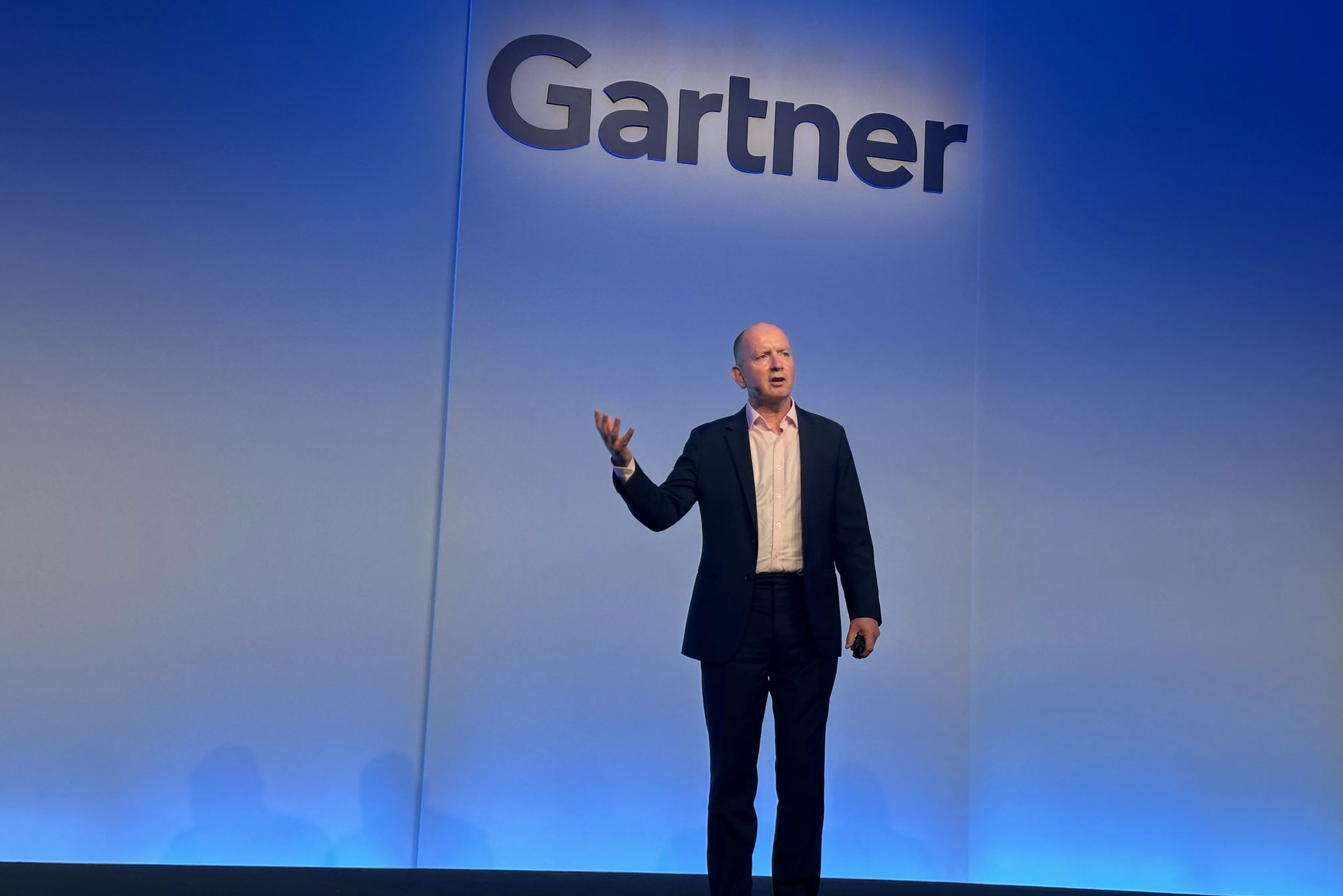
SupplyChainBrain reports: Helen Atkinson, Managing Editor, is focusing on an intriguing new role in the supply chain management industry: robot manager. No joke. Within the next few years there will be so many robots that approximately 5% of workforce managers will be managing robots like people. Of course, not quite like people—since robots don't get sick, take vacation, or take cigarette breaks—Gartner's Tom Enright, Vice President Analyst, noted in his presentation at Gartner's Supply Chain Symposium/XPO on May 5 in Orlando, Florida, during the session "Gartner's Top Strategic Supply Chain Predictions for 2025 and Beyond." "Going forward there will be robot fleets," Enright said. "And they won't just be in distribution centers. They'll be in stores, call centers, factories—everywhere. They will support people and human decision-making—not replace it." This rise of robots will be just one of the sharp, technology-driven changes coming to the supply chain world, making the role of any organization's chief supply chain officer (CSCO) far more central, Enright said. They will be shifting from "trucks and sheds" toward a much more customer-oriented role. Additionally, CSCOs will need to embrace AI and machine learning. "By 2028, 15% of day-to-day supply chain decisions will be made autonomously by AI agents—leaving humans to focus on more critical decisions." Major changes will come from three main areas, Enright said: people, AI, and customers. "Even if only 50% of our predictions prove correct, the CSCO role will become unrecognizable."
From a supply chain perspective, Gartner Inc. (NYSE: IT), based in Stamford, Connecticut, U.S., with Gene Hall as CEO, founded in 1979, is the global leader among technology research and consulting firms—with 2024 annual revenue of $6.3 billion USD and 21,000+ employees. Gartner Supply Chain (formerly Gartner Logistics Strategies; formerly AMR Research, acquired in 2009) includes principal analysts Mike Burkett, Distinguished VP Analyst; Tom Enright; Simon Bailey; Pierfrancesco Manenti; and Dwight Klappich. The Gartner Magic Quadrant; Hype Cycle; and Top 25 Supply Chains ranking are key outputs—with 2024 Top 25 leaders including Schneider Electric, Cisco, Colgate-Palmolive, Microsoft, and Johnson & Johnson as principal leading firms. Other major supply chain research firms include Forrester Research (CEO George Colony), IDC, Nucleus Research, ARC Advisory Group, and Lora Cecere (Supply Chain Insights) as principal ecosystem players.
From a supply chain perspective, principal supply chain robotics providers include Symbotic (Founder Rick Cohen; Walmart as principal customer); Locus Robotics (CEO Rick Faulk); 6 River Systems (Ocado-owned); Geek+; AutoStore (CEO Mats Hovland Vikse; Norway); Exotec (France); GreyOrange; Berkshire Grey (SoftBank-owned); Fetch Robotics (Zebra Technologies-owned); Boston Dynamics (Hyundai-owned); Agility Robotics (CEO Damion Shelton; humanoid "Digit"); Figure AI (CEO Brett Adcock); Apptronik; and 1X Technologies (OpenAI investment) as principal ecosystem players. AI agent and autonomous decision-making providers include o9 Solutions, Aera Technology, Project Atlas (Microsoft), SAP Joule, Salesforce Agentforce, Google Vertex AI, Anthropic Claude, and OpenAI as principal platforms. The Council of Supply Chain Management Professionals (CSCMP) and ASCM are principal professional organizations.
From a supply chain perspective, the evolution of the CSCO role includes: (1) 1980-2000, VP of Logistics; operational role; (2) 2000-2010, VP of Supply Chain; process optimization; (3) 2010-2020, Chief Supply Chain Officer; strategic role; (4) 2020-2024, post-pandemic resilience; ESG; supply chain visibility; (5) 2025+, AI; autonomous decision-making; customer-focused; as principal role evolution. Gartner's other 2025 strategic predictions include: (1) By 2027, 50% of supply chains will increase operational efficiency by 10%+ through generative AI usage; (2) By 2028, 25% of large 1,000-person companies will have an additional chief sustainability officer role; (3) By 2030, advanced robotics adoption will augment 30% of the global workforce; (4) Quantum computing will create real-world impact in supply chain optimization post-2030; (5) Circular supply chain will become mandatory due to regulatory pressure; as principal trend axes. Gartner Symposium/Xpo; Gartner CIO Conference; and Gartner Tech Growth & Innovation Conference are principal annual conferences. In conclusion, Enright's predictions regarding CSCO evolution are fundamentally redefining the global supply chain leadership role and the AI/robotics adoption paradigm—with customer-oriented transformation and autonomous AI agent adoption appearing to be principal strategic priorities for supply chain managers.
Key Notes:
1. Tom Enright (Gartner): By 2028, 15% of day-to-day decisions will be made by AI.
2. 5% of workforce managers will be managing robots like people.
3. CSCO will shift from "trucks and sheds" to a customer-oriented role.
4. Three major transformation areas: people, AI, and customers.
5. Gartner Supply Chain Symposium/XPO Orlando is the principal industry event.

