

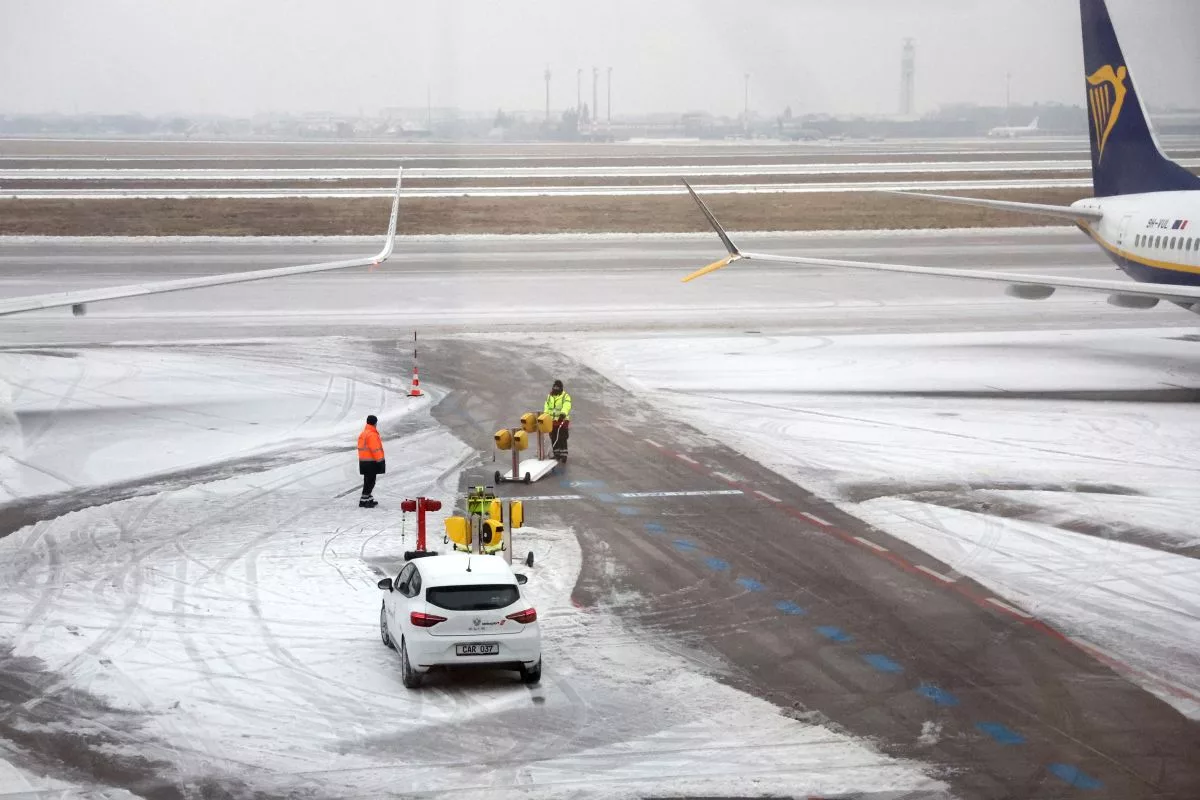
Berlin's main airport reopened on February 6 following a closure that saw hundreds of flights cancelled due to icing conditions disrupting transport systems across Northern Germany. Berlin Brandenburg Airport announced in a post on X on the afternoon of February 6 that some airlines were resuming flights; however, significant delays and cancellations are expected to persist. According to FlightAware data, more than 190 flights at the hub were cancelled within a 24-hour period. The incident underscores once again how sensitive European air traffic remains to extreme weather events during winter months, and highlights the importance of business continuity planning (BCP) for airport operations.
Closures began in the late evening of February 5, with the airport explaining on its website that no departures or arrivals could be conducted due to freezing rain and black ice. The operator used the phrase "Passengers need to be patient" in an explanation sent by email on the morning of February 6. Due to weather conditions, British Airways cancelled some morning departures from London airports. An EasyJet Plc spokesman stated that approximately 20 round-trip flights were cancelled on February 6, but that service subsequently resumed. The company spokesman said, "We are doing everything we can to resume stable flight operations as quickly as possible."
The German weather service DWD issued a "significant slipperiness" warning for regions stretching from Berlin to the Baltic Coast and the Poland border, noting that freezing rain causes icing as it makes contact with the ground. With temperatures expected to hover around freezing point, uncertainty remains as to when transport disruptions will ease. According to European Centre for Medium-Range Weather Forecasts models, a cold wave is expected to develop across Northwest Europe in the coming week. This environment has brought heightened focus on contingency planning, alternative airfield usage, and de-icing material procurement for both cargo and passenger airlines.
Deutsche Bahn, Germany's national rail operator, confirmed that train services between Berlin and Hanover were affected by weather conditions; delays and cancellations are straining this critical corridor linking eastern and western Germany. When rail line disruptions combine with airport closures, they compound the risk of a multimodal interruption for both passenger and express cargo flows. From a supply chain perspective, this incident carries particular significance for the industrial base in Brandenburg, where the automotive and electronics sectors depend on just-in-time supply flows. Consequently, the Berlin Brandenburg closure has become one of the latest examples of climate-driven operational risks coming back into sharp focus across Europe's logistics landscape.
Key Points:
1. Berlin Brandenburg Airport reopened on February 6.
2. More than 190 flights were cancelled in 24 hours due to icing.
3. British Airways and EasyJet cancelled morning flights.
4. DWD issued a "significant slipperiness" warning.
5. Deutsche Bahn reported delays on the Berlin-Hanover line.
We would be delighted to receive your feedback.
Wishing you happy reading in advance.

