

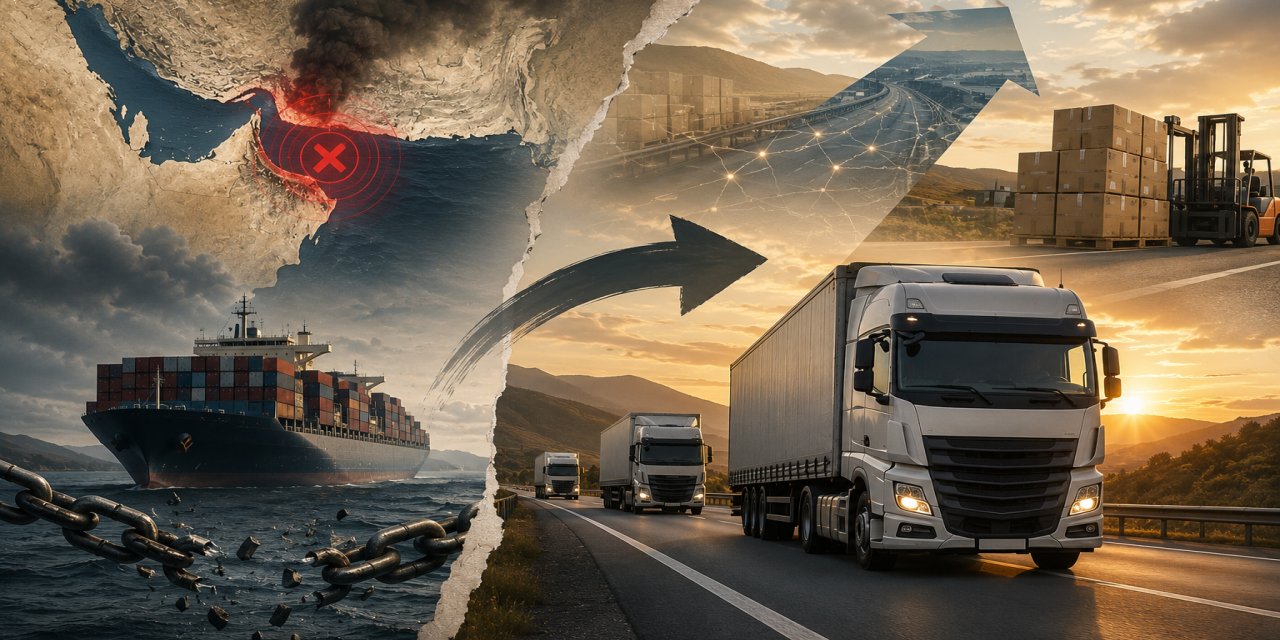
Ongoing tensions at the Strait of Hormuz and severe disruptions to vessel traffic have fundamentally shifted logistics balances across the Gulf region. As maritime shipping slows, Saudi Arabia, the United Arab Emirates (UAE), and Oman have pivoted to road freight. Highways and rail links in Gulf nations now function as emergency logistics corridors, according to Wall Street Journal analysis.
Bob Wilt, CEO of Maaden, Saudi Arabia's state-owned mining company, disclosed that the number of trucks operating on the route from the Gulf to the Red Sea has reached 3,500. The region's new logistics arrangement extends beyond roads. Goods loaded at Fujairah Port are transported to various UAE hubs via road and rail, with Etihad Rail Freight completing the country's first train-based automobile shipment.
Some food products from Europe now reach Dubai overland via Egypt and Saudi Arabia. The crisis has accelerated infrastructure investments at Red Sea ports. Prefabricated warehouses for phosphate and chemical shipments have been installed, alongside specialized piping systems and stainless-steel tanker compartments for corrosive materials.
Experts note these steps serve not only the current crisis but also strategic preparedness for future supply chain disruptions. Global carriers MSC and Maersk have begun actively using land routes across the Arabian Peninsula. The emerging pattern underscores the renewed importance of alternative transport corridors.
While land and rail cannot fully replace maritime trade, they play a critical role in global supply chain continuity. The region's new logistics network demonstrates the strategic importance of multimodal transport infrastructure against geopolitical fragility.
Key Takeaways:
1. Gulf nations shifted from maritime to road and rail freight due to Strait of Hormuz tensions.
2. Saudi mining company Maaden operates 3,500 trucks on the Gulf-Red Sea route.
3. Cargo from UAE's Fujairah Port moves inland by rail; Etihad Rail Freight ran the country's first automobile train.
4. Red Sea ports installed prefabricated warehouses and specialized tanker systems for phosphate and chemicals.
5. MSC and Maersk actively use land routes across the Arabian Peninsula.

