

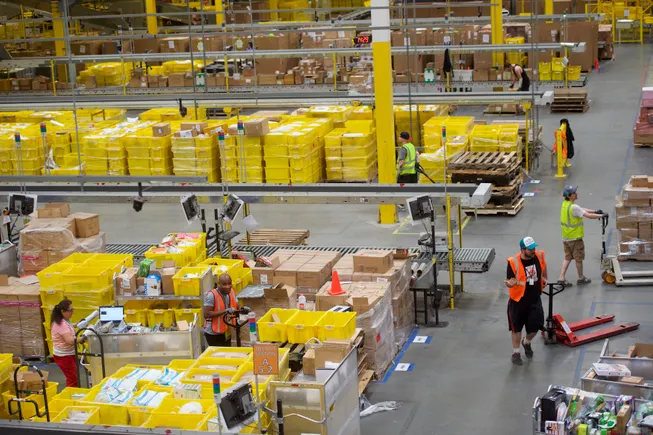
Amazon has expanded its transportation, distribution and fulfillment services beyond marketplace sellers to any company. Launched as Amazon Supply Chain Services (ASCS), the service bundle leverages the company's extensive network of U.S. fulfillment centers, trailers, intermodal containers and aircraft fleet. Industry experts note that while this move won't eliminate established players like FedEx and UPS in the near term, it will create significant pressure on the industry.
Matthew Hertz, CEO of Third Person, emphasizes that while the announcement isn't an immediate game changer, Amazon has been steadily winning customers through services like Amazon Shipping and Multichannel Fulfillment. Hertz predicts the business will grow organically over the next three years and capture more market share. While ASCS' individual components aren't entirely new, bundling different services into one package and marketing to a broader customer base provides a significant competitive advantage.
In parcel delivery, Amazon Shipping poses a threat to established players primarily through pricing. Nate Skiver, founder of LPF Spend Management, says smaller alternative carriers that focus on attracting customers through lower rates are most vulnerable to volume loss. FedEx and UPS are protecting themselves by focusing on high-margin verticals like healthcare that require complex logistics services. Both carriers are moving away from low-value e-commerce deliveries, the exact area where Amazon continues to strengthen.
In trucking, Amazon needs to expand its infrastructure and driver base to compete with LTL (less-than-truckload) giants like FedEx Freight and Old Dominion Freight Line. Logistics consultant Scooter Sayers notes that Amazon Freight currently has LTL coverage only in parts of the U.S. for inbound shipments to Amazon facilities. In warehousing and fulfillment, however, Amazon has already established its dominance for years through Fulfillment by Amazon.
ASCS' customer portfolio includes brands like 3M, Procter & Gamble, Lands' End and American Eagle Outfitters. Former Amazon logistics leader Derek Lossing says fast-growing brands needing to scale their supply chains quickly are the primary target audience for ASCS. These companies stand out as businesses seeking one-stop logistics solutions from manufacturing origin to end consumer. Lossing emphasizes that while individual services aren't transformational, bundling them all together creates a powerful value proposition.
Key Takeaways:
1. Amazon Supply Chain Services has opened freight, parcel shipping and warehousing to all businesses
2. Amazon Shipping directly threatens low-cost alternative parcel carriers through pricing competition
3. FedEx and UPS are focusing on high-margin verticals like healthcare to protect against Amazon
4. Fast-growing brands may prefer ASCS for its bundled one-stop logistics solution
5. 3M, Procter & Gamble and American Eagle Outfitters have begun using the services
[819522]

