

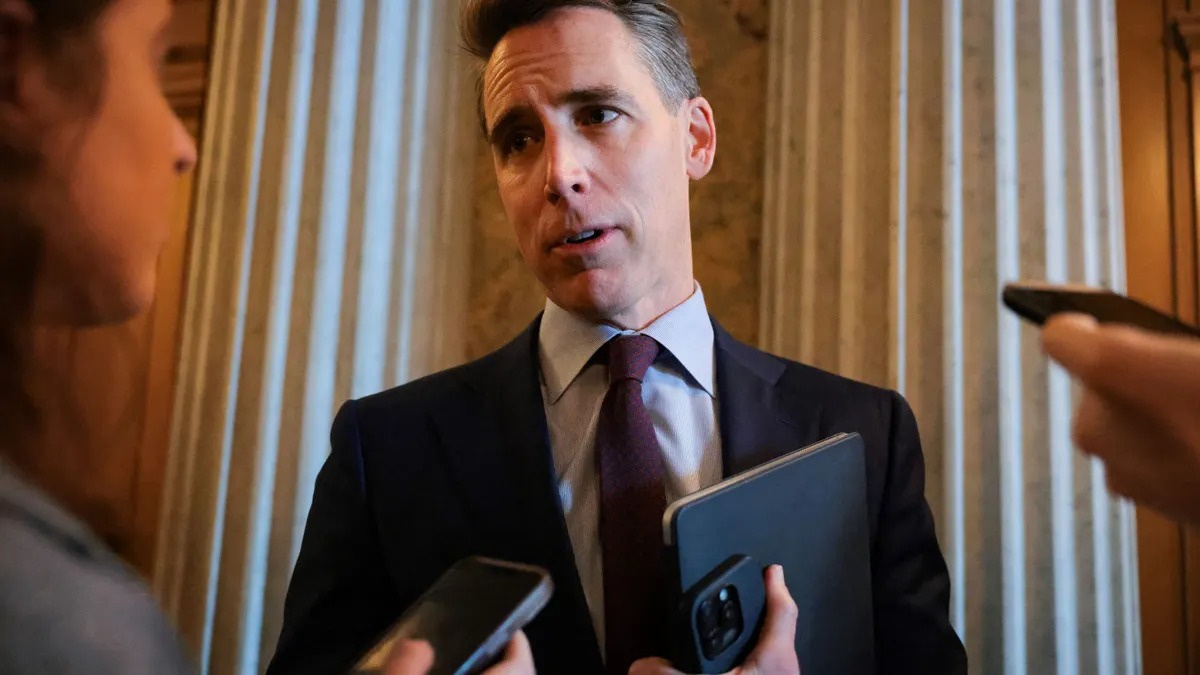
The United States has taken an important step forward in workforce policy. Republican Senator Josh Hawley (Missouri) and Democratic Senator Mark Warner (Virginia) introduced the AI-Related Job Impacts Clarity Act, a bipartisan bill, on November 5. The legislation aims to ensure that job losses resulting from artificial intelligence and automation are tracked and reported with greater transparency.
Under the proposed bill, large companies and federal agencies would be required to report all layoffs resulting from AI technologies to the U.S. Department of Labor (DOL).
The Department would then compile these reports into a public report accessible to both the public and Congress.
According to Hawley's statement, the goal is to make AI technology's impact on the workforce measurable, transparent, and capable of informing policy:
"The American people deserve to understand how our workforce is changing based on accurate information. We should be working toward a future where AI serves people, not one where people are at the mercy of AI."
Hawley cites research suggesting that AI could increase unemployment by as much as 20% over the next five years.
Washington takes a series of steps as AI's impact on the workforce grows
AI's transformation of the workforce is no longer theoretical; it has become a measurable reality.
For this reason, lawmakers are attempting to manage both risks and opportunities through various political mechanisms.
For example:
Senator Bernie Sanders stated in a report released last month that artificial intelligence could eliminate 97 million jobs within a decade.
Among the policies Sanders has proposed are:
A 32-hour work week without loss of pay,
A robot tax (automation tax),
Elimination of tax incentives applied to AI investments,
Protections for family and health leave.Representative Nancy Mace introduced bipartisan legislation to increase federal employees' access to AI training and modernize the public sector.
Senator Mark Kelly released an "AI for America" roadmap and proposed an AI Horizon Fund financed by major AI companies.
The objective: worker retraining, investment in social safety nets, responsible technology adoption.
Although these initiatives are still in the early stages of the legislative process, there is visible cross-party momentum in Congress regarding AI policy.
States are implementing strong and swift regulations
While the federal process moves more slowly, many states are taking aggressive steps to regulate AI use:
New York: Mandatory bias audits for AI-powered hiring systems.
California: AI risk management policy requirement for employers.
Colorado: Mandatory disclosure to candidates that AI was used in hiring.
This trend demonstrates that AI's rapid expansion into areas such as human resources, manufacturing, customer service, and office automation is generating stricter transparency and accountability requirements.
Why does this bill matter?
The new legislation would:
Make it difficult for companies to conceal AI-related layoffs,
Help the public better understand AI's economic impacts,
Facilitate institutions and lawmakers in developing sound economic policies,
Create a database for workforce protection strategies.
Furthermore, it aims to fill the gap of official and comprehensive data that has been lacking in discussions about AI-related job losses to date.
Key Takeaways:
Hawley and Warner introduced legislation requiring mandatory reporting of AI-related layoffs.
The DOL would compile this data and make it publicly available.
AI is expected to impact the workforce by as much as 20%.
Sanders: "97 million jobs" at risk; a 32-hour week and robot tax were proposed.
States are already implementing bias audits and AI disclosure requirements.
The bill is critical for transparency, economic planning, and workforce protection.
Author: SedatOnat.com
We would be delighted to receive your feedback.
Wishing you happy reading in advance.

