

As logistics operations enter peak seasons, they face increasing instances of delivery errors and particularly misload problems due to rising volumes, time pressure, and complex routing decisions. Despite automation advances across many stages, packages being loaded onto the wrong vehicle or routed incorrectly continue to create significant costs across the industry. In this context, Impinj Vice President of Product Management Gagan Luthra details how RAIN RFID technology solves these chronic problems.
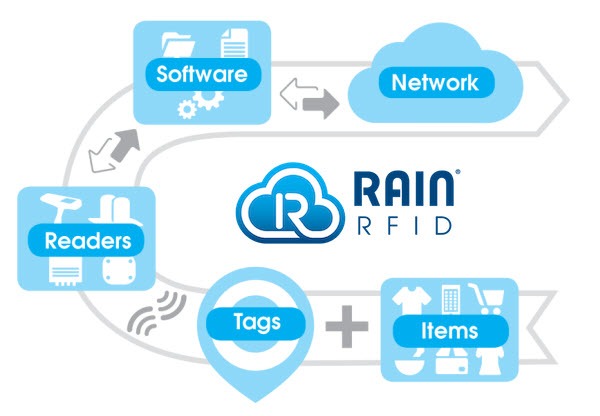
RAIN RFID is defined as a passive, battery-free, and low-cost wireless identification technology. Its ability to operate without line of sight, read up to 1,000 tagged items per second simultaneously, and provide item-level visibility make the technology attractive for logistics operations. Data obtained through fixed or portable readers is transferred to enterprise systems and transformed into actionable insights that support operational decisions.
The Real Cause of the Misload Problem
According to Luthra, misloads stem not from a technology gap but from incorrect technology deployment. According to a 2024 survey, 95% of supply chain professionals believe their organizations provide adequate visibility; however, only 33% confirm they can actually deliver 360°, real-time inventory visibility. This gap stems from over-reliance on manual processes and barcode-based systems.
Barcode systems enable packages to be scanned at a single point; however, they cannot provide continuous visibility regarding where a package is and which vehicle it was loaded onto during warehouse, cross-dock, and loading stages. This situation increases misload risk, particularly when last-minute route changes occur and volumes increase.
Human Error and Operational Burden
Common causes of misloads include:
human error (incorrect labeling, incorrect loading),
operational inefficiencies (last-minute route changes),
operational overload (peak season volumes)
With approximately 2 billion packages expected to be delivered during the 2025 holiday season, a 0.2% average misload rate means more than 4 million packages are misrouted.
The UPS Example: Measurable Impact
One of the most concrete examples of RAIN RFID's practical impact is UPS. Serving more than 200 countries with its global air and ground network, UPS deployed its Smart Package Smart Facility, an RFID-based solution, across more than 1,000 facilities in the United States. Following the first phase of this implementation, UPS reported reducing misload rates by 67%.
This success was made possible through providing end-to-end shipment visibility. Packages are automatically verified at every stage from warehouse entry to vehicle loading. The risk of being loaded onto the wrong vehicle is detected instantly by the system, allowing intervention before the error occurs.
Integration with Existing Systems
Another advantage of RAIN RFID is that it offers seamless integration with existing WMS, TMS, and warehouse infrastructure. Today, RFID hardware has become more reliable and out-of-the-box deployable compared to the past. Additionally, the maturing solution ecosystem with systems integrators, software providers, and hardware manufacturers enables rapid implementation.
This allows companies to gain accuracy, speed, and visibility without requiring complete infrastructure replacement.
Benefits Beyond Misload Reduction
RAIN RFID addresses far more than the misload problem. The technology simultaneously:
reduces shrink and lost packages,
lowers risks of counterfeiting and fake products,
enables rapid response to demand fluctuations,
reduces workforce requirements and allows current employees to focus on higher-value tasks.
Additional security layers such as Endpoint IC Verification strengthen authentication processes by preventing counterfeit RFID tags from infiltrating the supply chain.
Moving Toward a Standard?
According to Luthra, RAIN RFID, which is rapidly spreading in retail, healthcare, and food sectors, could become the de facto standard for parcel delivery in the coming years. The concrete results achieved by major players like UPS represent the strongest indication of this transformation.
Overall Assessment
RAIN RFID is becoming not just a complementary technology that improves delivery accuracy in logistics, but increasingly an operational foundational component. Its ability to reduce misload-related costs during peak seasons, enhance customer satisfaction, and alleviate workforce pressure clearly demonstrates the technology's strategic value.
Key Takeaways:
The fundamental cause of misloads is lack of real-time visibility.
RAIN RFID closes this gap by providing item-level visibility.
Following RFID deployment, UPS reduced misload rates by 67%.
Barcode systems fall short in intense operations.
RFID reduces loss, counterfeit products, and workforce burden.
The technology could become a standard delivery infrastructure in the coming years.
Author: SedatOnat.com
We would be delighted to receive your feedback.
Wishing you good reading.

